Common Concrete Driveway Cracking Issues in Lafayette and How to Prevent Them
What Most Buyers Miss: Concrete driveway cracks in Lafayette are usually caused by predictable factors like expansive clay soils, poor base preparation, weak mixes, and improper joint placement. By designing for local soil movement, using proper materials, and following correct installation practices, homeowners can significantly reduce cracking and extend the life of their driveway.
Concrete driveway cracking is one of the most common complaints from homeowners in Lafayette, and in our work across Acadiana, it is rarely a mystery why it happens. Cracks are not random, and they are not unavoidable. Most driveway cracking in this region can be traced back to predictable issues tied to soil behavior, installation shortcuts, and unrealistic expectations.
Understanding why cracks form is the first step toward preventing them. Ignoring local conditions is the fastest way to guarantee problems.
Why Concrete Driveways Crack in Lafayette
Lafayette sits on clay-heavy soils with high moisture variability. This matters because concrete itself is strong in compression but weak in tension. When the soil beneath it moves, the slab reacts.
Based on our years of experience installing
superior concrete driveway in Lafayette, most driveway cracks in Lafayette come from one or more of the following factors working together.
Expansive Clay Soils
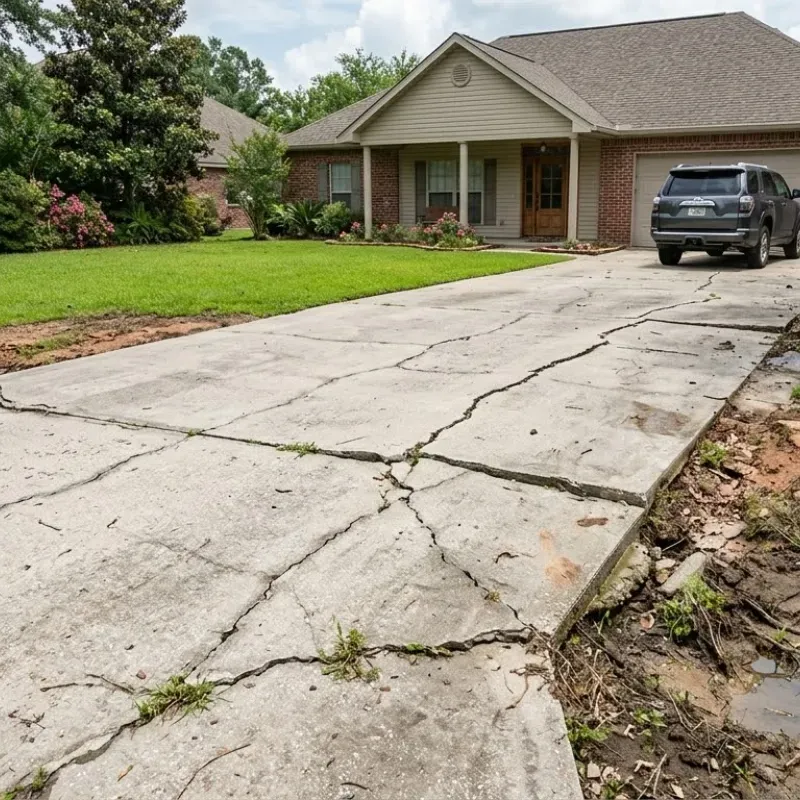
Clay expands when wet and shrinks when dry. In South Louisiana, frequent rainfall followed by heat causes constant soil movement. When a driveway slab is not designed to accommodate that movement, cracking becomes inevitable.
The LSU AgCenter documents that many Louisiana soils are clay-based and expand when wet and shrink when dry, and that these moisture shifts can lead to foundation movement and damage in slabs and flatwork.
Poor Base Preparation
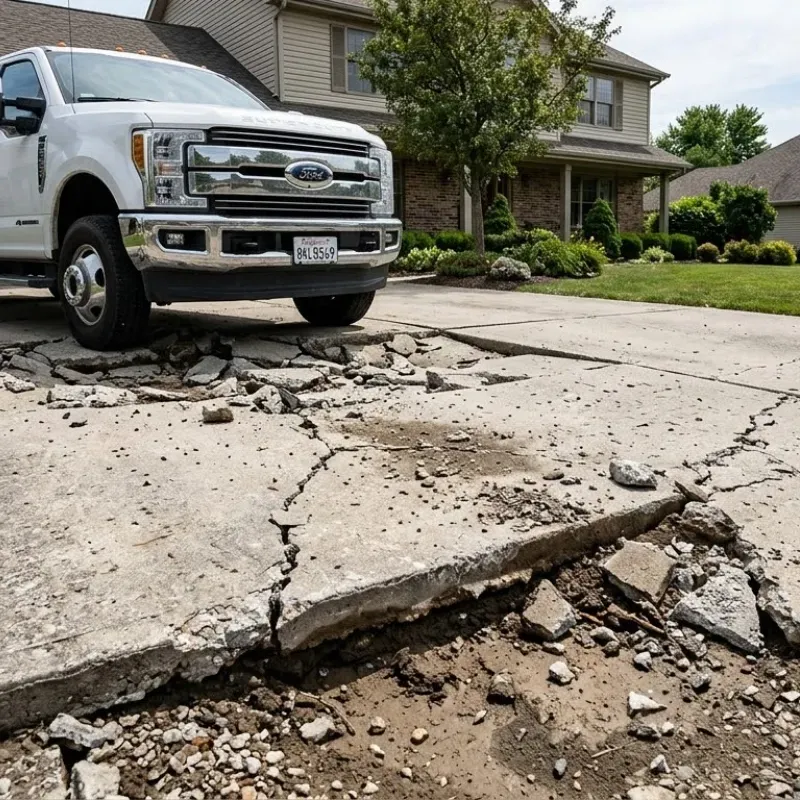
One of the most common mistakes our professional concrete driveway experts see is inadequate base compaction. A driveway poured over loose or uneven soil will settle unevenly. Concrete does not bend to accommodate that settlement.
Improper Concrete Mix
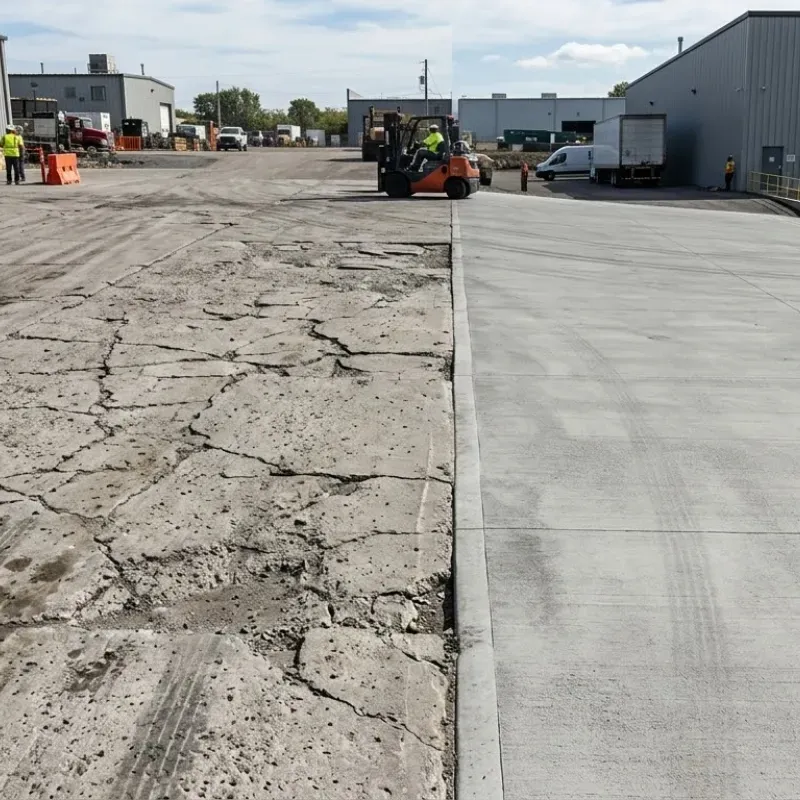
Using weak concrete mixes saves money upfront but increases cracking risk long term. In our work, 3000 PSI or higher mixes consistently perform better under vehicle loads and temperature swings.
According to Purdue University research, concrete mixtures with lower water-to-cement ratios that promote higher strength and proper curing (such as internal curing) reduce shrinkage cracking and improve overall durability.
Learn more about choosing the right commercial concrete mix to ensure maximum durability.
Lack of Control Joints
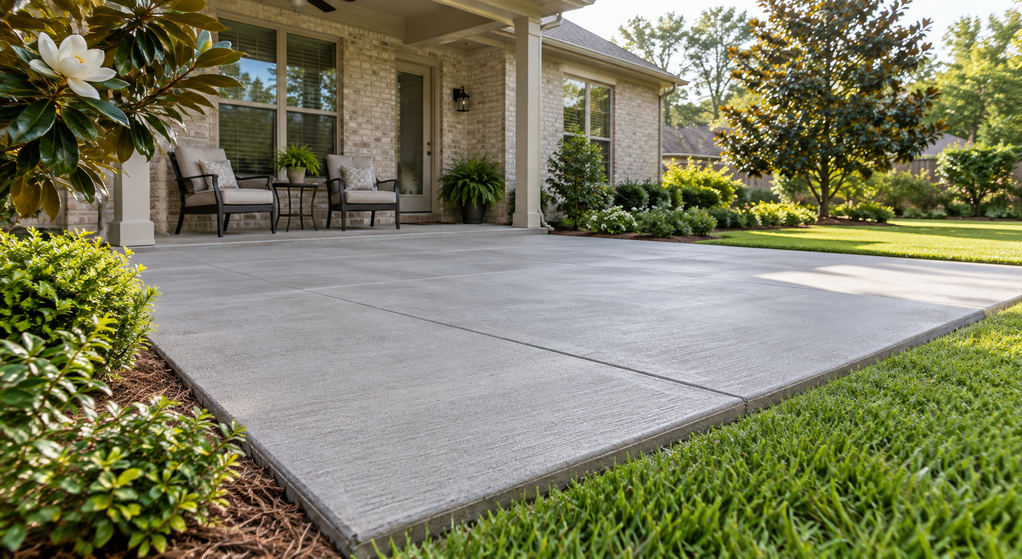
Concrete will crack. The goal is to control where it cracks. Driveways without correctly spaced control joints force cracks to form randomly across the surface.
In Lafayette, joint placement is especially important because slab movement is more aggressive than in drier regions.
Common Cracking Patterns and What They Mean
Not all cracks signal the same problem. Understanding the pattern tells you what went wrong.
Hairline Shrinkage Cracks
These usually appear within the first few weeks and are often cosmetic. They come from surface moisture loss during curing. Proper curing practices reduce their severity.
Straight Cracks Across the Slab
These often indicate soil movement or missing control joints. When the slab cannot relieve stress in planned locations, it finds its own path.
Edge Cracking
Cracks along the edges usually point to poor base support or heavy vehicle loads near slab edges. Driveways that are too thin or poorly reinforced are especially vulnerable.
Multiple Random Cracks
This pattern often means multiple failures. Weak mix, poor compaction, and improper curing are usually involved.
If you noticed some cracks in your driveway, here’s how to prevent hairline, structural, and settlement foundation cracks in Lafayette.
Why Prevention in Lafayette Requires a Different Approach
Driveway advice that works in dry climates does not translate well to South Louisiana. Lafayette driveways must be designed around moisture movement, not against it.
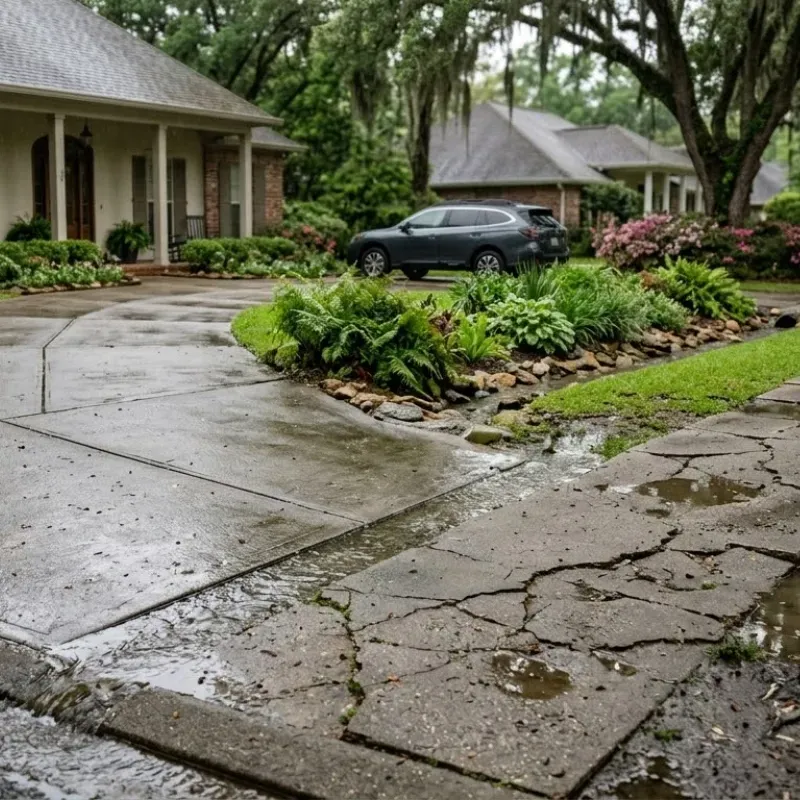
This is why local experience matters. Soil prep depth, base material selection, reinforcement strategy, and joint spacing all change based on local conditions.
The Federal Highway Administration highlights that proper subgrade preparation and effective drainage systems are essential for achieving long-lasting concrete pavement performance and durability.
In practice, driveways that account for drainage and soil behavior consistently outperform those that rely on standard templates.
Practical Ways to Prevent Driveway Cracking
Proper Site Preparation
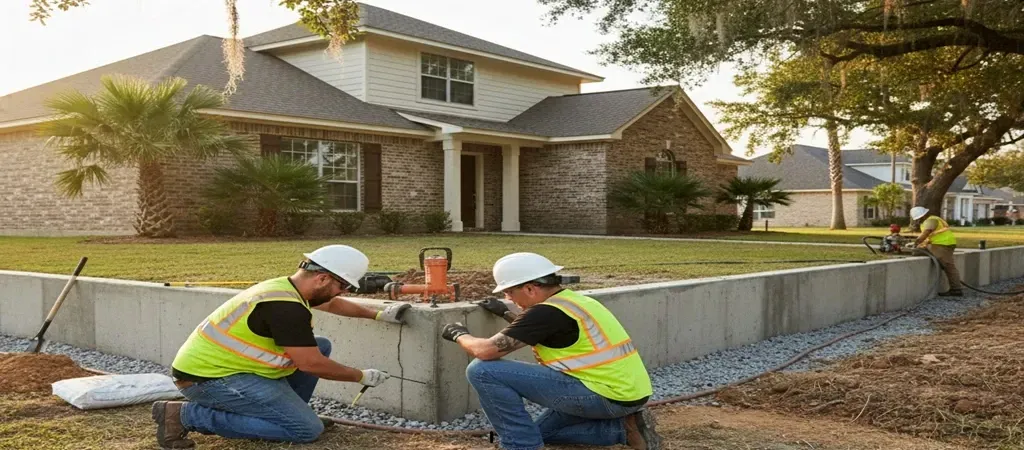
Excavation depth matters. Removing unstable soil and replacing it with compacted base material creates a stable platform. Skipping this step leads to settlement.
Adequate Thickness
Four inches is often the minimum. In areas with heavier vehicles or poor soils, thicker slabs perform better. Thin slabs crack faster under stress.
Reinforcement Where It Counts
Rebar or wire mesh does not stop cracks, but it helps hold slabs together when cracks occur. This limits displacement and keeps cracks from spreading.
Correct Joint Placement
Control joints should be placed at regular intervals and aligned with slab geometry. Random joint placement is a recipe for random cracking.
Curing Done Right
Curing controls how concrete gains strength. Poor curing increases surface cracking and reduces long-term durability. Moist curing or curing compounds make a measurable difference.
Tradeoffs Homeowners Should Understand
Crack prevention is not about eliminating all cracks. It is about minimizing severity and maintaining slab performance.
Higher-quality prep and materials cost more upfront. In our work, that cost is consistently lower than repairs or full replacements later.
Another tradeoff is appearance versus function. Some decorative finishes increase surface cracking risk if not executed properly. Knowing those risks helps homeowners make smarter design decisions.
Mistakes That Cause Most Driveway Failures
- Pouring directly on native clay without base prep
- Skipping reinforcement to save money
- Ignoring joint placement
- Allowing heavy vehicles on green concrete
- Assuming cracks mean failure rather than understanding their cause
Based on experience, most driveway problems are preventable when these mistakes are avoided.
Clear Takeaway
Concrete driveway cracking in Lafayette is not unavoidable. It is usually the result of ignoring soil behavior, cutting corners during preparation, or misunderstanding how concrete behaves in this climate.
Driveways that are properly designed for South Louisiana conditions last longer, crack less, and require fewer repairs over time.
Next Step for Homeowners
If you are planning a new driveway or evaluating cracks in an existing one, start by understanding the soil beneath it and how the slab was built. Ask direct questions to professionals about base preparation, concrete strength, reinforcement, and joint placement. Confidence comes from knowing what was done and why.

Written By:
Kurt Manalastas
Home & Property Research Journalist
Kurt is a Home & Property Research Journalist who researches and writes educational content on home services, property improvement, and residential decision-making. He focuses on translating real-world contractor experience, industry standards, and verified research into clear, practical guidance that helps homeowners understand their options and make informed decisions.