Protect Your Lafayette Home’s Foundation: Concrete Repair & Prevention Tips
Core Insight: Before You Decide: Foundation issues in Lafayette are driven by clay soil movement, moisture, and poor drainage, making early detection and proper repair essential to prevent costly structural damage. Long-term stability comes from combining strong materials, correct reinforcement, and proactive moisture control with ongoing maintenance tailored to local conditions.
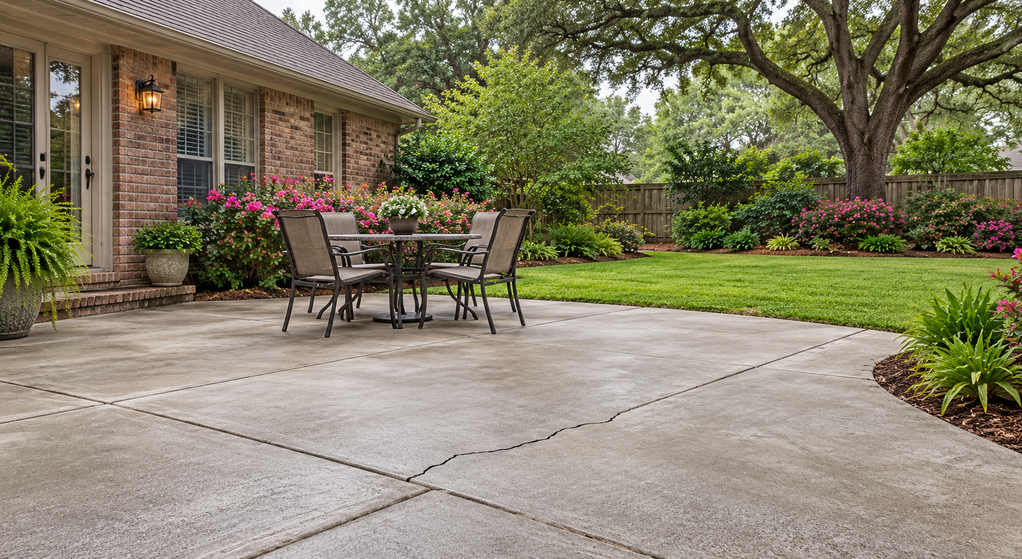
A home’s foundation is not something you notice every day, but in Lafayette, it quietly determines whether a house stays stable or slowly develops costly problems. South Louisiana soil, frequent rainfall, and long periods of moisture create conditions that put constant pressure on concrete foundations. Concrete foundation services in Lafayette note that when cracks, settling, or moisture intrusion appear, they are rarely cosmetic. They are signals that the foundation is reacting to its environment.
Why Foundations in Lafayette Are Vulnerable
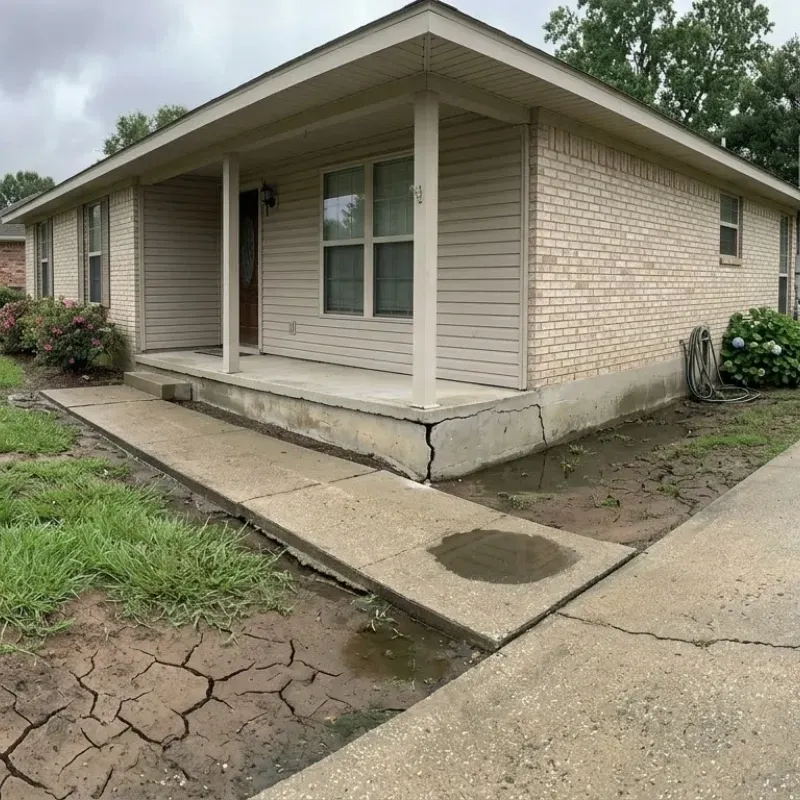
Lafayette sits on clay-heavy soil that expands when wet and shrinks when dry. This constant movement places stress on concrete foundations year-round. During heavy rains, soil swells and pushes against foundation walls. During dry stretches, it contracts and leaves voids beneath slabs.
Over time, this cycle leads to cracking, uneven settling, and water infiltration. Poor drainage, inadequate soil preparation, and low-strength concrete only accelerate the process. Foundation issues here are not rare or unexpected. According to
our concrete foundation team, they are predictable outcomes when construction or maintenance does not account for local conditions.
Early Warning Signs You Should Never Ignore
Foundation problems often begin subtly. Small cracks in interior walls, doors that stick, or uneven floors may seem minor at first. Outside, you might notice cracks in brick, gaps near windows, or concrete pulling away from the structure.
Concrete cracks wider than a hairline deserve attention, especially if they grow or reappear after repairs. Water stains, musty odors, or persistent dampness near the slab indicate moisture intrusion, which weakens concrete and promotes further movement.
Waiting rarely improves the situation. Early intervention is always more effective and less expensive than delayed repairs.
Understanding Common Concrete Foundation Repairs
Not all foundation cracks require the same solution. Hairline cracks caused by normal curing are different from structural cracks caused by movement. Proper diagnosis matters.
Crack injection is commonly used for narrow, non-structural cracks that allow water penetration. When done correctly, it restores continuity and blocks moisture. Surface patching alone is not a long-term solution and often fails in Lafayette’s climate.
For settling or uneven slabs, slab lifting techniques may be appropriate. These methods stabilize the foundation by filling voids beneath the concrete, reducing movement. However, they only work when underlying soil conditions are addressed.
In more severe cases, sections of concrete may need to be removed and re-poured. Breakouts and re-pours allow damaged concrete to be replaced with properly reinforced material that meets strength requirements for long-term performance.
Concrete Strength and Reinforcement Matter More Than Appearance
Foundation repairs are only as durable as the materials used. Concrete mixes below 3000 PSI often fail to withstand Lafayette’s soil movement and moisture exposure. Higher-strength mixes resist cracking and surface degradation far better over time.
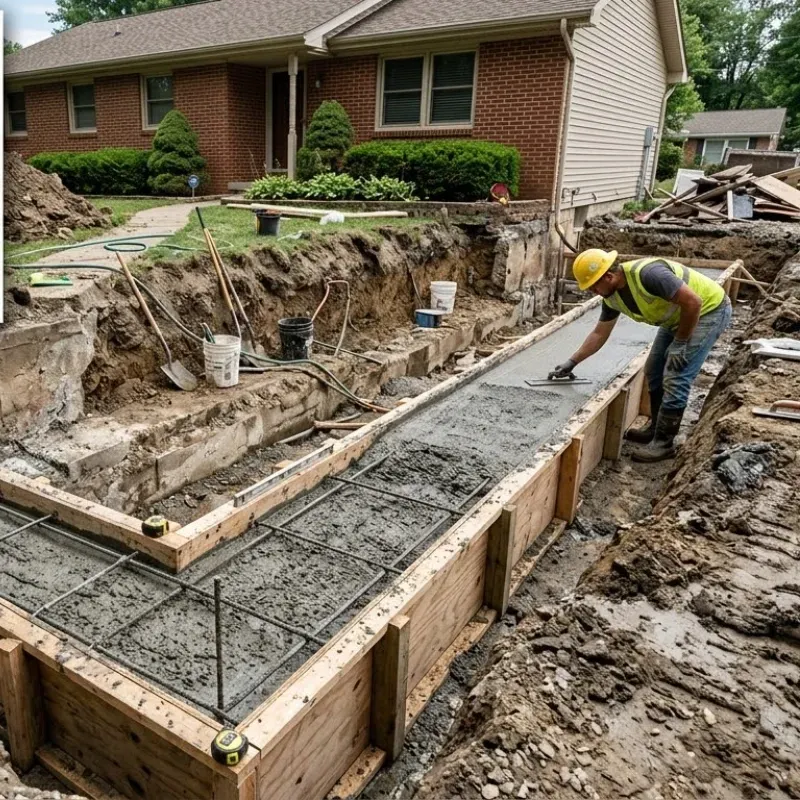
Reinforcement also plays a critical role. Proper rebar placement, spacing, and depth help concrete resist tensile forces caused by soil expansion and contraction. Skipping reinforcement or placing it incorrectly weakens the entire structure, regardless of surface finish.
A foundation repair that looks clean but lacks proper strength will not last. Durability always outweighs aesthetics when structural integrity is involved. Long-lasting concrete doesn’t happen by accident. Learn how expert planning and project knowledge maximize concrete durability for stronger, more reliable results.
Drainage Is the First Line of Prevention
Most foundation problems in Lafayette trace back to water. Poor drainage allows moisture to collect around the foundation, increasing soil pressure and encouraging movement.
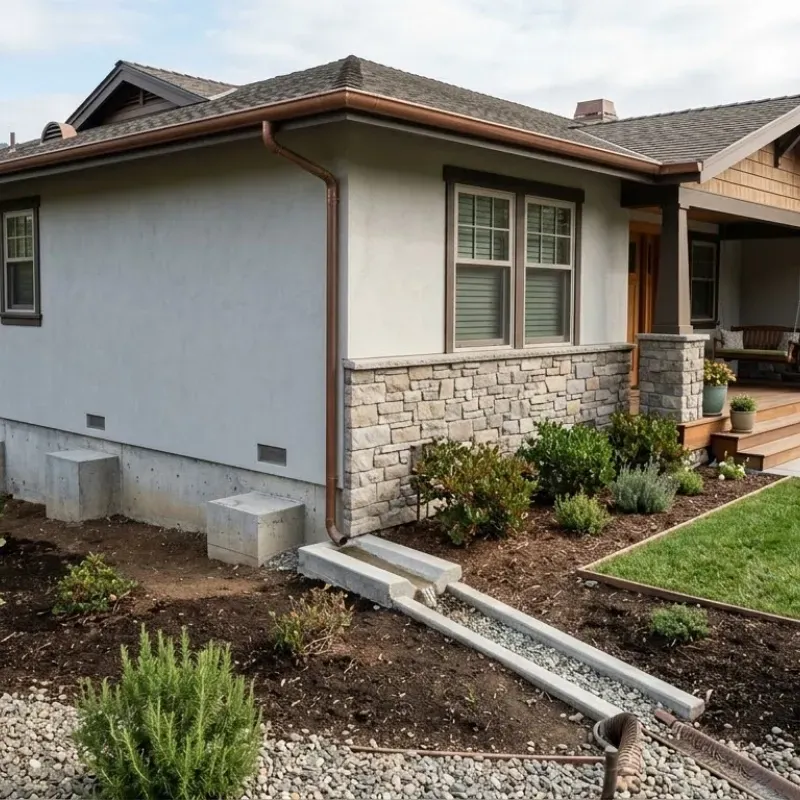
Gutters should direct water well away from the home, not just a few feet. Downspouts that discharge too close to the slab undermine soil stability. The ground surrounding the house should slope away from the foundation to prevent pooling.
French drains, swales, or surface grading adjustments can dramatically reduce moisture-related foundation stress. Addressing drainage issues often prevents the need for major repairs later.
Soil Preparation and Compaction Make a Long-Term Difference
Soil preparation is not just a construction-phase concern. Inadequate compaction beneath slabs leads to settlement over time. When voids form, concrete loses support and begins to crack or tilt.
In some cases, soil stabilization may be necessary to improve load-bearing capacity. This is especially important for additions, patios, or driveways connected to the foundation. New concrete tied into an unstable base can transfer movement directly to the home.
Proper preparation ensures that repairs do not introduce new problems, and mistakes in concrete projects can be expensive. See how professional project management reduces risk and ensures lasting results.
Moisture Control Protects Concrete From Within
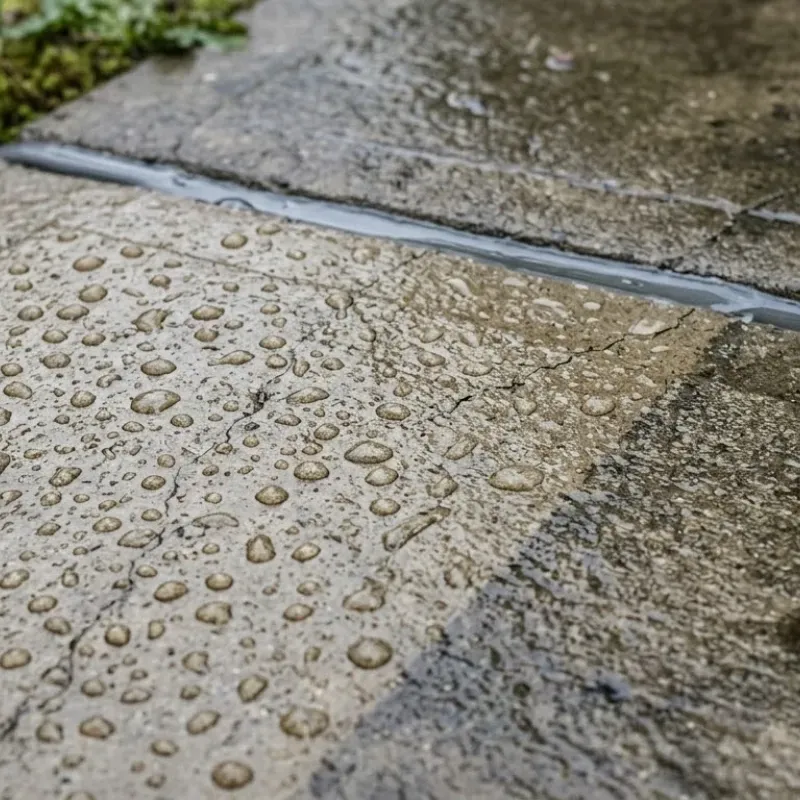
Concrete is porous by nature. Without protection, it absorbs moisture, which weakens internal structure and contributes to cracking. In Lafayette’s humid environment, moisture control is essential.
Penetrating sealers help reduce water absorption while allowing concrete to breathe. Unlike surface coatings, they do not trap moisture or create peeling issues. When applied correctly, they extend the lifespan of repaired areas and reduce future damage.
Moisture barriers and proper joint sealing also prevent water intrusion at vulnerable points where slabs meet walls or expansions occur.
Prevention Is More Effective Than Repair
Foundation repairs restore stability, but prevention preserves it. Regular inspections allow homeowners to catch issues before they escalate. Monitoring cracks, checking drainage, and addressing soil erosion early can save thousands in repairs.
Avoid planting large trees too close to the foundation, as roots draw moisture from soil and increase movement. Maintain consistent moisture levels around the home rather than allowing extreme wet and dry cycles.
Small adjustments made consistently protect the foundation far better than emergency fixes.
Choosing the Right Approach for Lafayette Homes
Foundation repair is not a one-size-fits-all process. Solutions must reflect local soil behavior, climate conditions, and construction methods. Shortcuts that work in other regions often fail here.
Effective repairs combine accurate diagnosis, strong materials, proper reinforcement, and moisture management. When these elements align, concrete foundations perform reliably for decades.
Final Thoughts on Protecting Your Foundation
Protecting a Lafayette home’s foundation means respecting the environment it sits in. Soil movement, moisture, and concrete behavior are realities that cannot be ignored.
Concrete repair works best when paired with prevention strategies that address root causes rather than symptoms. Strong materials, proper drainage, and consistent maintenance keep foundations stable and homes secure.
A foundation does not fail suddenly. It shows signs long before serious damage occurs. Paying attention early is the smartest way to protect one of the most important parts of any home.

Written By:
Kurt Manalastas
Home & Property Research Journalist
Kurt is a Home & Property Research Journalist who researches and writes educational content on home services, property improvement, and residential decision-making. He focuses on translating real-world contractor experience, industry standards, and verified research into clear, practical guidance that helps homeowners understand their options and make informed decisions.