Concrete vs. Asphalt Driveways in Lafayette: Which Option Lasts Longer?
Decision Snapshot: In Lafayette’s heat, heavy rainfall, and clay soils, concrete driveways consistently last longer than asphalt due to their rigidity, resistance to deformation, and lower maintenance needs. While both materials depend on proper installation, concrete’s ability to handle moisture and ground movement gives it a clear long-term durability advantage.
At first glance, concrete and asphalt seem interchangeable. Both line the streets of Acadiana. Both promise strength. Both are marketed as long-lasting solutions. Yet many homeowners only discover the difference years later, when cracks widen, depressions form, and repairs become routine.
Why Local Conditions Matter More Than Material Labels
Driveways do not fail because of brand names or surface color. They fail because of climate and soil. Lafayette experiences long periods of high heat, heavy seasonal rainfall, and expansive clay soils that swell and shrink throughout the year. These forces act on a driveway every single day.
In our work, we have seen asphalt surfaces soften in summer heat, develop depressions under vehicle weight, and crack prematurely after repeated wet and dry cycles.
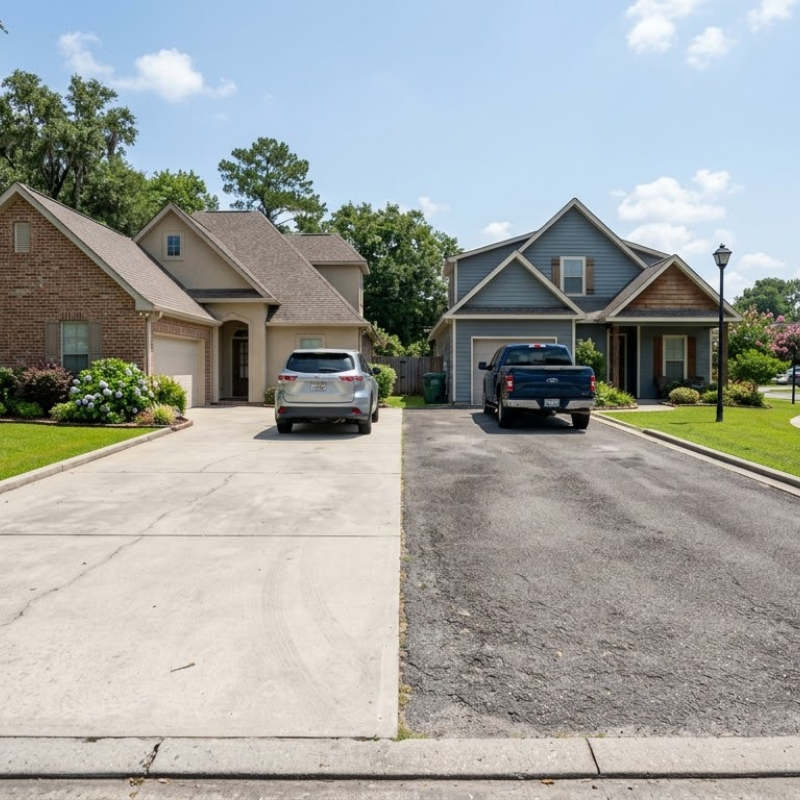
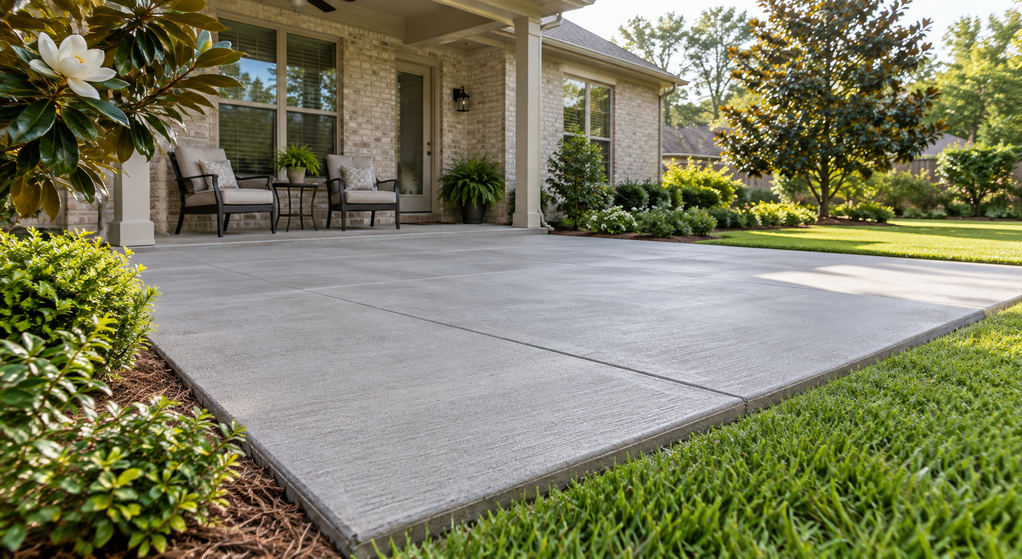
We have also seen properly built concrete driveways, installed by professional concrete driveway services in Lafayette, remain structurally stable for decades under the same conditions.
The Structural Difference That Decides Longevity
The key distinction between asphalt and concrete is how they carry load.
Asphalt is a flexible pavement. It bends under weight and follows the movement of the soil beneath it. Concrete is a rigid pavement. It distributes load across a wider area and resists deformation.
According to our driveway experts, that difference becomes critical in expansive clay soils.
When the ground swells and contracts, flexible pavements fatigue. Microcracks form. Water enters. The base weakens. Over time, surface failure accelerates.
Concrete behaves differently. When reinforced and placed on a properly prepared base, it bridges minor soil movement instead of absorbing it. That is why concrete maintains structural integrity far longer in unstable soils.
In our experience, most long-lasting concrete driveways share three traits. High-strength concrete mixes, proper reinforcement, and carefully prepared subgrades. When any of these are missing, lifespan drops sharply.
Material performance is inseparable from installation quality. Learn more about Maximizing Concrete Durability Through Expert Planning and Project Knowledge.
What Real-World Lifespan Looks Like in Acadiana
Industry averages often state that asphalt lasts 15 to 20 years while concrete lasts 25 to 40 years. Those numbers come from organizations such as the Portland Cement Association and the National Asphalt Pavement Association.
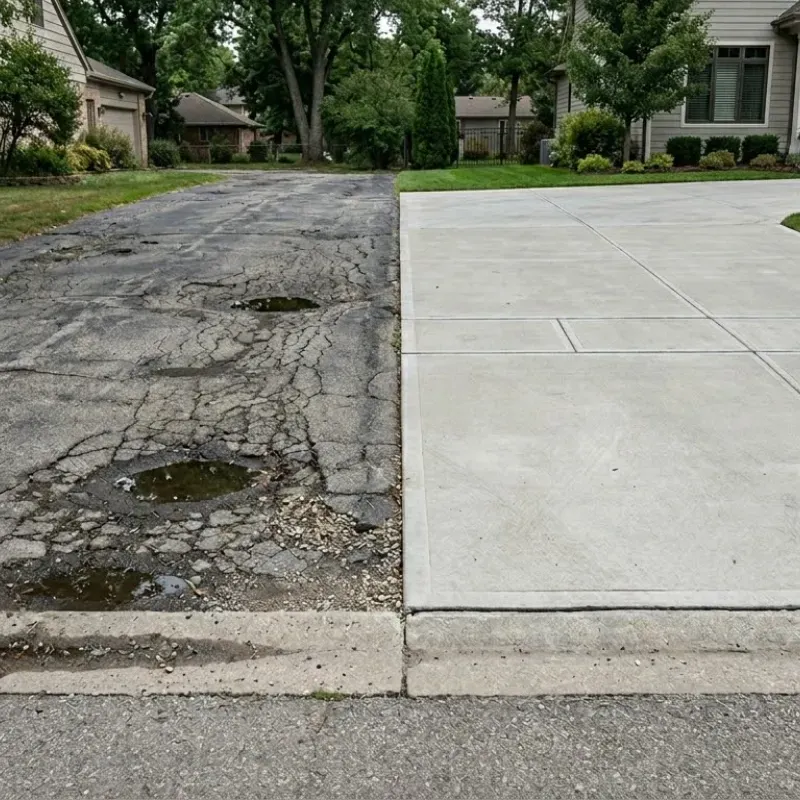
In South Louisiana, the gap often widens. We have seen asphalt driveways show deformation and cracking in under ten years when exposed to heat, water, and heavy vehicles. We have also inspected concrete driveways over thirty years old that remain structurally sound with only minor surface wear.
The difference is not theoretical. It is visible across neighborhoods throughout Lafayette.
Concrete does not soften in heat, does not oxidize, and does not rely on petroleum binders that degrade over time. These properties directly translate into longer service life.
Maintenance and How It Affects Long-Term Performance
Longevity is not only about initial strength. It is also about how much maintenance a surface requires to remain functional.
Asphalt is highly sensitive to oxidation and moisture. Without routine sealing and crack repair, deterioration accelerates quickly. Water penetrates the surface, weakens the base, and leads to structural failure.
Concrete requires far less routine intervention. When joints are properly placed and drainage is correctly designed, maintenance is limited to occasional cleaning and optional sealing.
In our work, we routinely see concrete driveways functioning well decades after installation with minimal intervention. That long-term stability is one of the primary reasons concrete outperforms asphalt in lifespan.
Common Mistakes That Shorten Any Driveway’s Life
Most premature driveway failures are not caused by the wrong material choice. They are caused by construction errors.
Based on experience, the most damaging mistakes include inadequate soil compaction, insufficient base thickness, weak concrete mixes, missing reinforcement, improper joint spacing, and poor drainage planning.
These errors affect both materials, but asphalt is far less forgiving. Flexible pavements deteriorate rapidly when the base is unstable. Concrete tolerates minor imperfections better because of its rigidity.
This is why contractor selection matters as much as material selection.
Why Concrete Performs Better Specifically in Lafayette
Every region has different performance drivers.
In Lafayette, three factors dominate. Heavy rainfall, intense heat, and clay soil movement.
Concrete sheds water efficiently and resists saturation damage. It is unaffected by high surface temperatures. Also, concrete resists deformation from expanding soils. These advantages are magnified in South Louisiana compared to cooler or drier climates. Material performance is always local.
Environmental and Design Considerations
Beyond durability, concrete offers long-term advantages in appearance and environmental performance.
- It reflects more sunlight, reducing surface heat.
- It can be textured, colored, or patterned without sacrificing strength.
- It does not release petroleum-based compounds as it ages.
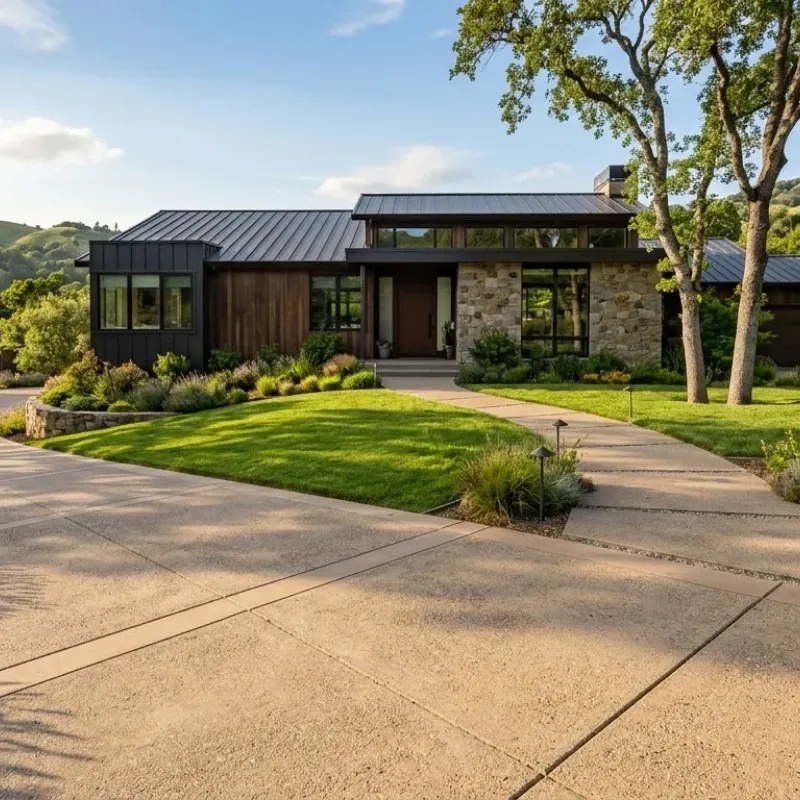
For homeowners planning to invest in long-term curb appeal, concrete offers greater design stability over time.
Longevity in Lafayette starts with how a material handles water, heat, and ground movement. To know more, explore How Soil and Weather Impact Your Concrete Foundation.
This is a subtitle for your new post
The Final Answer: Which Lasts Longer?
In Lafayette, concrete lasts longer than asphalt when both are installed properly.
Not by a small margin. Often by decades.
Asphalt remains useful for short-term applications and low-demand surfaces. But for homeowners who plan to stay in their homes and value structural longevity, concrete is the superior choice.
Takeaway and Next Step
If your goal is a driveway that survives South Louisiana’s climate for decades, concrete is the smarter long-term option.
Before you hire a contractor, ask detailed questions about soil preparation, reinforcement strategy, drainage design, and mix strength. The lifespan of your driveway will depend more on those answers than on the material alone.

Written By:
Kurt Manalastas
Home & Property Research Journalist
Kurt is a Home & Property Research Journalist who researches and writes educational content on home services, property improvement, and residential decision-making. He focuses on translating real-world contractor experience, industry standards, and verified research into clear, practical guidance that helps homeowners understand their options and make informed decisions.