Winter and Summer Maintenance Tips for Concrete Driveways in Lafayette
Local Insight: Concrete driveways in Lafayette face seasonal stress from moisture, heat, and shifting clay soils, making regular maintenance essential to prevent cracking and surface damage. By managing moisture in winter and addressing heat, UV exposure, and drainage in summer, homeowners can significantly extend durability and avoid costly repairs.
What if the biggest threat to your concrete driveway in Lafayette is not time, but neglect?
Winter and summer create very different stresses on concrete in Lafayette. If you understand those stresses and respond correctly, you extend the life of your driveway dramatically and avoid premature repair or replacement. This guide breaks down exactly what that looks like and why it matters specifically in South Louisiana.
Why Climate in Lafayette Demands Seasonal Maintenance
Lafayette’s subtropical climate brings long, humid summers and mild winters with occasional freeze events. According to the National Weather Service data for South Louisiana, freeze and thaw cycles, even if infrequent, can significantly stress saturated concrete. Moisture enters small surface pores, freezes, expands, and creates internal pressure.
The Federal Highway Administration explains that repeated freeze-thaw exposure contributes to surface scaling and cracking in improperly sealed concrete surfaces.
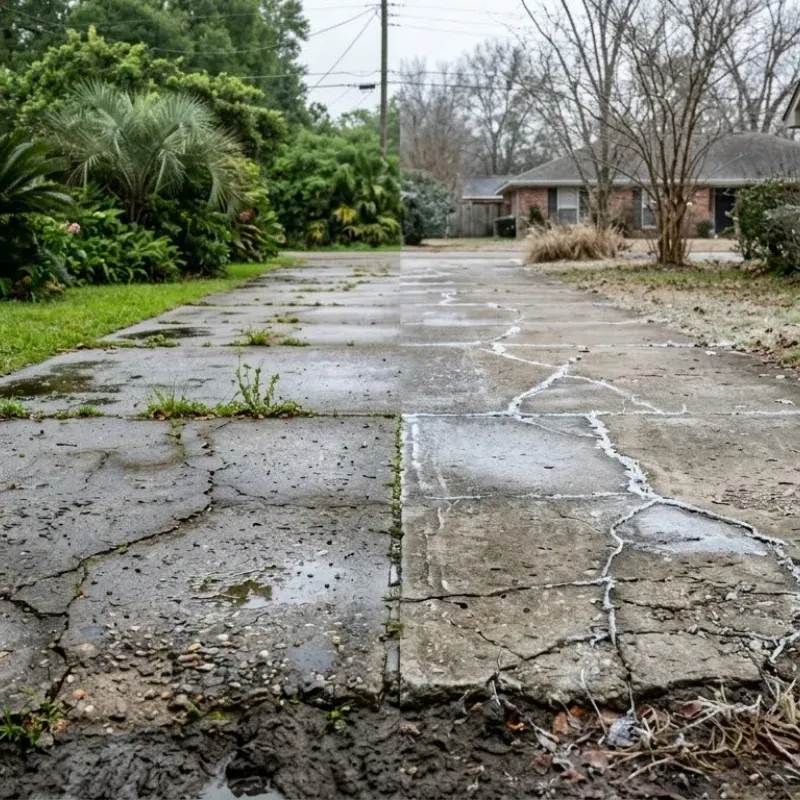
Through our years of experience providing concrete driveway installation services in Lafayette, the driveways that suffer the most are the ones left unsealed and unprotected during seasonal shifts.
Clay-heavy soils in the region also expand when saturated and shrink during dry periods. This movement transfers stress directly into the slab if proper reinforcement and soil preparation were not done correctly from the start.
That is why seasonal maintenance is especially important here.
Winter Maintenance Tips for Concrete Driveways in Lafayette
Winter in Lafayette is not harsh compared to northern states, but that does not mean it is harmless. Here are some tips from our concrete driveway experts:
1. Keep the Surface Clean and Dry
Leaves, dirt, and debris trap moisture against the concrete. In our experience, driveways that stay damp through winter are more prone to surface scaling. Even light freeze events can damage wet concrete.
Sweep regularly and rinse away organic buildup before cold snaps.
Moisture penetration combined with freezing conditions increases internal stress and microfracturing.
2. Avoid Harsh Deicing Chemicals
Homeowners sometimes use deicers during rare ice events. The American Concrete Institute warns that deicing salts can accelerate surface deterioration, especially on concrete less than a year old.
Instead of rock salt, use sand for traction if needed. Avoid products containing ammonium nitrate or ammonium sulfate, which are especially damaging.
Salt offers quick melting, but long-term surface damage is far more costly than short-term inconvenience.
3. Inspect and Seal Before Freeze Season
If your driveway has not been sealed in the last two to three years, fall is the time to address it. A breathable, penetrating sealer helps reduce water absorption while allowing vapor to escape.
Based on experience, sealed driveways consistently show less winter scaling than untreated surfaces.
Do not apply sealer when temperatures are too low or humidity is excessive. Follow manufacturer recommendations carefully.
4. Address Small Cracks Immediately
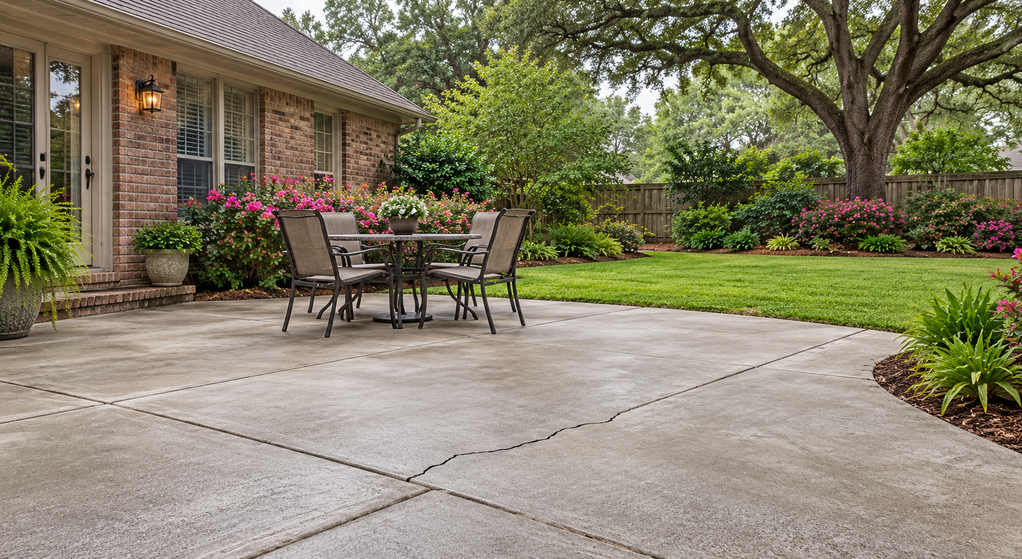
Small cracks rarely stay small. Water enters, freezes, expands, and widens the crack.
According to the Seattle Department of Transportation, cracking sealing as a preventive maintenance activity prevents water and debris from entering pavement cracks and helps extend the service life of the pavement. Use a flexible concrete crack filler before winter arrives to prevent water intrusion.
Ignoring hairline cracks is one of the most common and expensive mistakes homeowners make. Once you notice a crack, act right away. Here’s
how to prevent hairline, structural, and settlement foundation cracks in Lafayette.
Summer Maintenance Tips for Concrete Driveways in Lafayette
Summer presents a different kind of stress. Heat, UV exposure, and soil movement dominate this season.
1. Wash Away Mold and Mildew
High humidity in Lafayette promotes mold and algae growth on shaded driveways. These organisms retain moisture and can slowly degrade surface integrity.
Pressure washing once or twice during summer helps maintain surface quality. Use moderate pressure to avoid etching.
Why this matters: Organic growth increases moisture retention and surface slipperiness, both of which accelerate wear.
2. Monitor for Soil Movement
South Louisiana clay expands during heavy rains and contracts during dry periods. If you notice slight slab lifting, sinking, or widening cracks during summer droughts, it may indicate subgrade movement.
We have seen many cases where early detection allowed for minor repairs instead of full replacement.
If drainage around the driveway is poor, correct it immediately. The Louisiana Department of Transportation and Development emphasizes proper drainage as a critical factor in pavement longevity.
3. Reapply Sealer When Needed
UV exposure breaks down surface sealers over time. If water no longer beads on the surface, protection is compromised.
In Lafayette’s climate, resealing every two to three years is typically appropriate. High-traffic driveways may require more frequent application.
4. Prevent Oil and Chemical Stains
Summer heat causes oil to penetrate deeper into porous concrete. Clean vehicle leaks quickly using absorbent material followed by degreaser.
Oil weakens surface bonding and makes future repairs more difficult.
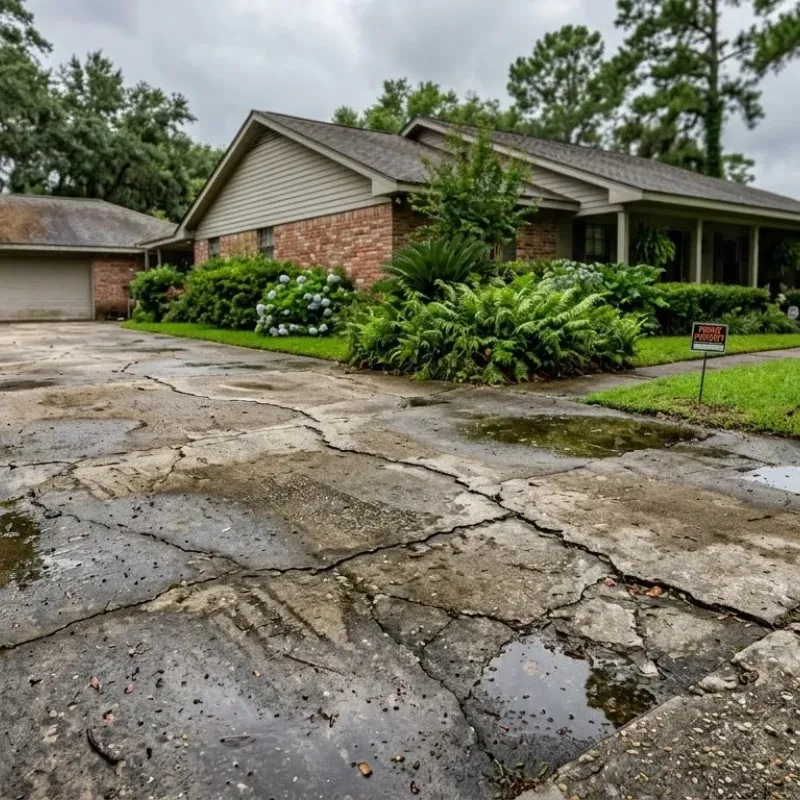
Common Mistakes Lafayette Homeowners Make
- Waiting until visible damage becomes severe
- Using improper sealers not rated for humid climates
- Ignoring drainage problems around the slab
- Power washing with excessive pressure
- Assuming mild winters mean no freeze damage risk
Concrete performance is cumulative. Small neglect over several seasons compounds into structural issues. To learn more, here are the common concrete driveway cracking issues in Lafayette and how to prevent them.
Why Location-Specific Advice Matters
Concrete maintenance advice from colder states does not always apply to Lafayette. Northern regions focus heavily on snow and road salt. Here, moisture management and soil stability are more significant long-term factors.
In South Louisiana, heavy rainfall combined with expansive clay creates conditions that demand vigilance even when temperatures seem moderate.
Maintenance schedules should reflect local climate patterns, not generic online advice.
The Clear Takeaway for Lafayette Homeowners
If you want your concrete driveway to last in Lafayette, you must think seasonally. In winter, focus on moisture control, sealing, and crack repair. In summer, focus on cleaning, UV protection, drainage, and soil movement monitoring.
A well-installed, properly reinforced concrete slab using 3000 PSI or higher mixes can last decades in South Louisiana. But even the strongest slab benefits from informed, climate-aware maintenance.
Take time each season to inspect, clean, seal, and correct small issues early. That discipline is what separates long-lasting driveways from premature replacements.
If you follow these winter and summer maintenance strategies specific to Lafayette conditions, you dramatically improve your driveway’s durability, safety, and long-term value.

Written By:
Kurt Manalastas
Home & Property Research Journalist
Kurt is a Home & Property Research Journalist who researches and writes educational content on home services, property improvement, and residential decision-making. He focuses on translating real-world contractor experience, industry standards, and verified research into clear, practical guidance that helps homeowners understand their options and make informed decisions.