Concrete Driveway Thickness and Reinforcement Requirements for Lafayette Homes
Key Insight:
Concrete driveway thickness and reinforcement in Lafayette are not one-size-fits-all decisions. Louisiana’s expansive clay soil, high humidity, and heavy rainfall create conditions that demand more from a driveway slab than most generic specifications account for. Getting both right from the start is what separates a driveway that holds up for decades from one that starts cracking within a few years.
When homeowners in Lafayette start thinking about a new concrete driveway, the conversation usually starts with color, finish, and price. Thickness and reinforcement — the decisions that actually determine how the driveway performs over the next 20 or 30 years — often come up late if they come up at all. That gap between what gets discussed and what actually affects performance is where many Lafayette driveways run into trouble.
This is not a complicated subject, but it does require understanding how Louisiana’s conditions affect what a driveway slab needs to handle. Here is a straightforward look at the thickness and reinforcement decisions that make the difference between a driveway that holds up and one that does not.
Why Lafayette’s Soil Changes Everything
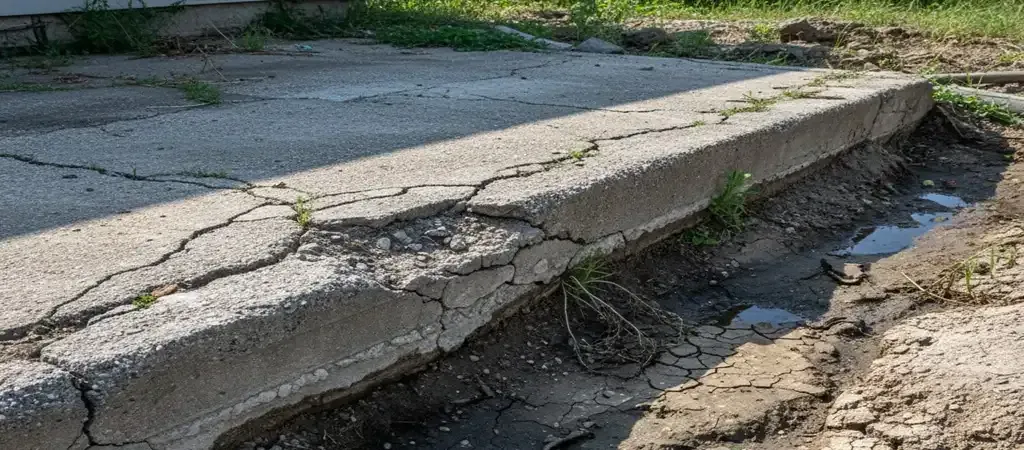
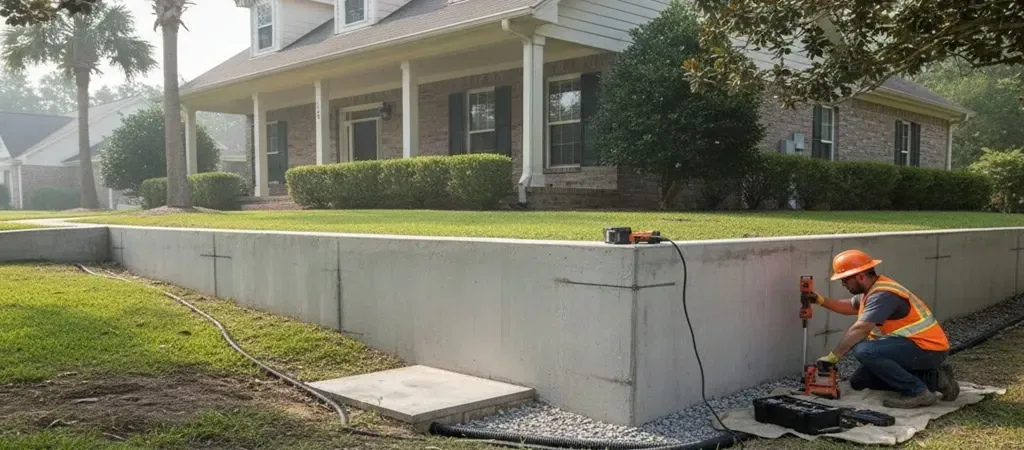
The single most important context for any concrete driveway decision in Lafayette is the soil underneath it. Most of the region sits on expansive clay — soil that swells significantly when it absorbs moisture and shrinks when it dries out. That movement happens seasonally, and in some years it happens multiple times as weather patterns shift. A concrete slab sitting on clay that is actively moving is under stress that no amount of surface finish can protect against if the slab itself is not designed to handle it. For homeowners planning a
concrete driveway in Lafayette, LA, the soil condition beneath the slab is the first variable that needs to drive the specification, not the last.
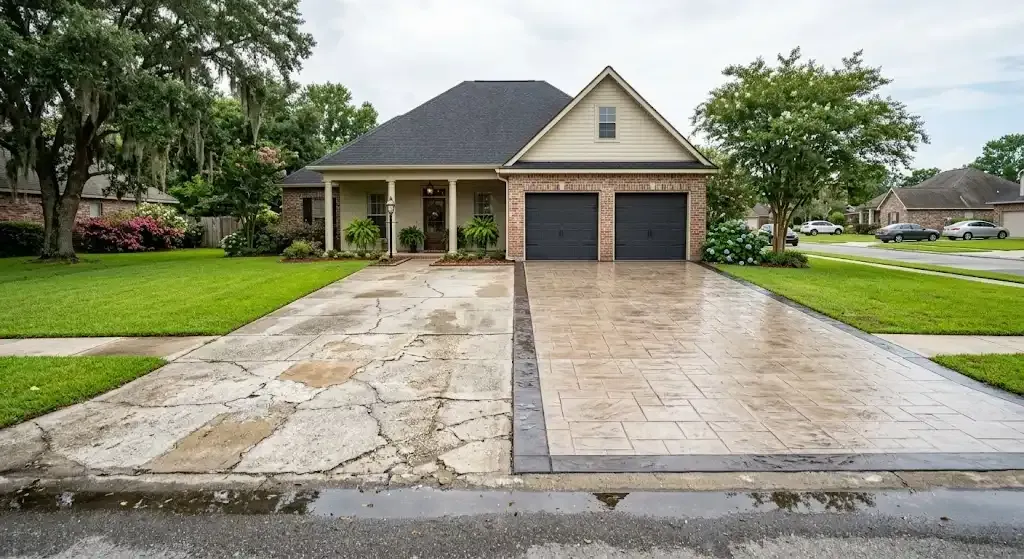
In practice, this means that the generic driveway specifications you might find in a national home improvement guide — four inches thick, wire mesh for reinforcement, standard residential mix — are often inadequate for Lafayette’s conditions. They may be fine in areas with stable, well-drained soil. In south Louisiana, where the ground moves, they produce driveways that crack sooner than homeowners expect and require repair or replacement before their time.
Thickness: What the Numbers Actually Mean
Concrete driveway thickness is measured in inches, and the standard residential recommendation of four inches is a starting point, not a universal answer. Four inches is adequate for a driveway that will carry only passenger vehicles, is built on stable, well-compacted subbase material, and is not subject to significant soil movement. In Lafayette, that combination of conditions is not always present, and when it is not, four inches is not enough.
Five inches is a more defensible specification for most Lafayette residential driveways, particularly on lots with known clay soil content or in neighborhoods that experience regular seasonal drainage issues. The additional inch adds meaningful load capacity and bending resistance — the ability to span minor voids that develop beneath the slab as soil shifts — without a proportional increase in cost. A five-inch slab uses roughly 25 percent more concrete than a four-inch slab, but that added thickness can significantly extend service life in challenging soil conditions.
For driveways that will regularly carry heavier loads — RVs, trailers, heavy pickup trucks, or frequent delivery vehicles — six inches is the more appropriate starting point. Heavier vehicles apply more load per axle, and that load stress concentrates at the surface of the slab and propagates downward. A thicker slab distributes that stress over a greater cross-section and is more resistant to the surface cracking and structural failure that heavy load cycles produce in undersized slabs.
Reinforcement: Rebar vs. Wire Mesh vs. Fiber
Concrete is strong in compression but weak in tension — it handles being squeezed well and handles being pulled apart much less well. Reinforcement is what provides tensile strength, and the type of reinforcement used in a driveway slab has a significant effect on how it performs when the soil beneath it moves, when heavy loads create bending stress, or when thermal expansion and contraction generate internal tension.
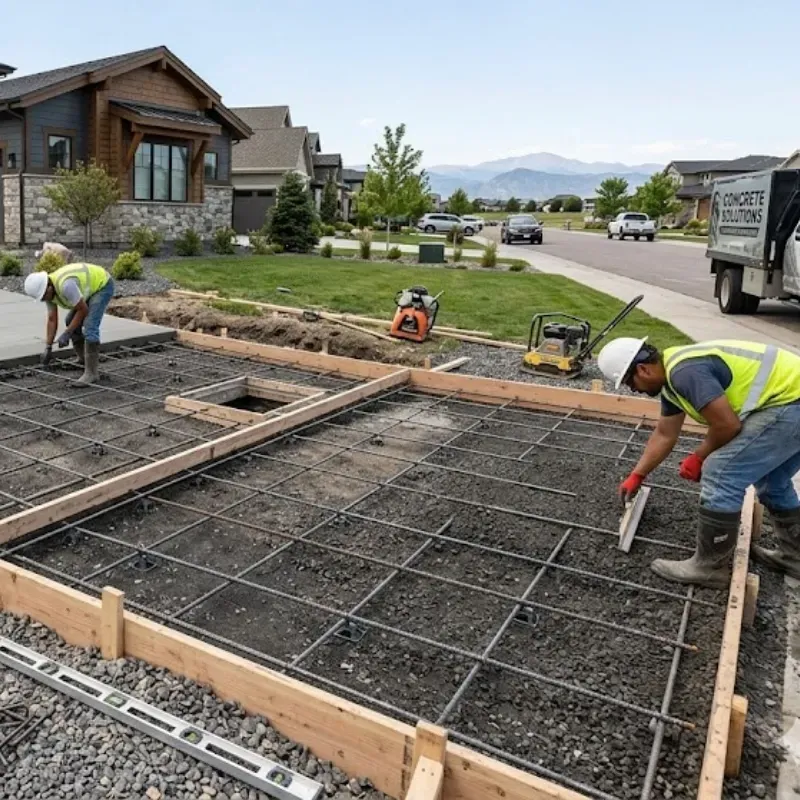
Wire mesh — the welded wire grid that has been the standard residential driveway reinforcement for decades — provides some tensile reinforcement when it is properly positioned in the middle third of the slab. The problem is that wire mesh frequently ends up resting on or near the bottom of the slab rather than in the center, either because it is not properly supported during the pour or because workers step on it and push it down. Wire mesh that sits at the bottom of a four-inch slab provides very little effective reinforcement for the portion of the slab that is in tension during bending.
Rebar — steel reinforcing bar placed on proper supports at the correct depth — is a more reliable and more effective reinforcement option for Lafayette driveways, particularly at five or six-inch thickness. Number three rebar on 18-inch centers provides substantially more tensile capacity than wire mesh and is less susceptible to the placement problems that reduce wire mesh’s effectiveness. At Lafayette Concrete Services, we specify rebar for driveways where soil conditions or anticipated loads justify it, and we use proper chair supports to ensure the reinforcement stays in the right position through the pour. The difference in cost is real but modest relative to the improvement in driveway performance over time.
Fiber reinforcement — synthetic or steel fibers mixed into the concrete itself — is a third option that is increasingly used in residential concrete work. Fibers do not replace structural rebar for heavily loaded applications, but they do provide crack control benefits by distributing tensile stress throughout the slab matrix rather than relying on discrete bars or mesh. Polypropylene fiber is commonly added to residential driveway mixes in Louisiana as a supplement to conventional reinforcement, helping to control the plastic shrinkage cracking that occurs during curing in hot, humid conditions.
Subbase Preparation: The Foundation Under the Foundation
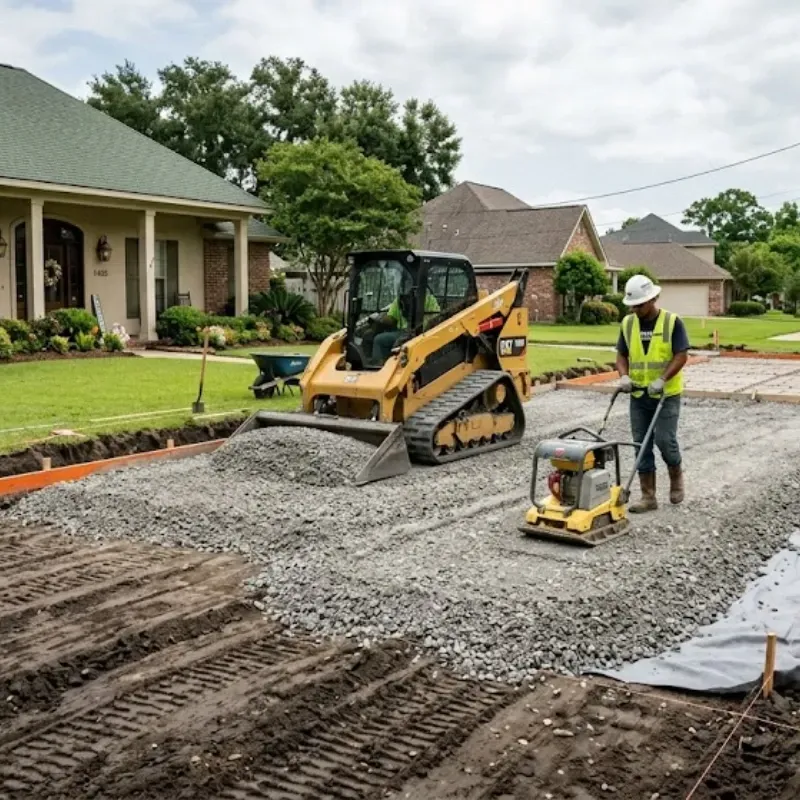
Thickness and reinforcement specifications are only as effective as the subbase they sit on. A well-reinforced five-inch slab on a poorly prepared subbase will crack faster than a four-inch slab on a properly prepared one, because the subbase is what determines how uniformly the slab is supported and how much it has to span when soil movement creates voids beneath it.
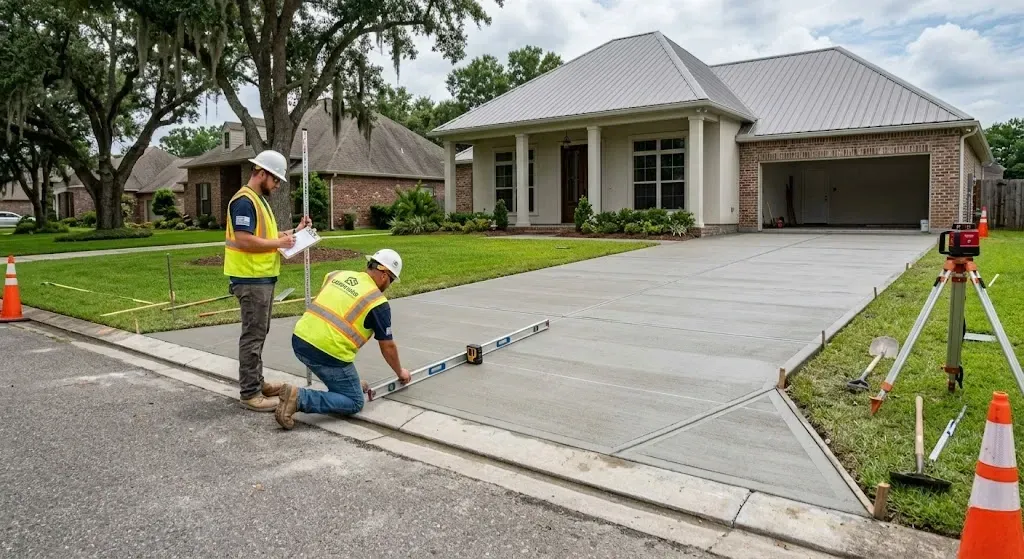
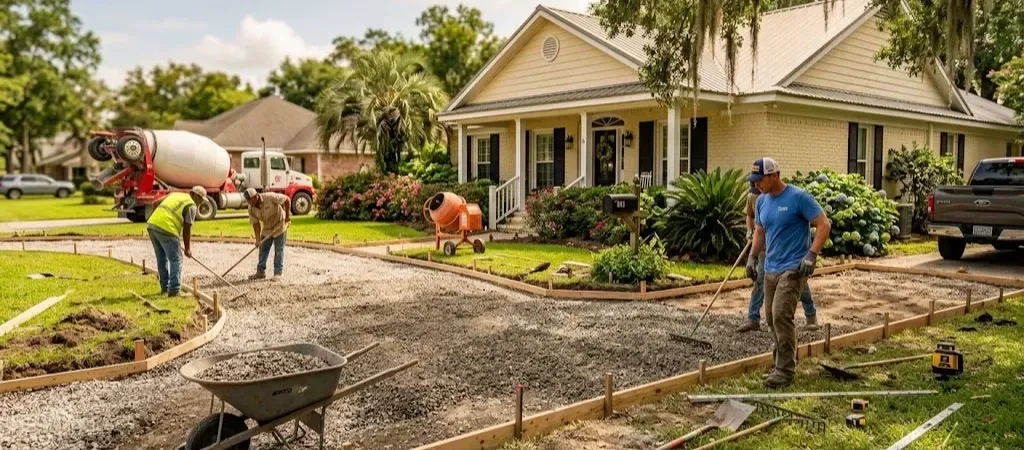
In Lafayette, proper subbase preparation for a residential driveway involves removing any existing vegetation, organic material, and soft spots, compacting the native soil, and placing a layer of crushed aggregate — typically four to six inches of compacted base course — over the prepared subgrade. The aggregate layer provides a stable, well-drained platform that reduces the direct contact between the concrete slab and the expansive clay that causes so much of the movement-related cracking seen in Lafayette driveways.
Moisture barriers are sometimes used beneath residential driveways in areas with high water table or significant upward moisture migration, particularly in slab-on-grade construction where vapor transmission from the soil can affect the curing process and contribute to long-term moisture-related deterioration. Whether a moisture barrier is warranted for a specific site depends on the site conditions and the drainage characteristics of the surrounding area.
Joints: The Part Nobody Talks About Enough
Control joints — the grooves cut or formed into the surface of a concrete slab at regular intervals — are one of the most important and most frequently underappreciated elements of a driveway design. Concrete shrinks as it cures and moves with temperature changes throughout its life. That movement has to go somewhere, and if the slab does not have planned weak points where cracking can occur in a controlled way, it will crack randomly in ways that are both structurally and cosmetically worse than a well-placed joint.
The standard spacing recommendation for residential driveway control joints is roughly ten feet in each direction — creating approximately square panels. In practice, many driveways in Lafayette are built with joints spaced too far apart, producing large panels that are more susceptible to random cracking. Joint depth matters too: a control joint should be cut or formed to at least one quarter of the slab thickness to create an effective weak plane that directs cracking where you want it rather than where the concrete decides on its own.
For homeowners who are also considering other concrete work on their property alongside a driveway project, combining projects with the same contractor typically reduces both cost and disruption. Our concrete patio services in Lafayette are frequently paired with driveway projects for exactly that reason, and the joint and drainage design for both can be coordinated from the start rather than worked around after the fact.
Questions to Ask Before the Pour
A few questions worth getting clear answers to before any concrete driveway project begins in Lafayette. What thickness is being specified, and why? What type of reinforcement is being used, and how will it be supported during the pour? What does the subbase preparation involve? What is the concrete mix design, and what compressive strength is specified? Where will control joints be placed, and how will they be formed or cut?
These are not trick questions, and a contractor who has done residential concrete work in Lafayette should be able to answer all of them confidently and specifically. Vague answers — “we’ll use standard mix” or “just the normal thickness” — are a signal that the project has not been thought through at the level of detail that determines whether a driveway holds up in this environment. The specifics matter, and they should be discussed before work begins rather than assumed after the fact.
If you are also weighing whether your existing driveway is worth repairing or if replacement makes more sense, reviewing driveway repair vs replacement in Lafayette can help clarify the better long-term option based on slab condition and soil movement.