Popular Stamped Concrete Patterns for Lafayette Homes
Summary
Ashlar slate, brick, cobblestone, irregular stone, wood plank, and seamless textures give Lafayette homeowners different ways to shape an outdoor space. The best choice depends on pattern scale, surrounding materials, furniture placement, and the finished surface. Compare actual samples and a layout drawing before approving the design.
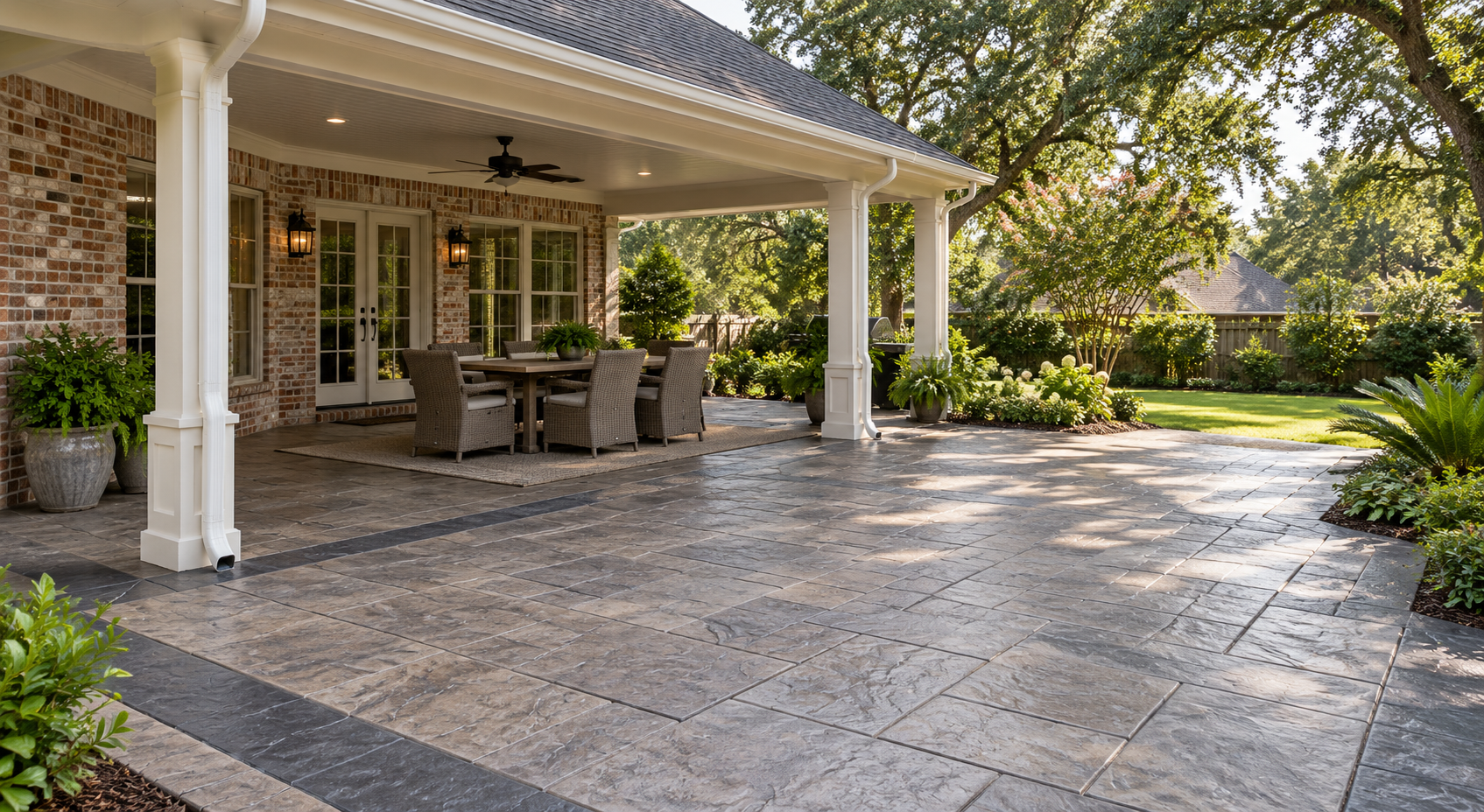
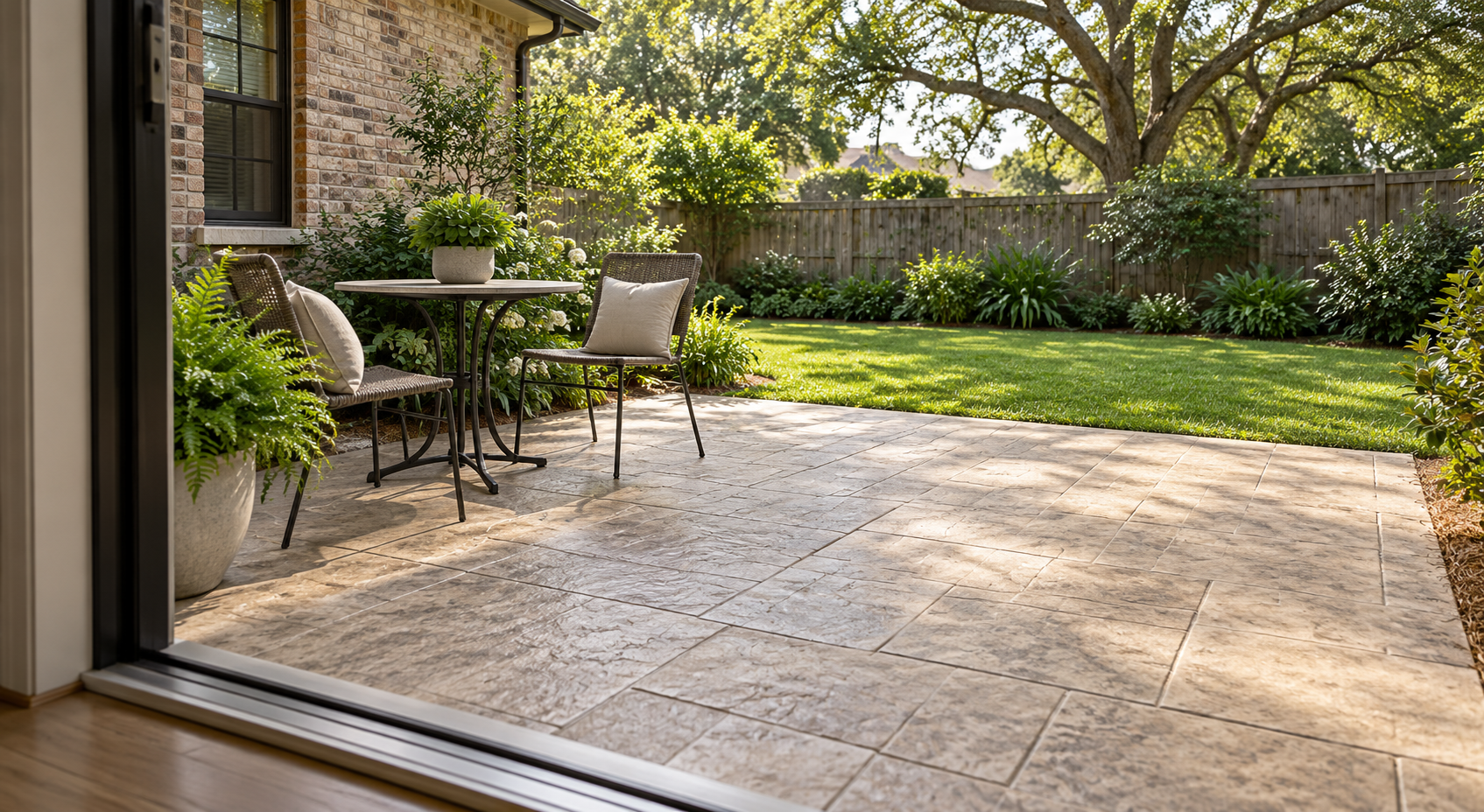
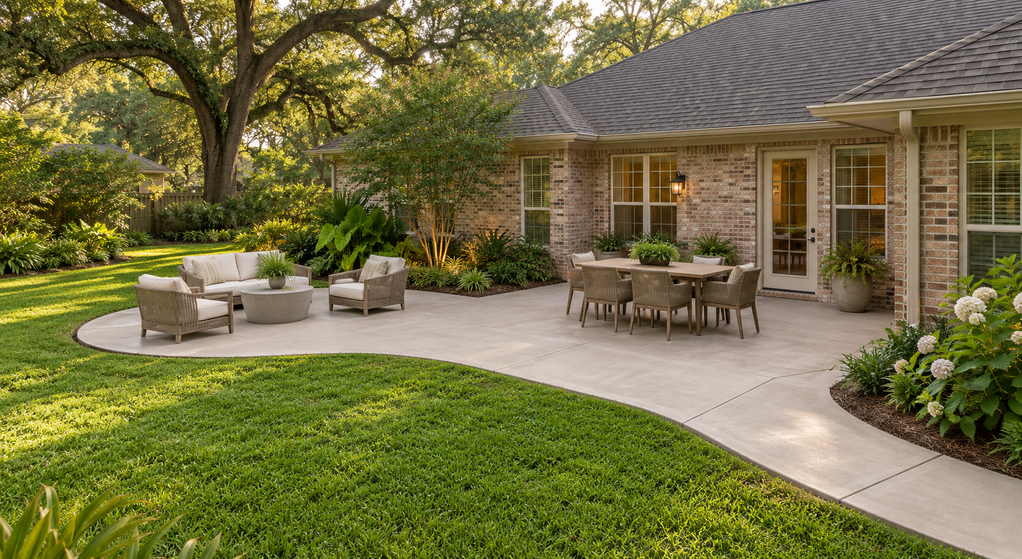
A stamp that looks convincing in a close-up photograph can feel completely different across a backyard patio. Small cobblestones introduce many lines, broad slate shapes create a larger visual rhythm, and wood planks draw the eye in one direction. The full patio—not the close-up—has to carry the design.
When comparing stamped concrete installation and finishing in Lafayette, separate three decisions: the pattern, the color combination, and the surface texture. Similar colors can make two patterns look related, but their proportions and feel underfoot may differ substantially.
T&T Lafayette Concrete Contractors offers stamped concrete for residential applications, including patios and walkways. Before selecting a design, confirm which stamp sets are available and request examples of the specific pattern under consideration. These are established pattern families, not a claim about what Lafayette homeowners buy most.
Compare the Pattern Families by Their Visual Effect
Ashlar slate: a structured stone appearance
Ashlar patterns combine rectangular and square stone shapes in an organized arrangement. They offer a useful starting point when you want more variation than a square grid without the irregular outline of fieldstone.
Compare the actual dimensions of the simulated stones. On a narrow walkway, a large pattern may leave only fragments visible between the edges. On a broad patio, those same units may be easier to appreciate. Ask to see several repeats together, especially where the layout meets steps or a border.
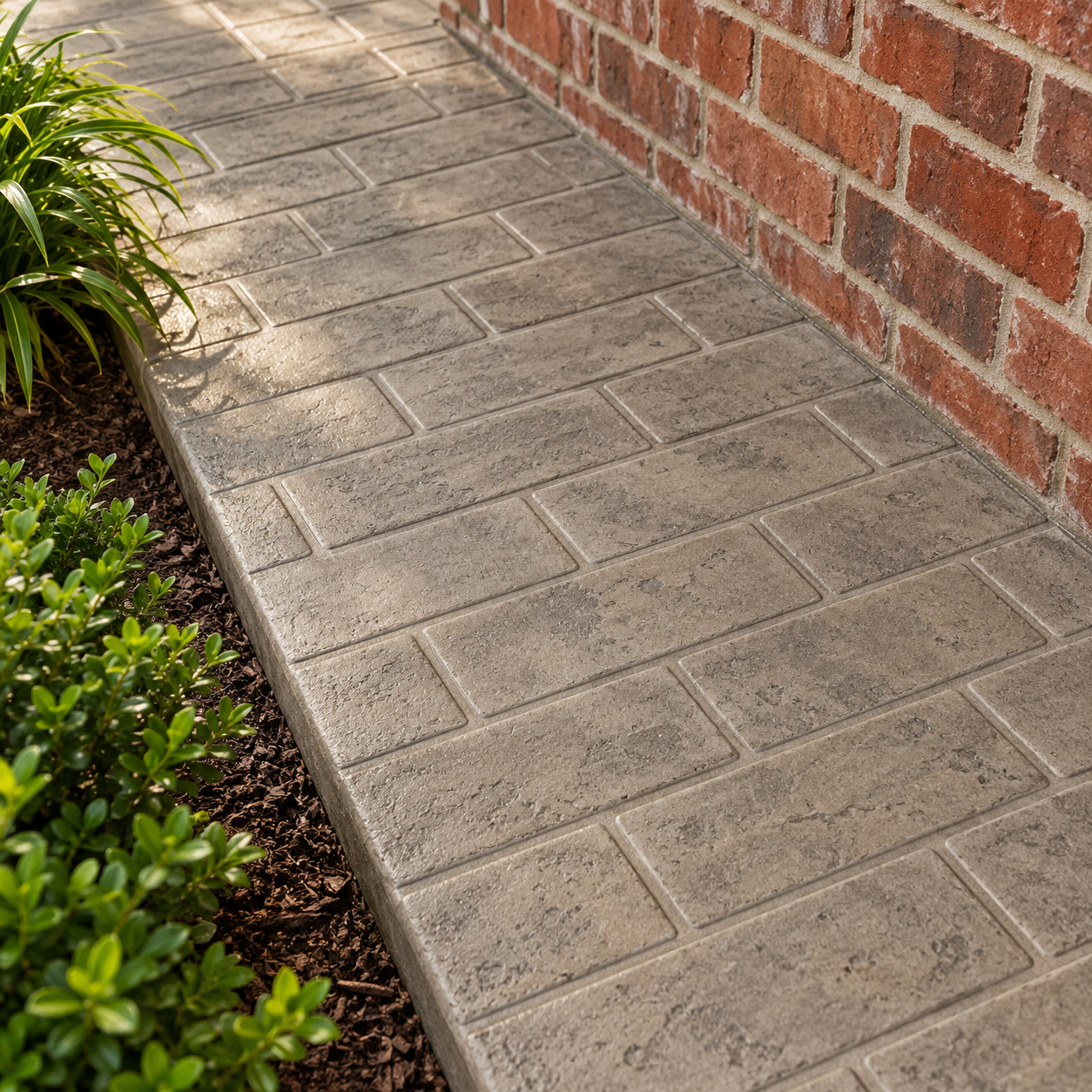
Brick: familiar proportions and clear direction
Brick patterns suit homeowners who want repeated, orderly shapes. Running bond creates offset rows, while herringbone introduces a more directional, interlocking visual effect.
For a Lafayette house with brick walls or columns, place the proposed concrete sample beside the existing masonry. A near-match in red or brown may look less intentional than a complementary neutral. Also consider whether a full brick-pattern surface competes with the facade; using it only as a border is another design option.
Cobblestone: smaller units and stronger detail
Cobblestone patterns create a closely repeated stone appearance. They can give a garden path or entry court a distinct character, particularly where the surface itself is meant to attract attention.
Examine the exact stamp rather than relying on the name. Compare the depth of its impressions and the shape of its upper surfaces. For a dining area, ask to test a chair on a representative sample instead of judging suitability from a photograph.
Irregular stone: a less geometric layout
Flagstone and random-stone patterns use uneven outlines to create a looser composition. Consider them where curved planting beds or informal landscaping guide the design.
Look closely at the perimeter. Ask how the installer would finish narrow leftover shapes beside the house, steps, or curved edges. A border can provide a deliberate stopping point, but it also adds another element to the design and quote.
Wood plank: a pronounced linear pattern
Wood stamps reproduce boards and grain. Their direction deserves particular attention: compare a sketch with planks running parallel to the house against one with them extending toward the yard.
Check several repeats for conspicuous recurring knots or grain details. Remember that the resemblance is visual; the finished surface remains concrete, so a wood appearance does not establish barefoot comfort or temperature.
Seamless texture: fewer decorative dividing lines
Seamless stone or slate textures provide surface character without outlining individual bricks or stones. This can be worth considering when furniture, landscaping, or the house already supplies plenty of detail.
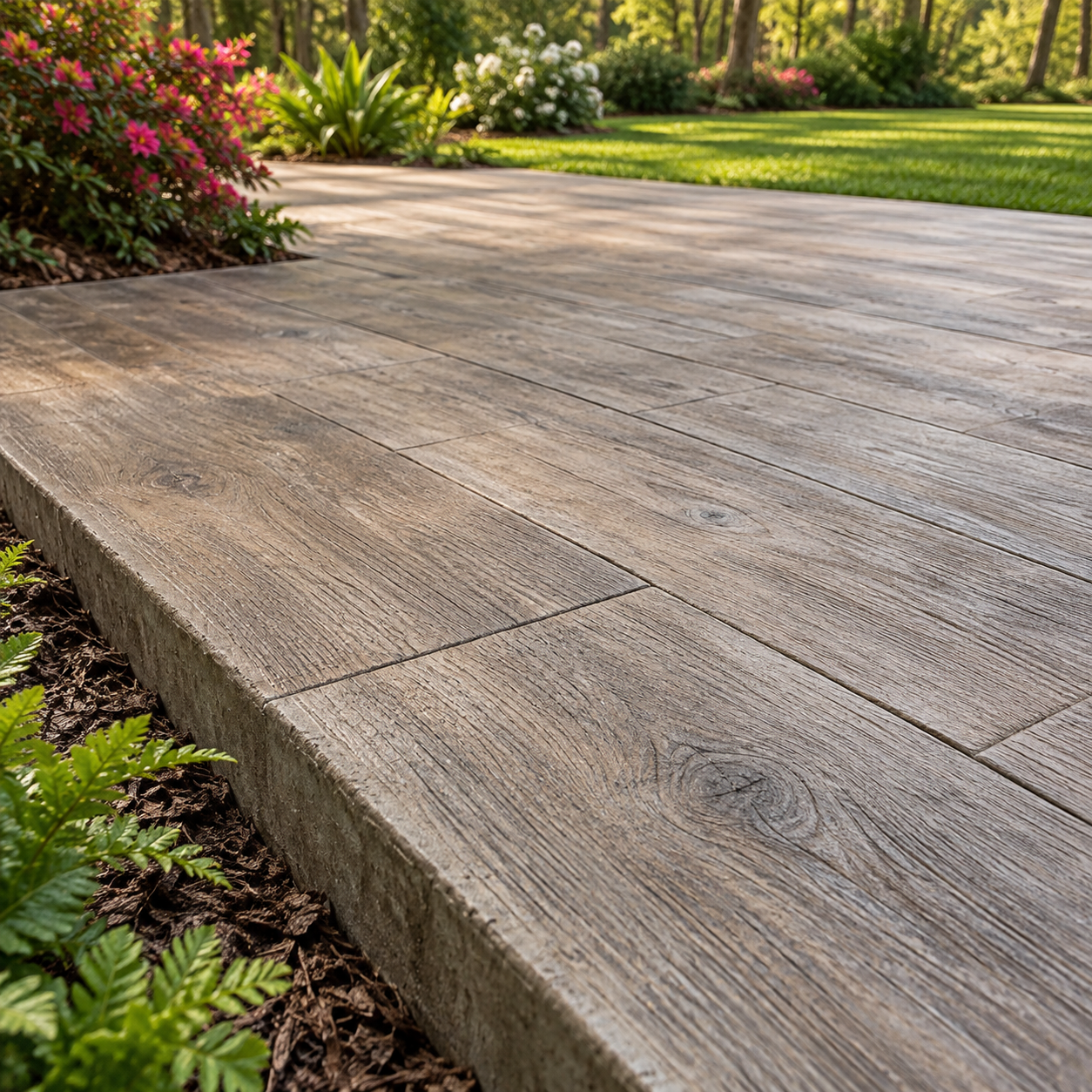
“Seamless” describes the decorative effect, not a promise of joint-free concrete. Request a drawing showing the actual slab joints so their appearance is part of the selection.
Fit the Pattern to the Space You Will Actually Use
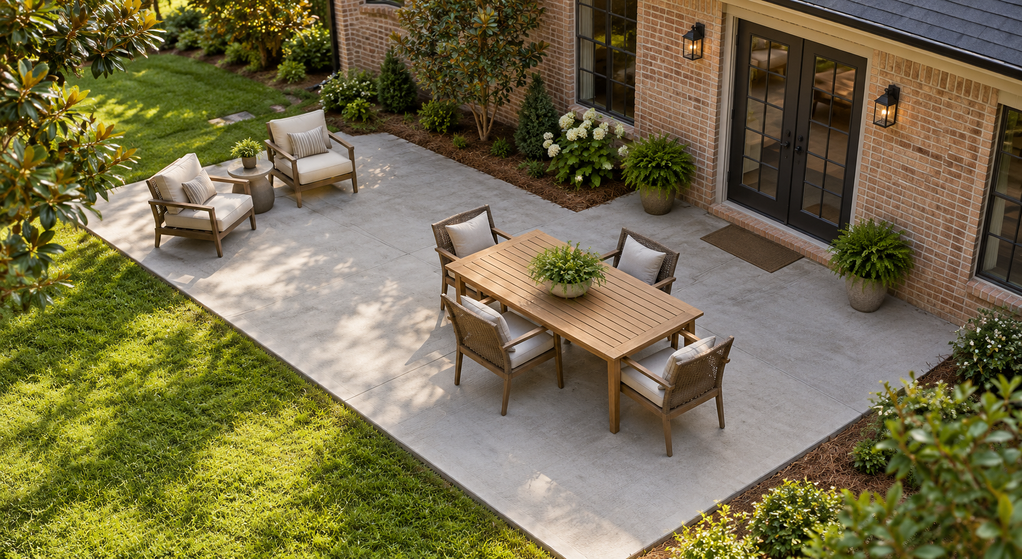
Before settling on scale, mark the proposed slab outline and furniture positions. A central medallion may disappear beneath a table, while a wide contrasting border may dominate a small seating area. View the design from the back door as well as from the yard.
The guide to How to Size a Lafayette Concrete Patio for Furniture and Comfortable Circulation helps establish the usable footprint before decorative details are finalized. Once that footprint works, place the pattern within it rather than changing practical dimensions simply to reproduce an inspiration photo.
Judge Color, Sealer, and Wet-Weather Use Together
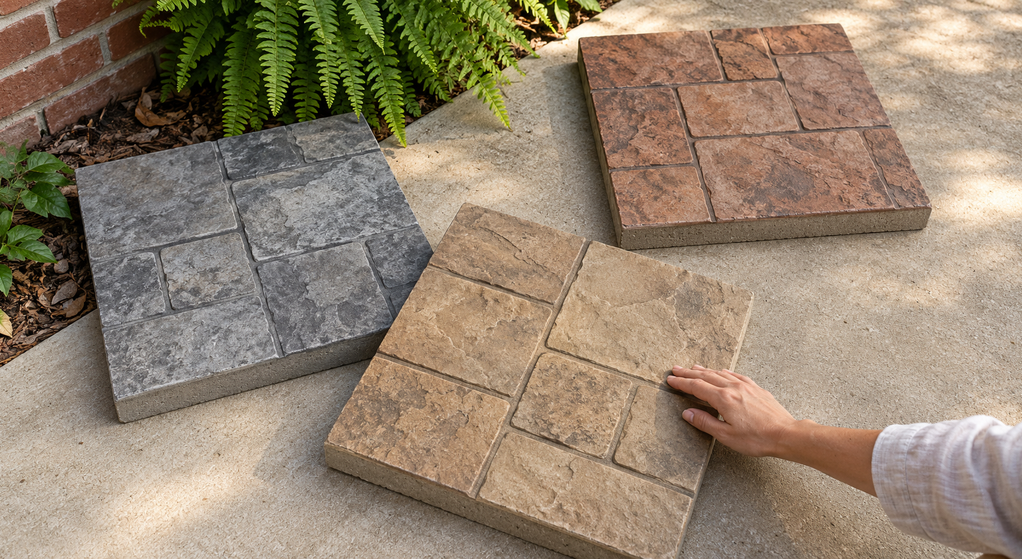
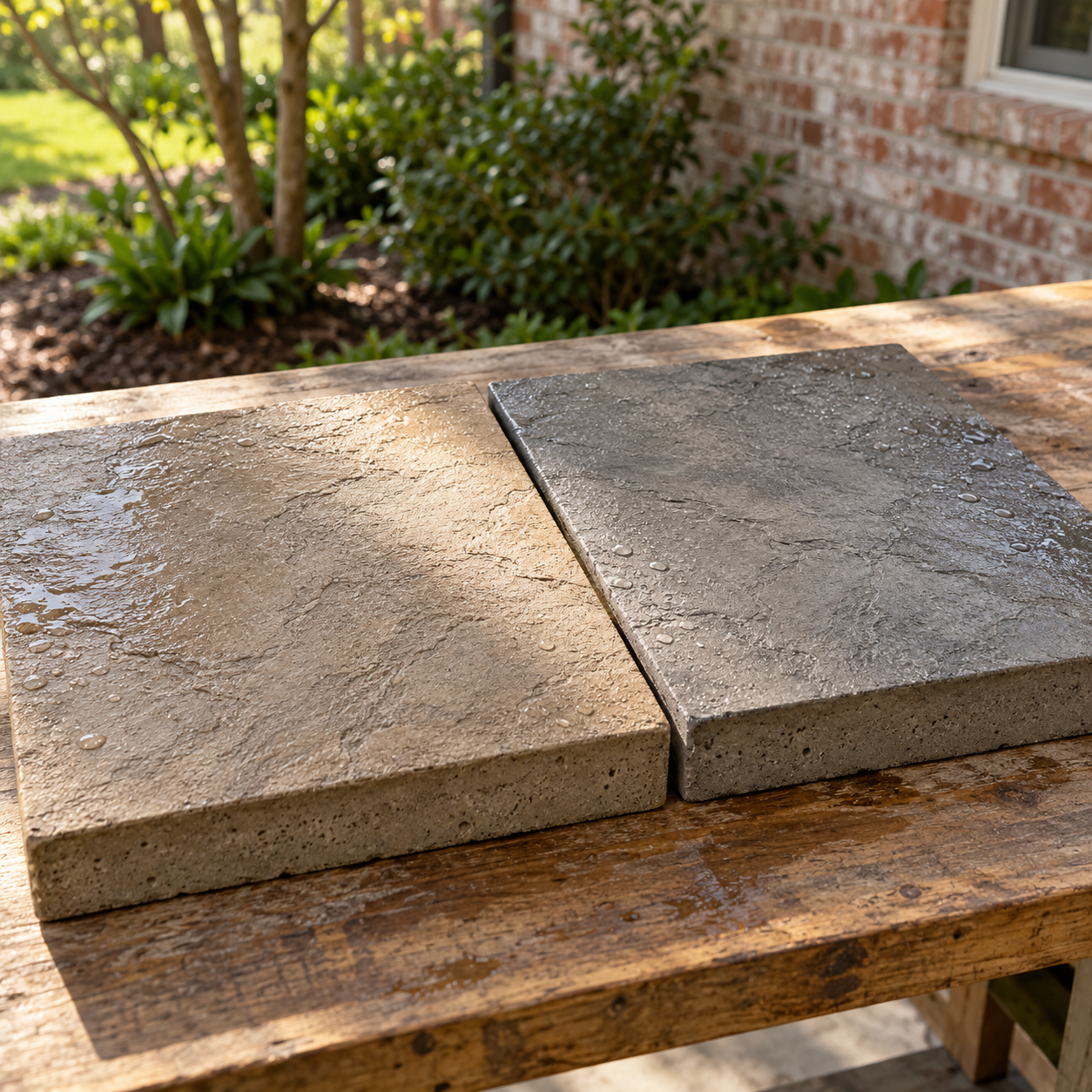
Pattern alone does not determine the result. The base color, darker accents, and final sealer all affect what the stamp looks like at full scale. A finished sample matters more than choosing those components separately.
Request a sample with the proposed finish, then view it beside the house in sun and shade. Identify what you like specifically: the stone shapes, muted contrast, grain, or sheen. This prevents an attractive color treatment from being mistaken for a preference for the underlying stamp.
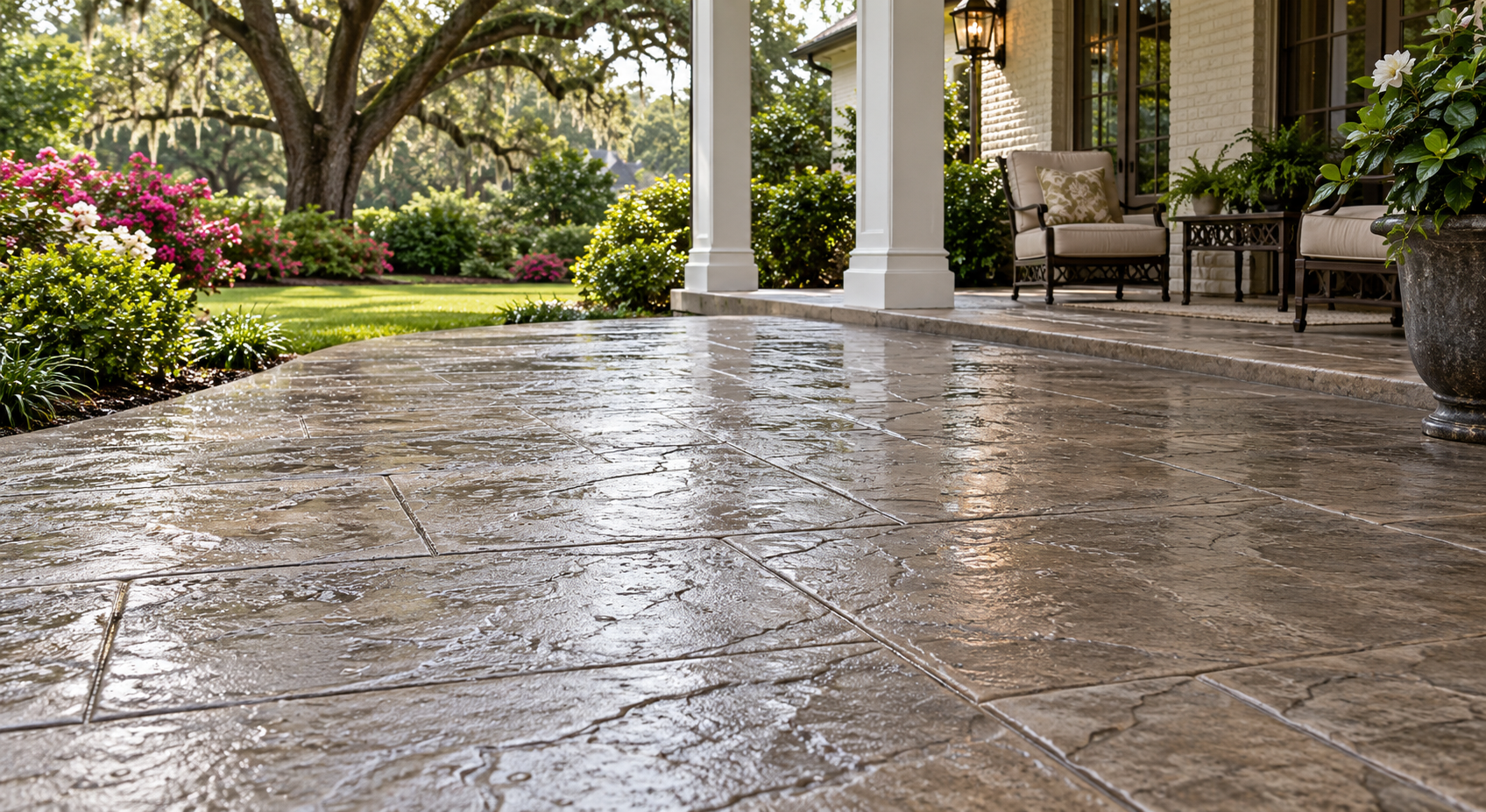
For an exposed Lafayette patio, include rain and wet shoes in the
discussion. Ask how the selected texture and sealer suit the intended use, particularly near steps or a pool. Deep decorative impressions alone are not proof of suitable traction. The guide to How to Prevent Slippery Stamped Concrete Around Lafayette Homes expands on surface condition, sealer choices, and upkeep.
For the full relationship between stamp texture, base pigment, accent coloring, and sealer, Brickform’s complete stamped concrete system guide explains how those layers shape the finished effect. Treat its manufacturer recommendations as context for the actual products specified.
Turn the Shortlist Into a Clear Specification
Narrow the choice to two patterns. For each, request the stamp name, unit dimensions, layout direction, border treatment, color combination, sealer, and joint layout. Have the quote identify those selections and explain maintenance expectations.
Choose the one that still looks right at full scale, beside the house and around the furniture you actually use. A convincing sample and a clear layout are more useful than a dramatic photograph of someone else’s property.

Written By:
Kurt Manalastas
Home & Property Research Journalist
Kurt is a Home & Property Research Journalist who researches and writes educational content on home services, property improvement, and residential decision-making. He focuses on translating real-world contractor experience, industry standards, and verified research into clear, practical guidance that helps homeowners understand their options and make informed decisions.