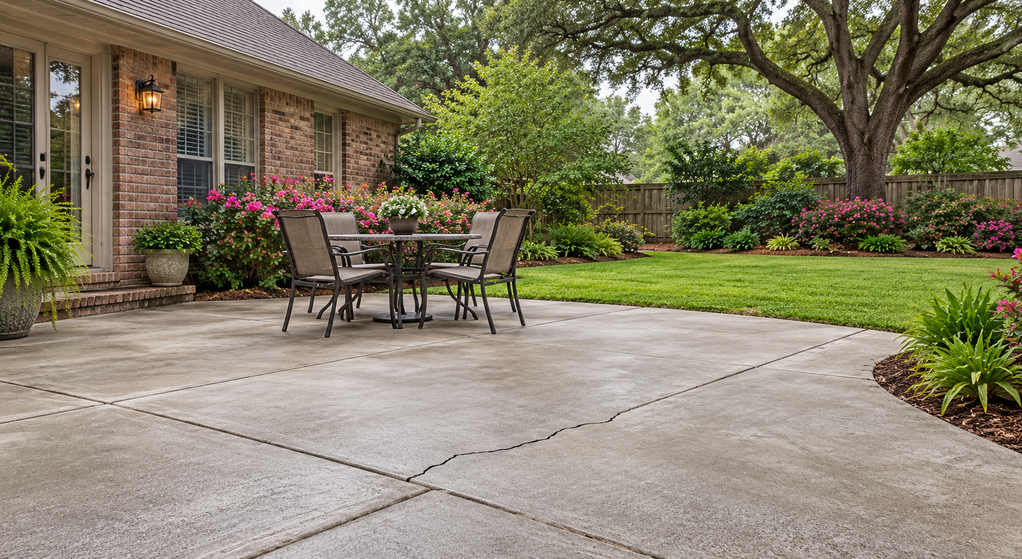
What Causes Concrete Patios in Lafayette to Sink or Shift?
Summary
Concrete patios can sink, heave, or tilt when support beneath the slab changes. In Lafayette, useful diagnosis starts by identifying the direction of movement, then checking compaction, runoff, moisture-sensitive soil, roots, and added loads. Repair should target the cause rather than only leveling or filling the visible damage.
First Identify the Direction of Movement
A patio that is no longer level may have settled downward, heaved upward, tilted because support changed unevenly, or experienced more than one of these conditions. The direction matters because the same visible step can come from one panel dropping or the neighboring panel rising.
An assessment of concrete patio installation and repair services in Lafayette should therefore begin with the slab’s current position, drainage, and support rather than with a preferred repair method. T&T Lafayette Concrete Contractors provides residential patio work in Lafayette; the repair decision still needs to be tied to conditions at the specific property.
- Settlement: a panel drops relative to adjacent concrete, steps, or the house.
- Heave: a portion rises, sometimes creating a ridge or reverse drainage slope.
- Tilt: one edge changes more than another, redirecting water or creating a trip point.
- Cracking without displacement: the slab may have cracked while remaining generally supported and level.
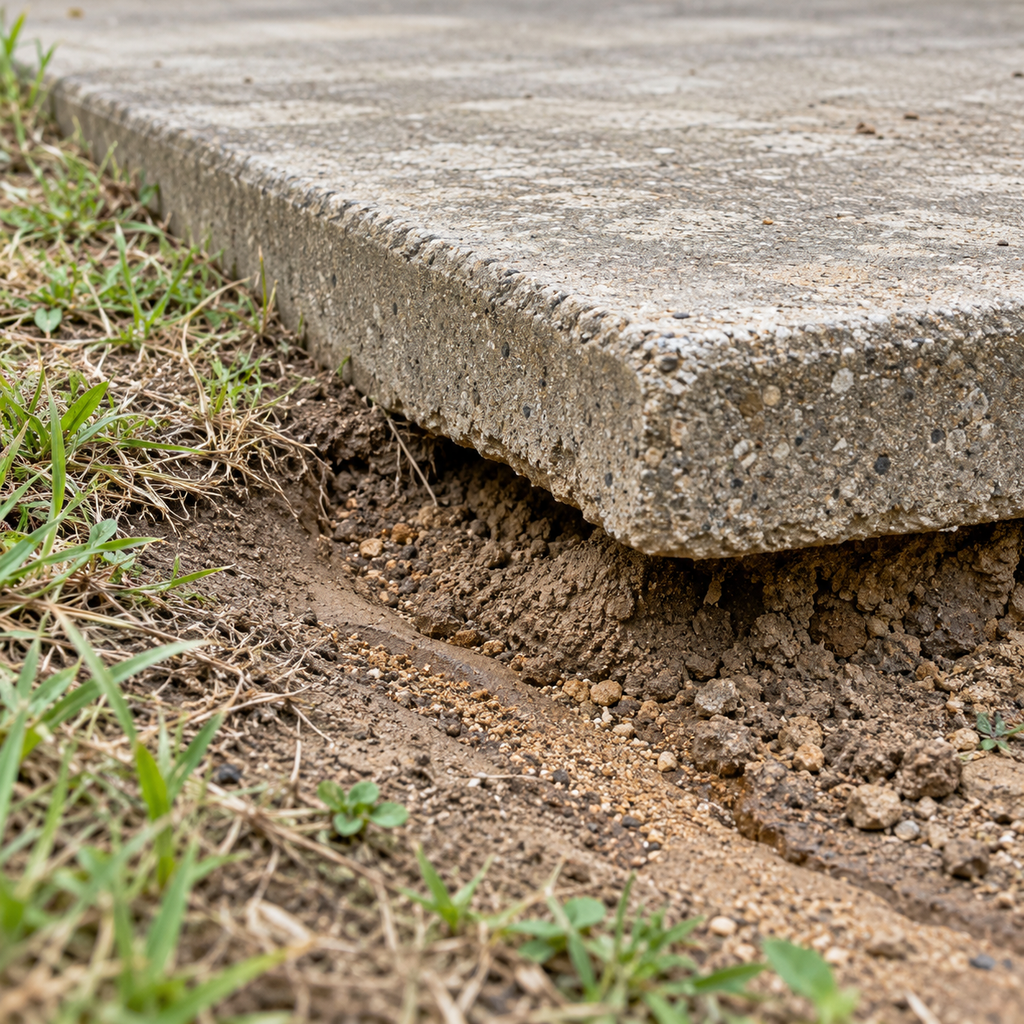
Loss of Support Can Pull a Panel Down
Loose or poorly compacted fill can compress after construction. Previously disturbed areas, including backfilled trenches or added fill used to raise grade, deserve attention because their support history may differ from undisturbed ground.
Water can also remove fine material where runoff has a path along or beneath the slab. Look for exposed voids at accessible edges, displaced sediment, erosion channels, or a panel that rocks under ordinary foot traffic.
The inventory guide How to Prevent Concrete Patio Problems on Lafayette Properties provides the prevention side of these same issues, including drainage, base preparation, joints, curing, and maintenance. This article is focused on diagnosing movement that has already occurred.
Runoff Can Be a Cause or a Consequence
A downspout, irrigation leak, or concentrated yard runoff can change support conditions. But standing water on the patio does not prove water caused the original movement. A panel that settles can create a new low spot that begins collecting water afterward.
Observe the property during rainfall when it is safe to do so. Record where water arrives, where it leaves, and whether the wettest area lines up with the movement. An unexplained wet area during otherwise dry weather can justify checking irrigation or plumbing instead of assuming ordinary rainfall is responsible.
Moisture-Sensitive Soil Can Move in Both Directions
Where clay-rich soil with shrink-swell potential is present, drying can reduce volume and wetting can increase it. The local page How Soil and Weather Impact Your Concrete Foundation offers broader context on ground support and moisture, but a patio should not be assumed to behave exactly like a house foundation.
The U.S. Geological Survey explanation of swelling clays describes reversible expansion and contraction as moisture conditions change. That supports considering soil behavior as one possible mechanism, not assuming that every Lafayette patio movement problem is expansive clay.
Uneven moisture matters more than a citywide label. One side of a
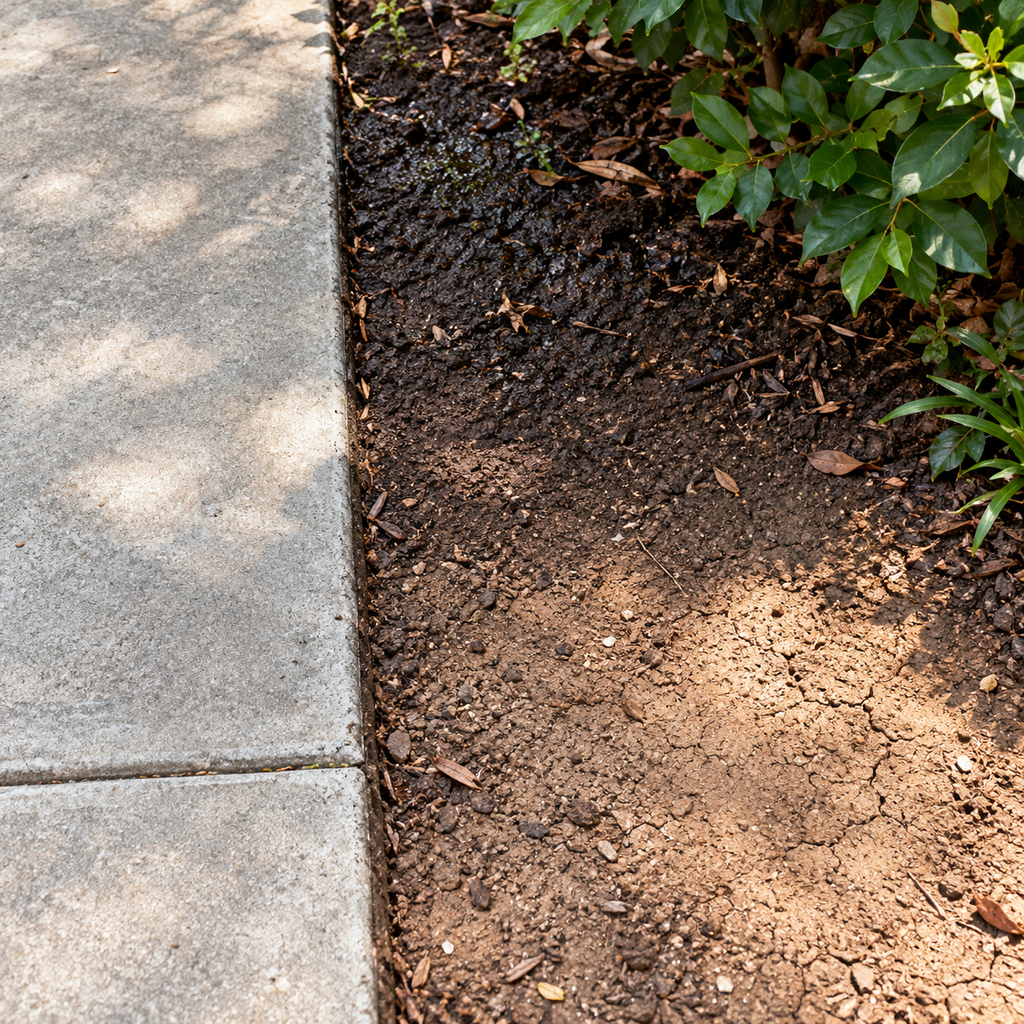
patio may receive roof runoff or irrigation while another remains comparatively dry. Soil type, depth, compaction, and drainage still need property-specific evaluation.
Roots, Excavation, and New Loads Can Create Local Changes
Roots can lift paving where they grow beneath a slab, while tree removal or major root work can change nearby soil and moisture conditions. Do not cut substantial roots simply because a patio is uneven; confirm the mechanism and obtain appropriate tree advice first.
Also document recent excavation, utility work, new planters, masonry kitchens, hot tubs, roof posts, or other additions. A load concentrated over weak support can contribute to movement, and a trench beside the slab can create a different support condition from the rest of the yard.
Build an Evidence File Before Choosing the Repair
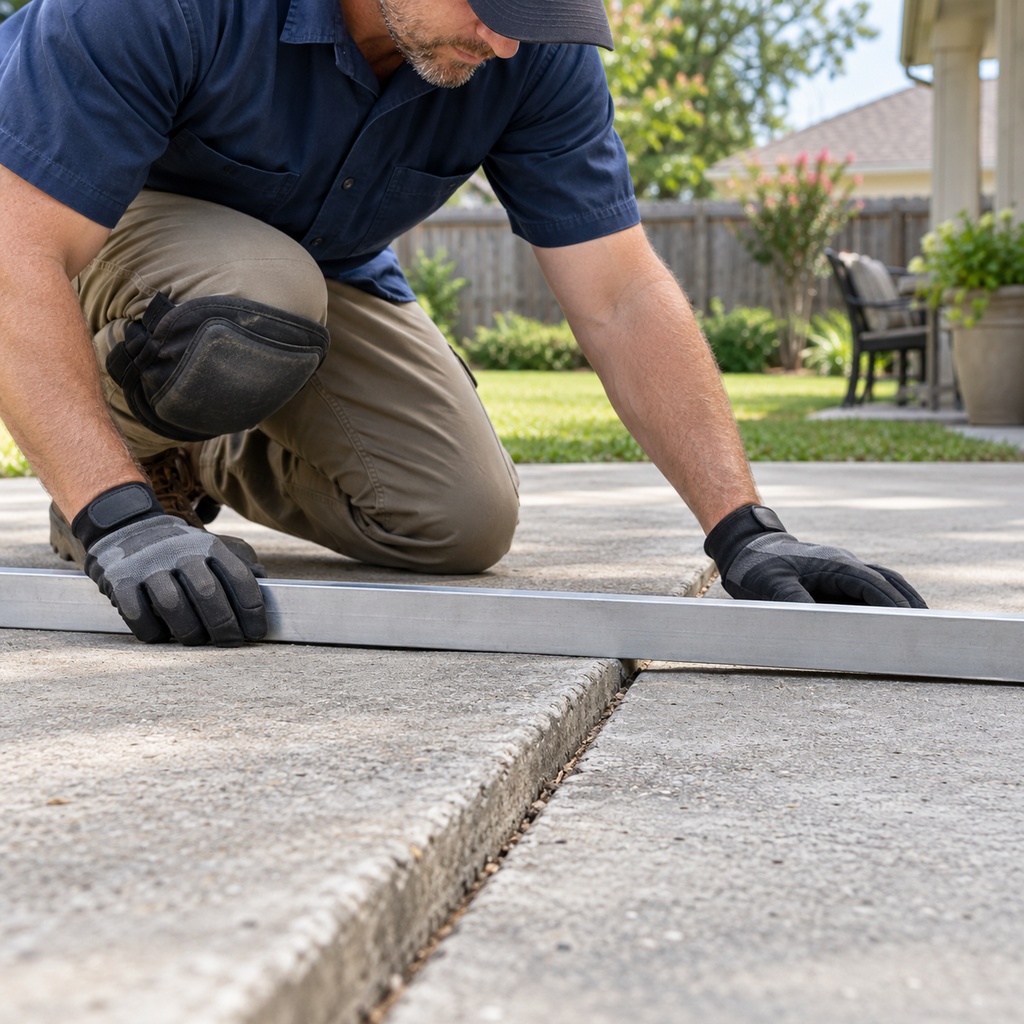
Photograph the same locations with a ruler or other scale and record dates. Note whether movement follows heavy rain, prolonged dry weather, irrigation changes, tree work, or excavation. Measure height differences at joints or cracks if it can be done safely.
Ask whether the slab settled, heaved, tilted, or experienced a combination.
- Ask what evidence supports the suspected cause and what remains uncertain.
- Ask whether drainage, support, or load conditions must change before surface repair.
- Ask what would make lifting, localized replacement, or full replacement unsuitable.
Crack filler and resurfacing can improve the surface, but neither restores missing support or corrects active ground movement. The durable repair is the one that matches the direction and cause of the movement rather than only the visible symptom.

Written By:
Kurt Manalastas
Home & Property Research Journalist
Kurt is a Home & Property Research Journalist who researches and writes educational content on home services, property improvement, and residential decision-making. He focuses on translating real-world contractor experience, industry standards, and verified research into clear, practical guidance that helps homeowners understand their options and make informed decisions.