How to Prevent Slippery Stamped Concrete Around Lafayette Homes
Summary
Reducing slipperiness on stamped concrete starts with identifying whether the problem comes from surface buildup, the sealer, or lingering water. Around Lafayette homes, practical prevention combines routine cleaning, suitable surface texture, compatible traction additives, and effective drainage. Resealing alone may leave the underlying problem unresolved.
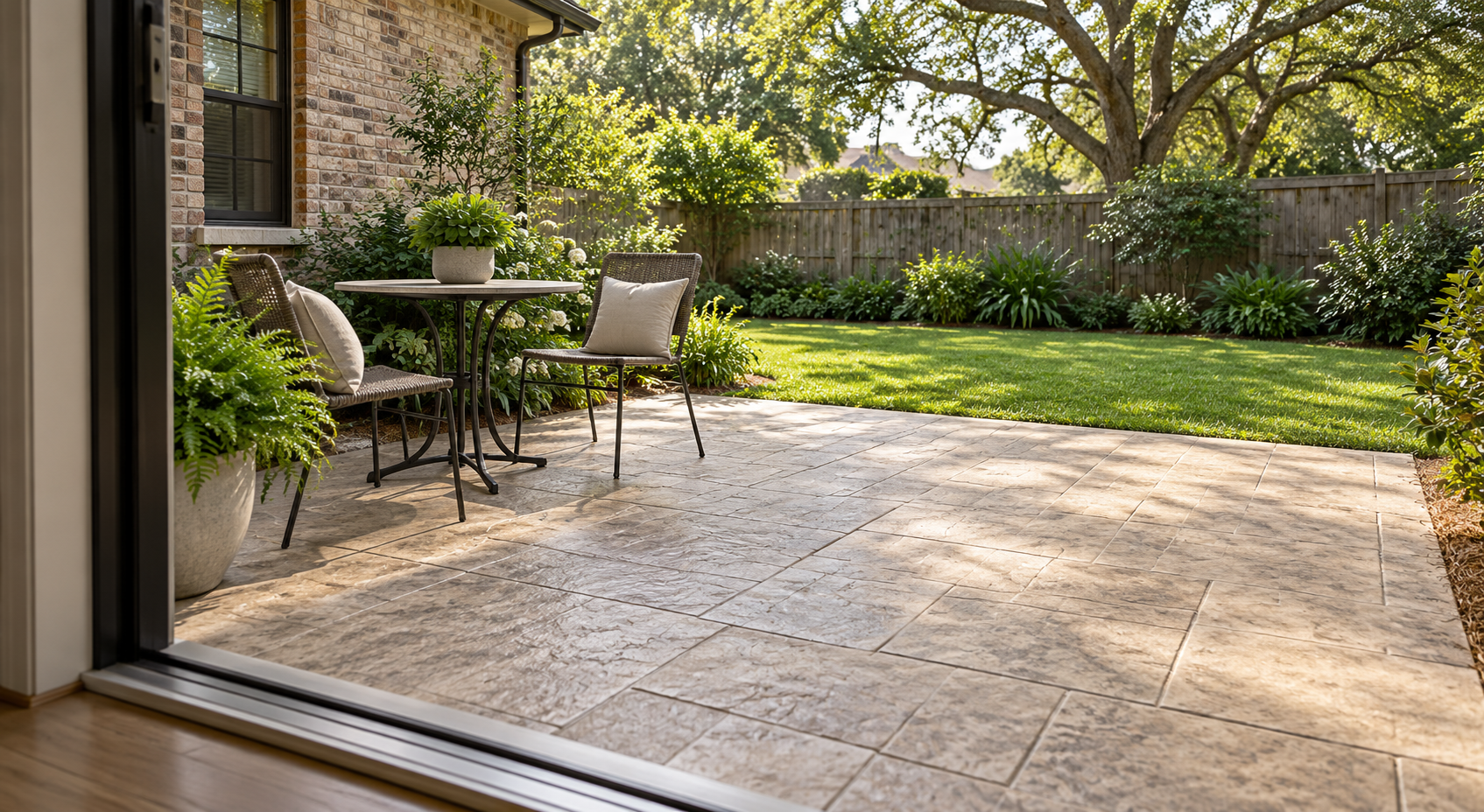
Stamped concrete can look textured while still feeling slick after rain. The pattern creates the appearance of stone or brick, but walking traction also depends on the exposed surface, its coating, and what collects on it.
Stamped concrete installation and resealing services in Lafayette cover decisions that affect both appearance and everyday use.
T&T Lafayette Concrete Contractors provides stamped concrete for residential applications, along with repairs and resealing. Before choosing a treatment, establish whether your patio, walkway, or entry needs cleaning, coating correction, or changes to how water drains.
Identify When and Where the Surface Becomes Slick
Start with the history of the problem. A walkway that became slippery immediately after resealing raises different questions from a shaded patio that gradually developed a green film.
Look for patterns without deliberately sliding your foot across a wet surface.
- Slickness following resealing can indicate a coating or application issue.
- Green or dark buildup in damp areas may indicate biological growth.
- Slipperiness near a grill may involve grease or food residue.
- Persistent puddles point toward drainage or elevation problems.
- Trouble concentrated on steps or sloped sections deserves prompt attention because a loss of footing has greater consequences there.
Photograph affected areas and note recent cleaning or coating work. Keep people away from a known slippery section until it can be addressed. Surface appearance alone cannot establish that an area is safe.
Remove Buildup Before Adding Another Coating
Leaves, soil, grease, and cleaning residue can interfere with traction. In Lafayette’s humid conditions, pay particular attention to shaded areas that remain damp, including spaces beside dense landscaping and beneath outdoor furnishings.
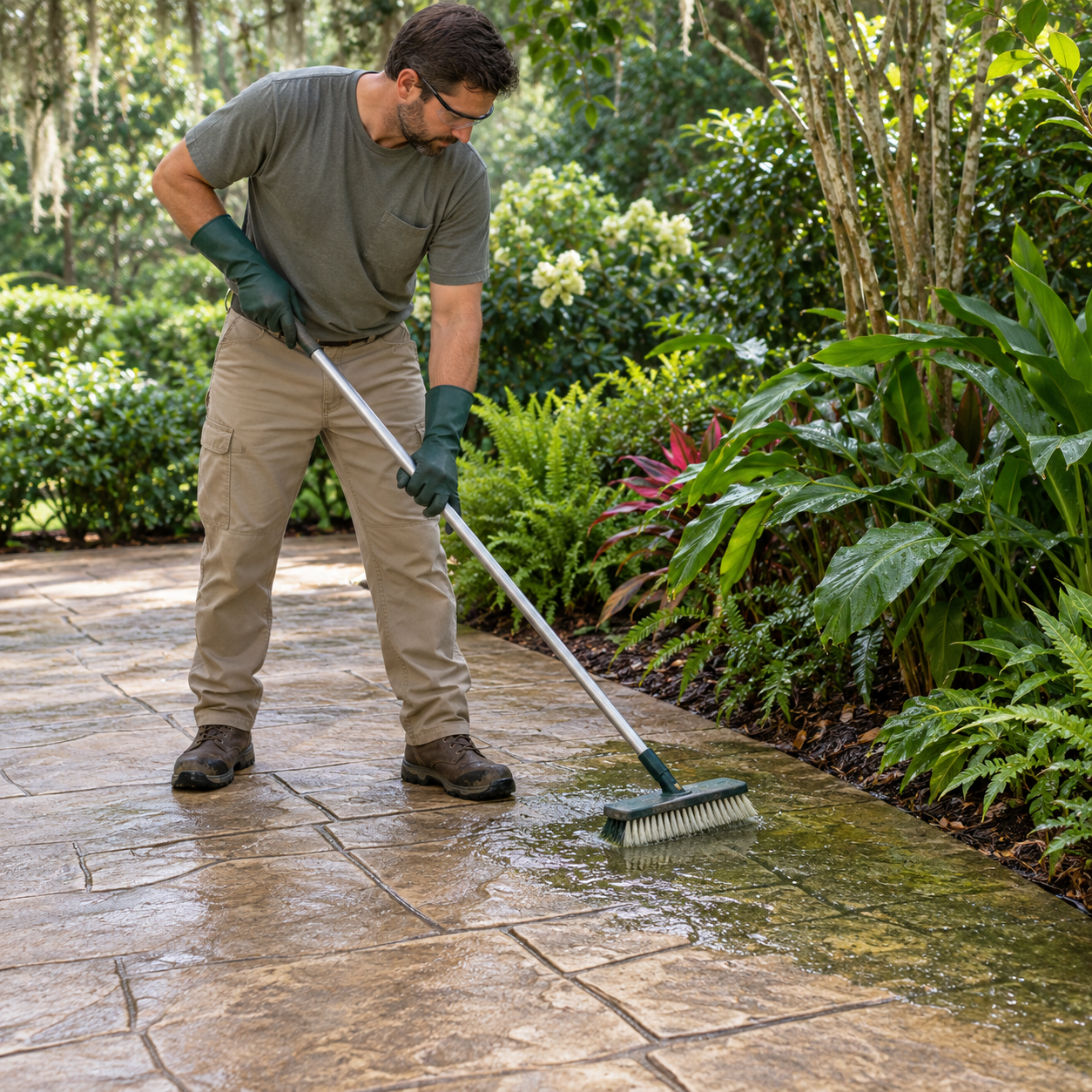
Sweep debris first. Then use a cleaner approved for the existing sealer and follow its dilution, contact-time, and rinsing instructions. Work on a small, inconspicuous area before treating the entire slab.
Avoid improvising with strong acids or aggressive pressure washing. These can damage decorative color or coatings, depending on the surface and method. If you cannot identify the existing sealer, obtain guidance before choosing a cleaner.
After cleaning, allow the surface to dry and have any remaining traction concern evaluated. A cleaner-looking patio may still need coating changes. Conversely, applying more sealer over contamination can create additional problems without addressing the original cause.
Evaluate the Finished Surface, Not Just the Stamp Pattern
Deep decorative joints do not necessarily provide useful texture across the raised areas where shoes make contact. For new concrete, discuss the texture of those walking surfaces as carefully as the pattern.
Ask to see a cured sample with the proposed sealer already applied. An unsealed sample does not represent the final coating system. Discuss wet-use suitability, especially for pool approaches, entryways, and frequently used paths.
More pronounced texture also has tradeoffs. It may hold dirt or feel uncomfortable under bare feet, while uneven relief can complicate furniture placement. The goal is a usable surface suited to its location.
A comparison of broom, stamped, and decorative concrete patio finishes in Lafayette helps explain these finish choices when planning a new patio or replacing an unsuitable section.
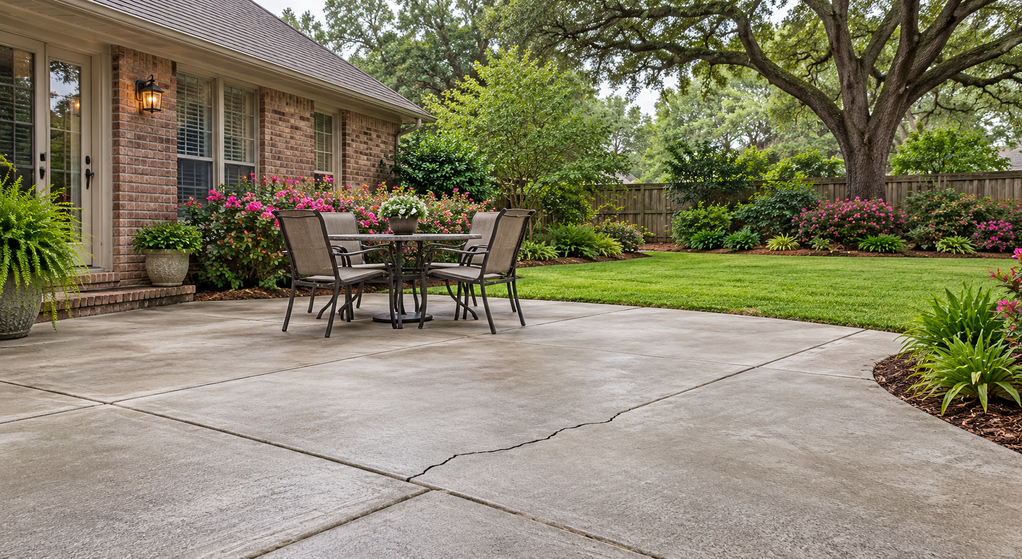
Because recurring ponding and slab condition can create traction problems regardless of the sealer, the guide to preventing concrete patio problems on Lafayette properties provides broader context on drainage, settlement, joints, and long-term surface performance.
Choose a Compatible Sealer and Traction Additive
Do not assume that a low-gloss label establishes wet slip resistance. Ask about the complete system, including the existing coating, proposed sealer, traction additive, and application rate.
Some sealers accept manufacturer-approved additives designed to improve grip. For example, Dulux Avista’s guidance for its exterior concrete sealer specifies a compatible slip-reducing additive for improved slip resistance, particularly in wet areas. That guidance applies to its product system; it does not establish compatibility with another brand.
Before work begins, request answers to three questions.
- Is the proposed additive approved for this exact sealer?
- How will the existing coating be prepared or removed?
- What application and curing instructions will be followed?
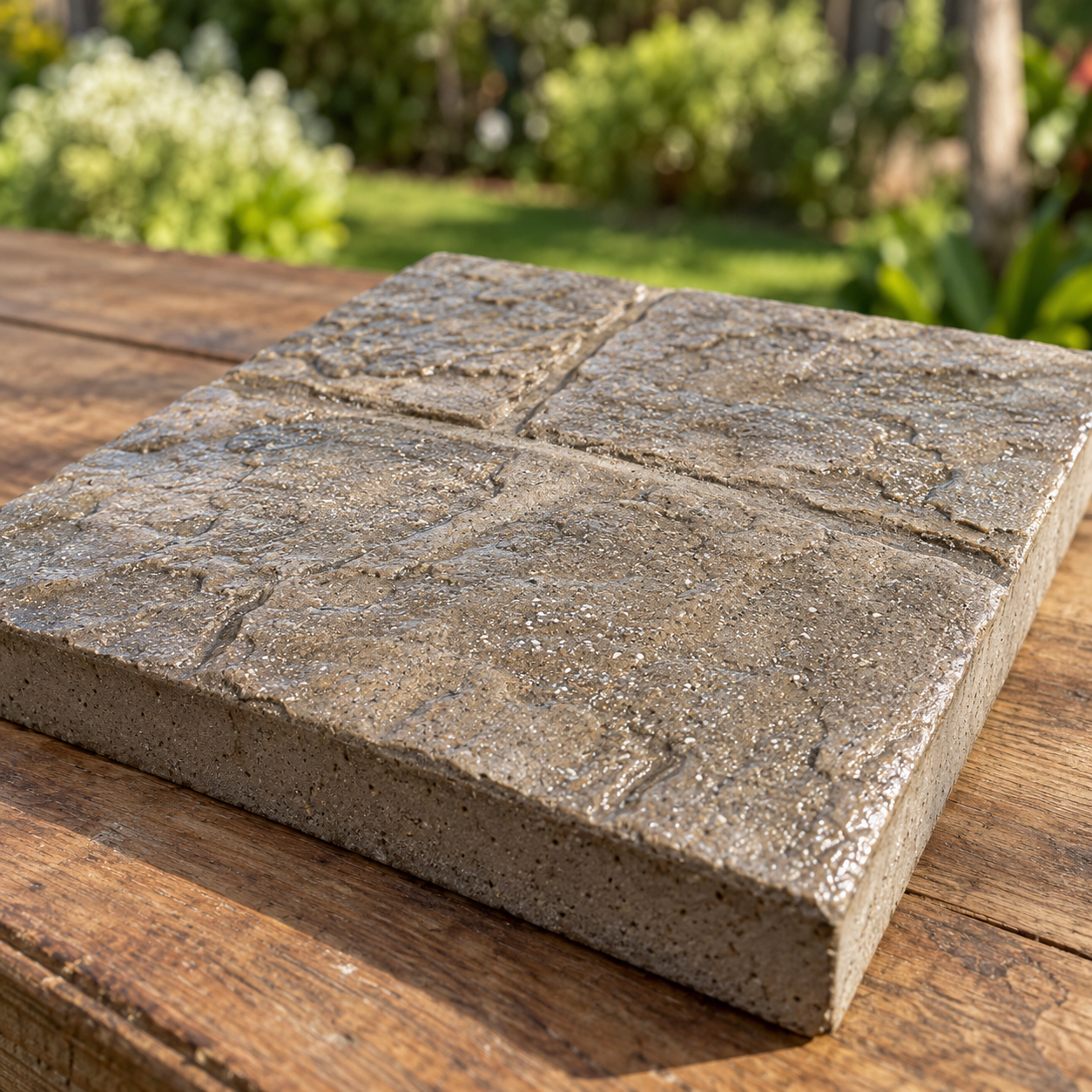
Adding extra grit or applying a heavier coat is not automatically better. Follow the selected product’s instructions and review a sample for appearance, cleaning needs, and barefoot comfort. An additive can improve traction without making a surface slip-proof.
If the current coating is peeling, uneven, or excessively built up, ask whether correction or removal is necessary before another coat. Avoid treating every slippery surface as a routine resealing job.
Reduce Water That Keeps Returning
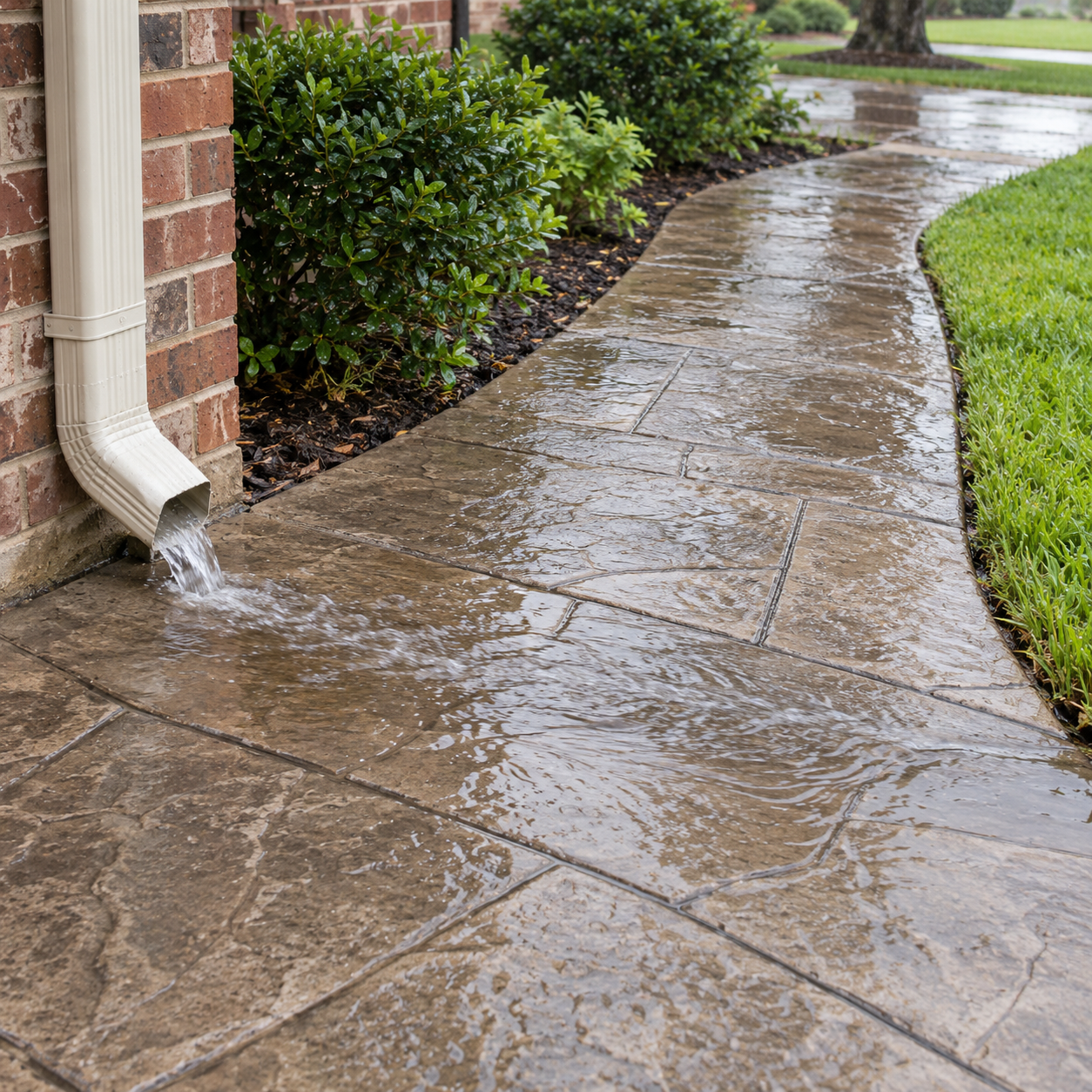
Surface treatment cannot correct a low spot or a downspout that empties across a walkway. Observe runoff from a dry, secure location during or after rain.
Check whether gutters overflow, sprinklers repeatedly wet the concrete, or landscape edging blocks the discharge path. Remove debris from accessible drain openings and keep runoff routes clear.
Persistent ponding may require an assessment of slab elevations, settlement, or drainage layout. Redirecting water should not create a new problem at a doorway, foundation, or neighboring property.
Plan the Correction in the Right Order
Gather any previous sealer invoices or product names, document the slippery areas, and explain when the problem began. Ask for a written scope separating cleaning, coating preparation, traction treatment, and drainage work.
Confirm when the treated surface can receive foot traffic and water exposure. Those times depend on the product and conditions, so a surface that feels dry may not yet be ready.
Lasting improvement starts with the cause. Keep stamped concrete clean, manage recurring moisture, and select a compatible finish system based on how the area is actually used.

Written By:
Kurt Manalastas
Home & Property Research Journalist
Kurt is a Home & Property Research Journalist who researches and writes educational content on home services, property improvement, and residential decision-making. He focuses on translating real-world contractor experience, industry standards, and verified research into clear, practical guidance that helps homeowners understand their options and make informed decisions.