Can an Old Concrete Patio in Lafayette Be Saved?
Summary
An old concrete patio can often be kept when it is stable, drains acceptably, and deterioration is limited. The decision changes when panels move, support is lost, water problems persist, or surface repairs have little sound concrete to bond to. Compare cleaning, repair, resurfacing, partial replacement, and full rebuild against the slab’s actual condition.
Decision Gate 1: Is the Slab Stable?
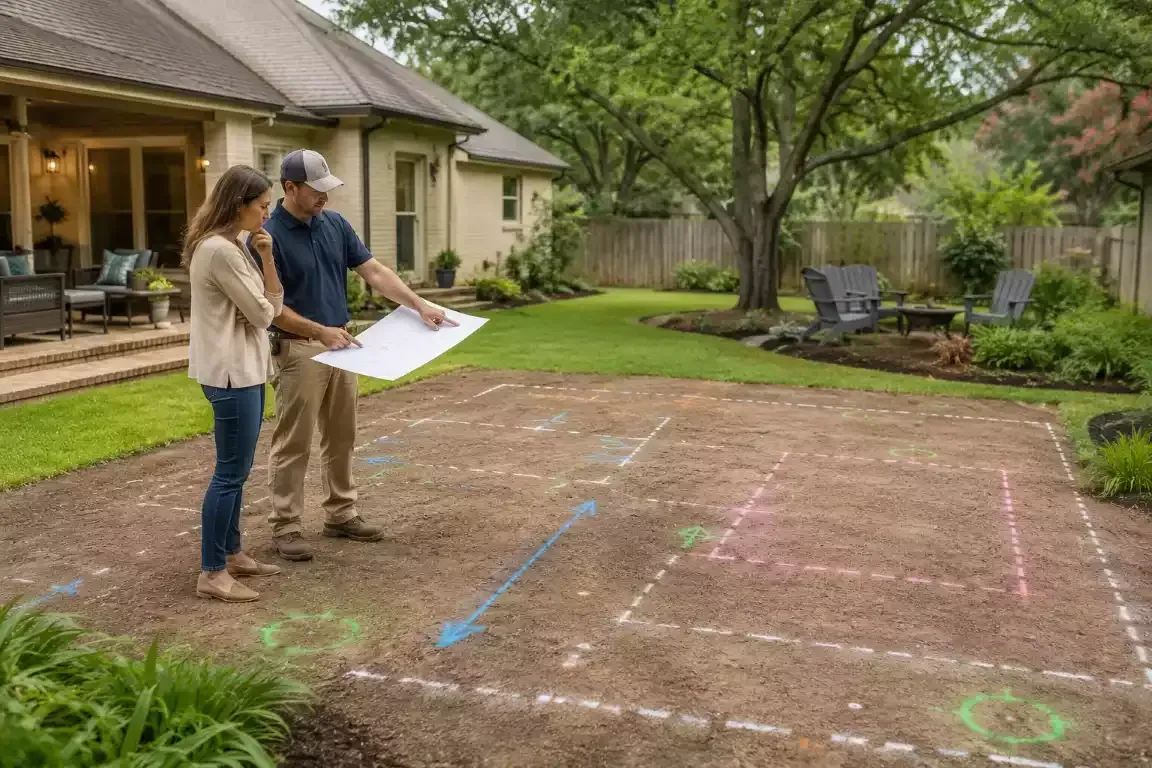
Age alone does not determine whether a patio should be demolished. Start by deciding whether the slab is still supported, reasonably level for its use, and draining in a workable direction.
Available concrete patio installation and repair services in Lafayette include both restoration and replacement, so the scope should follow the condition rather than a preset preference. T&T Lafayette Concrete Contractors provides residential patio work in Lafayette; an aging slab still needs a condition-based assessment before a treatment is chosen.
- Look for cracks with changing height differences, not just surface width.
- Check for panels that rock, tilt, or separate from steps and adjoining concrete.
- Photograph recurring puddles and runoff toward the house.
- Look for exposed voids, soil loss, or erosion at accessible edges.
- Note whether earlier patches or overlays are failing in the same locations.
If movement is active or a clear trip hazard exists, move directly to assessment instead of spending first on cosmetic work.

Decision Gate 2: Is the Remaining Concrete Sound Enough to Repair?
A stable patio with staining, weathering, or minor cosmetic defects may need cleaning and maintenance rather than reconstruction. Set expectations honestly: cleaning can improve appearance without making old concrete look newly poured.
Before applying stain or sealer, confirm that the surface is suitable for the product and that moisture or drainage problems are not being hidden. Test decorative treatments on a representative area whenever possible. If sound concrete is not available beneath the affected area, move to the next gate and determine whether the failure is localized or widespread.
If Sound: Choose Refresh, Repair, or Resurfacing Based on Deterioration
Localized chips, shallow deterioration, or suitable surface wear may be repairable when sound concrete remains beneath the damaged material. The NRMCA guidance on repairing scaled concrete surfaces states that light to moderate scaled surfaces can be repaired when unsound material is removed and the receiving surface is sound. That source addresses scaling specifically; it should not be used to assume freeze-thaw scaling caused deterioration on a Lafayette patio.
Preparation controls whether a bonded repair has a dependable base. Ask what weak material will be removed, how the surface will be prepared, and which defects are expected to remain visible.
Once the condition is confirmed, Concrete Patio Finishes in Lafayette: Broom, Stamped, and Decorative Options can help compare surface options without confusing finish selection with structural repair.
Decision Gate 3: Is the Failure Localized or Widespread?
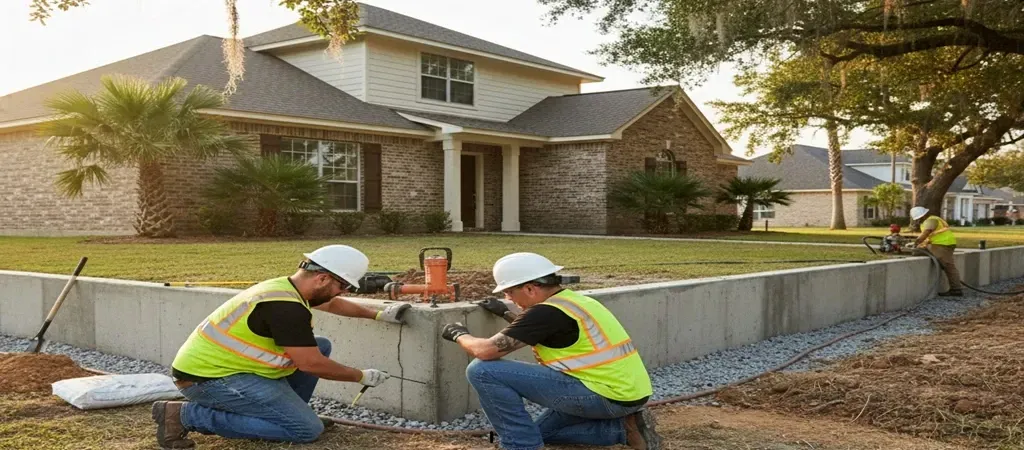
Partial replacement can make sense when one or a few sections have settled, broken apart, or lost support while the rest of the patio remains stable. The new work should correct the local support or drainage issue rather than simply reproduce the failed panel at the same elevation.
Ask how the replacement will meet existing concrete, where joints will fall, and how color and texture differences will be handled. New concrete rarely disappears visually into an older patio, so appearance expectations should be discussed before work begins.

If Widespread: Rebuild Around Corrected Support and Drainage
Full replacement becomes more reasonable when many panels have moved, drainage elevations no longer work, deterioration extends through large areas, or the amount of corrective work approaches reconstruction of the complete slab.
If rebuilding is being considered, What Lafayette Homeowners Should Know Before Adding a Patio provides the planning questions for base preparation, finished elevations, drainage, future features, and construction scope.
Replacement is also an opportunity to change a poor layout or coordinate a future cover or kitchen, but those benefits should be separated from the technical reason the old slab is no longer worth preserving.

Decision Gate 4: Will Saving It Meet the Desired Appearance?
Even when an old patio is technically repairable, saving it may not deliver the appearance the owner expects. Patches can differ in color, repairs can telegraph through some finishes, and stains can react differently across original concrete and repair materials. Decide whether the goal is safe function, improved appearance, or a near-new visual result.
That distinction matters because the most economical functional repair may not deliver the uniform appearance someone expects from replacement. Ask to see realistic examples and, when appropriate, a test area that includes both original and repaired concrete.
Final Decision: Compare Repair, Partial Replacement, and Rebuild Scopes
Request separate descriptions for essential corrections and optional appearance upgrades. A repair proposal should state preparation, drainage or support work, repair materials, finish, limitations, and excluded conditions. A replacement proposal should state demolition, disposal, base work, elevations, joints, finish, and curing.
- What caused the damage, and how does this scope address it?
- Which defects may remain visible or return?
- What conditions could change the scope after work starts?
- What is the practical service goal of the repair or replacement?
An old patio is worth saving when the remaining slab provides a dependable base and the proposed work meets the owner’s functional and appearance expectations. When movement, support loss, or drainage problems are widespread, replacement may provide the cleaner path to a usable outdoor space.

Written By:
Kurt Manalastas
Home & Property Research Journalist
Kurt is a Home & Property Research Journalist who researches and writes educational content on home services, property improvement, and residential decision-making. He focuses on translating real-world contractor experience, industry standards, and verified research into clear, practical guidance that helps homeowners understand their options and make informed decisions.