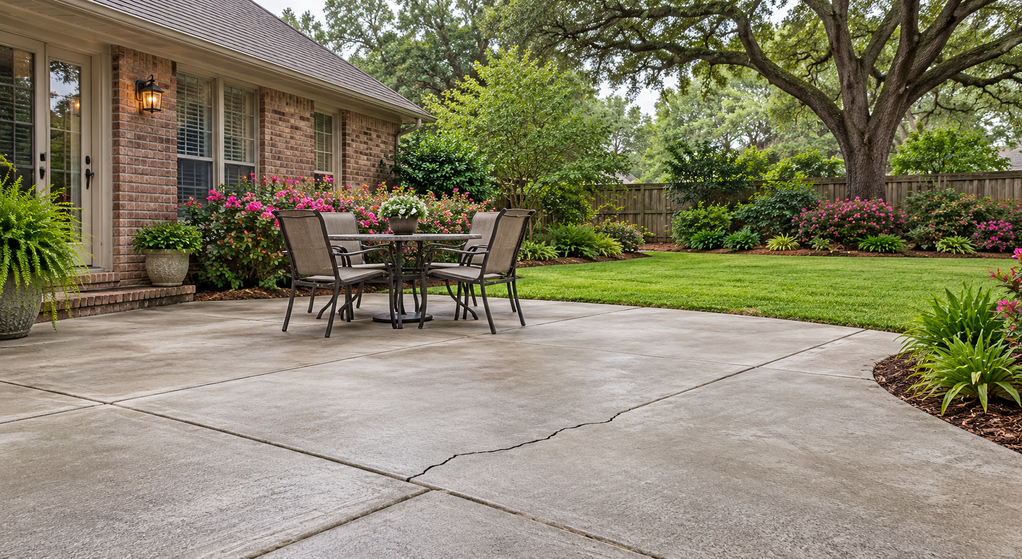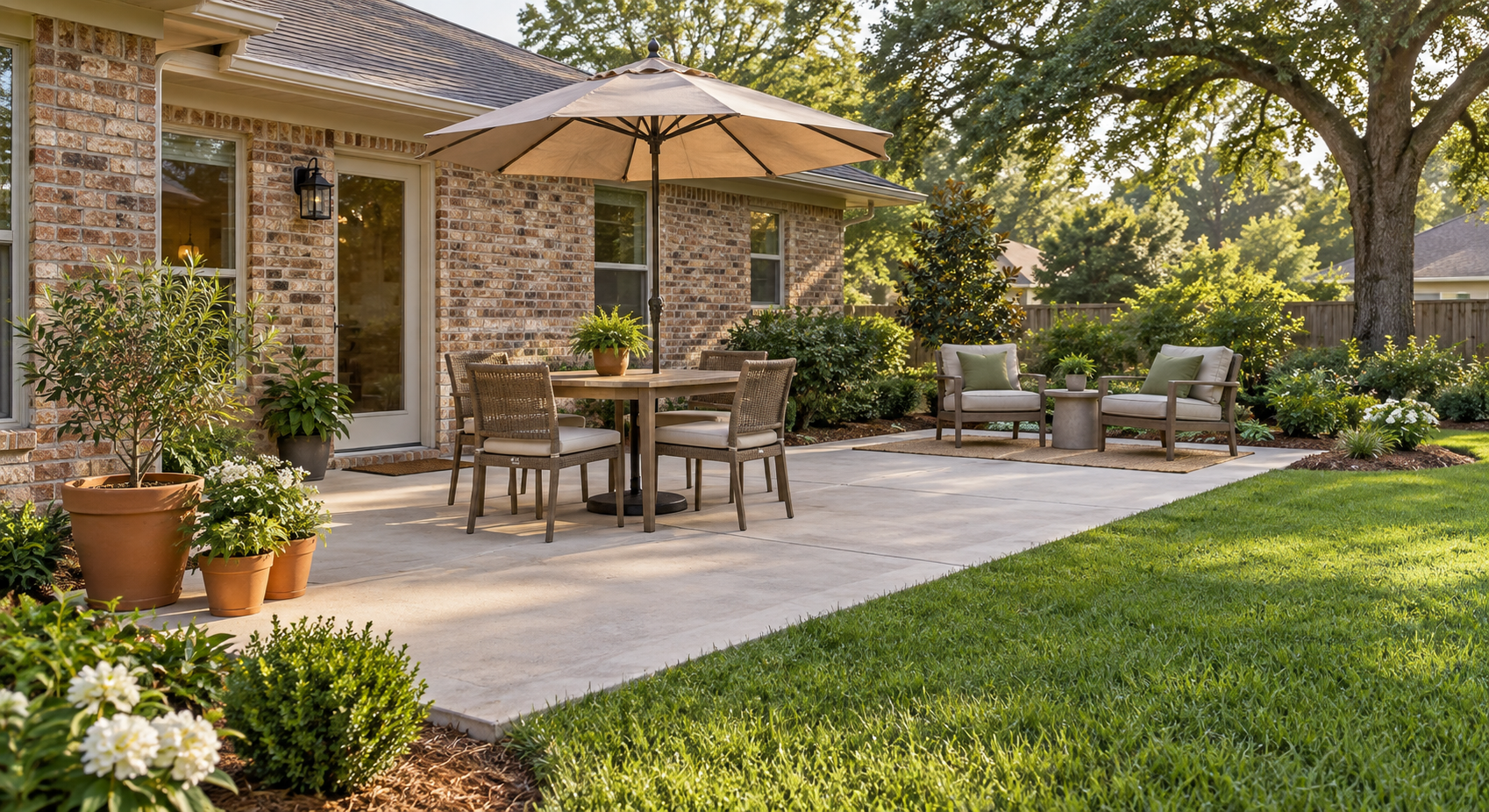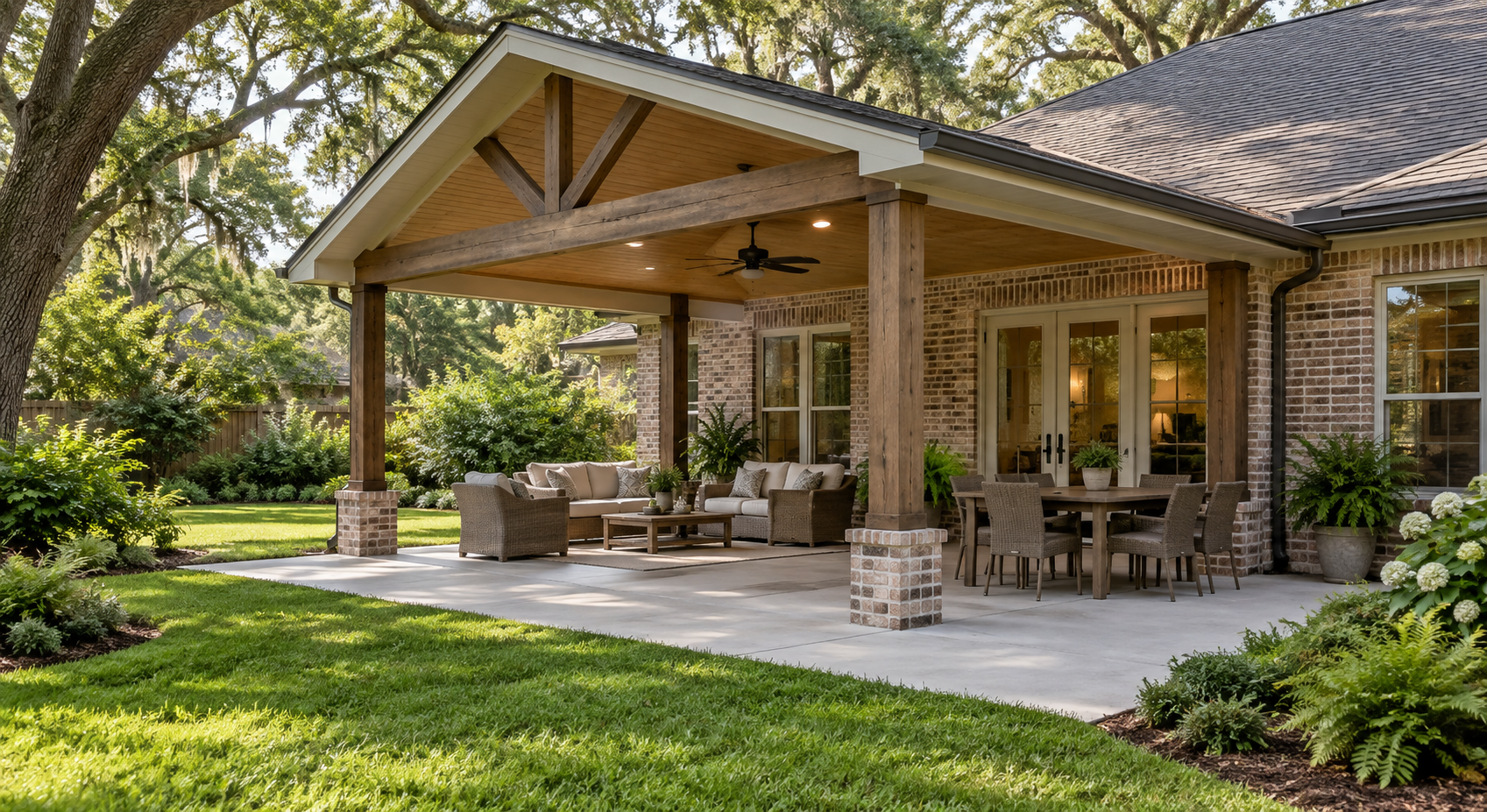
How to Make a Small Lafayette Patio Look Bigger with Stamped Concrete
Summary
A small stamped concrete patio can feel more spacious when pattern scale, color contrast, borders, and furniture work together. Lafayette homeowners can compare full-size layouts before committing, keep the main surface visually continuous, and coordinate decorative choices with drainage, joints, and the room needed to move comfortably.
A pattern that looks balanced around a large pool can overwhelm a compact backyard patio. On a smaller slab, every border, simulated stone joint, and color change occupies a larger share of the view. The goal is to create a surface that feels open while leaving enough usable room for everyday activities.
Available stamped concrete patio design and installation services in Lafayette include decorative options worth comparing at the scale of your actual space.
T&T Lafayette Concrete Contractors offers stamped concrete patios using texture and pattern stamps. For a small patio, the useful starting point is a measured layout showing how the selected finish will look beside the house and beneath the furniture.
Judge the Pattern from the Doorway
Start where you will usually see the patio, such as the kitchen door or living room window. A design viewed straight down in a sample photograph can look very different from inside the house.
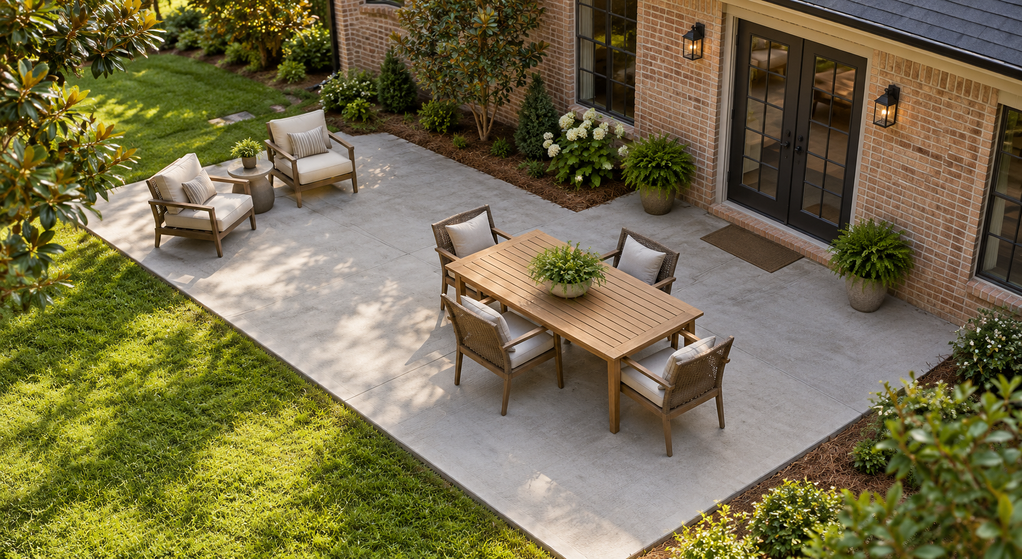
Sketch the patio outline and mark the door, steps, furniture, and adjoining lawn. Then compare two or three patterns within that same outline. Look for a clear view across the surface rather than several competing focal points.
If the space feels narrow, test a rectangular pattern with its longer units running across the width. Also compare the opposite orientation. Neither arrangement automatically makes a patio look larger; the house, fence, and furniture can change the effect. Choose the version that feels less confined from your main viewing position.
Choose a Stamp Scale That Fits the Available Surface
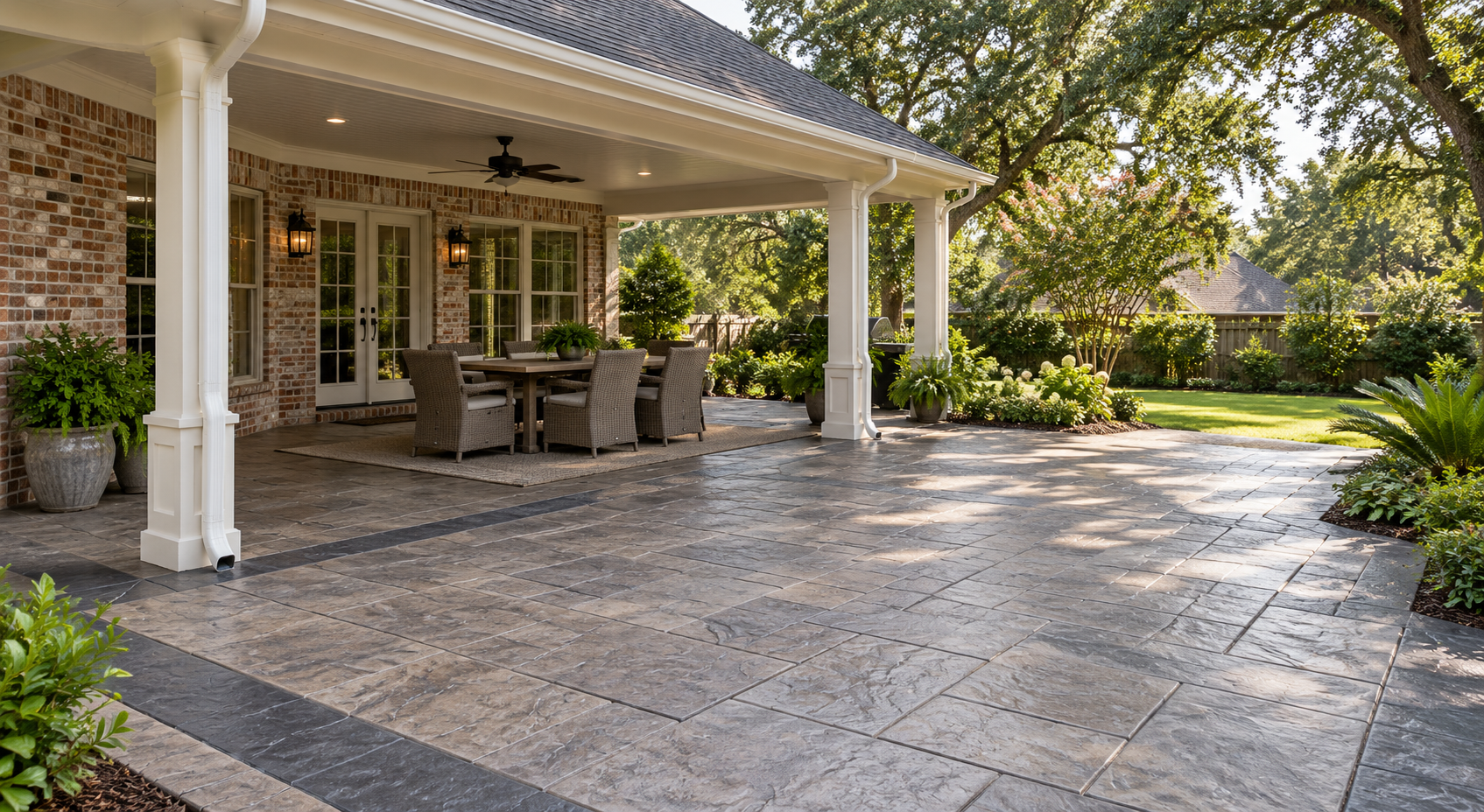
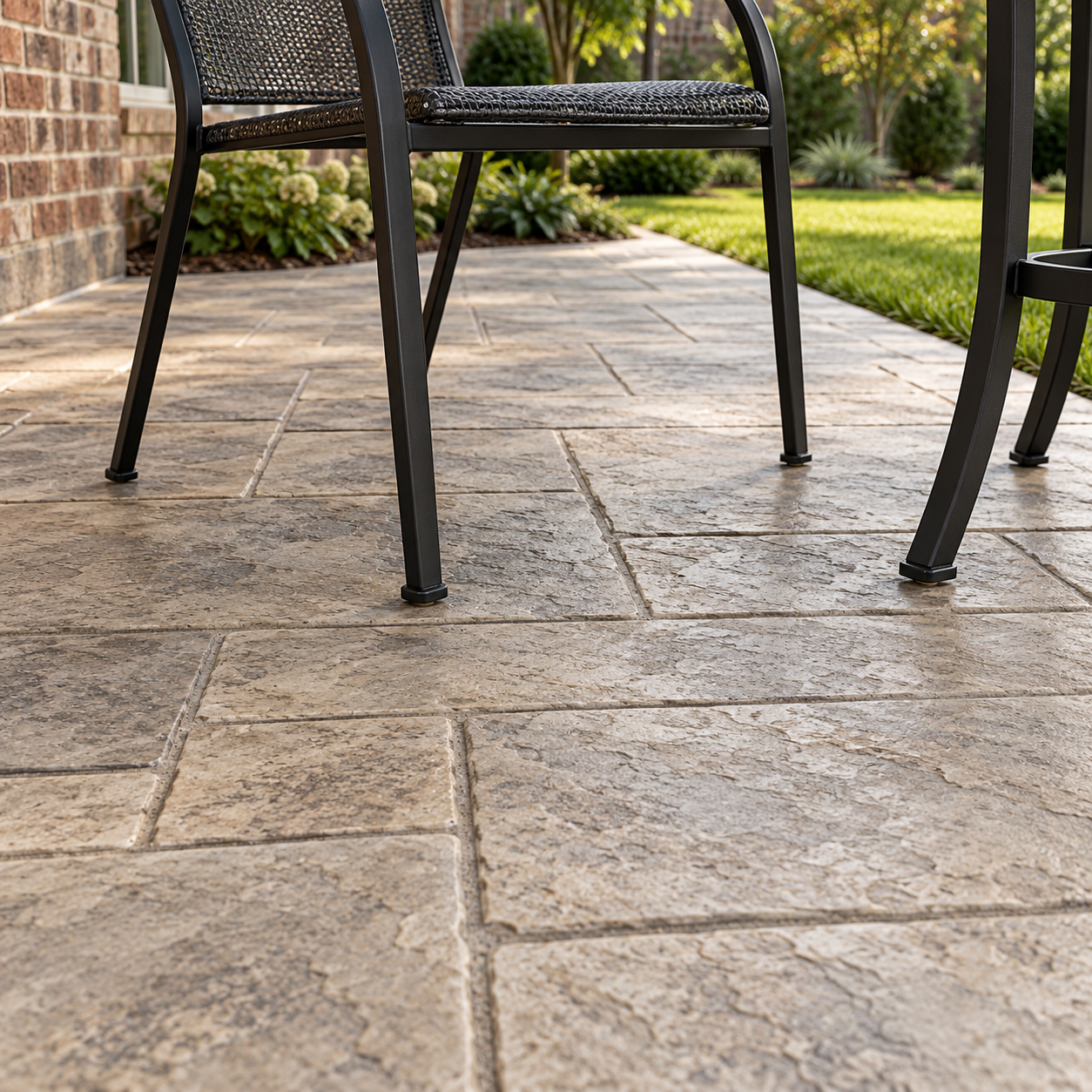
Small patios do not necessarily need small patterns. Closely spaced cobblestone impressions can create a busy surface, especially beside brick walls or patterned fencing. Larger stone impressions or a subtle continuous texture may provide a calmer backdrop.
However, an oversized pattern can look awkward when only a few complete units fit between the house and the outer edge. Ask for the actual stamp dimensions and a layout showing where the pattern starts and ends.
For illustration, a 10-foot-wide patio fits five nominal 2-foot modules before borders or other layout adjustments. A photograph of the same pattern on a much wider slab will not show how those cropped edges affect your patio.
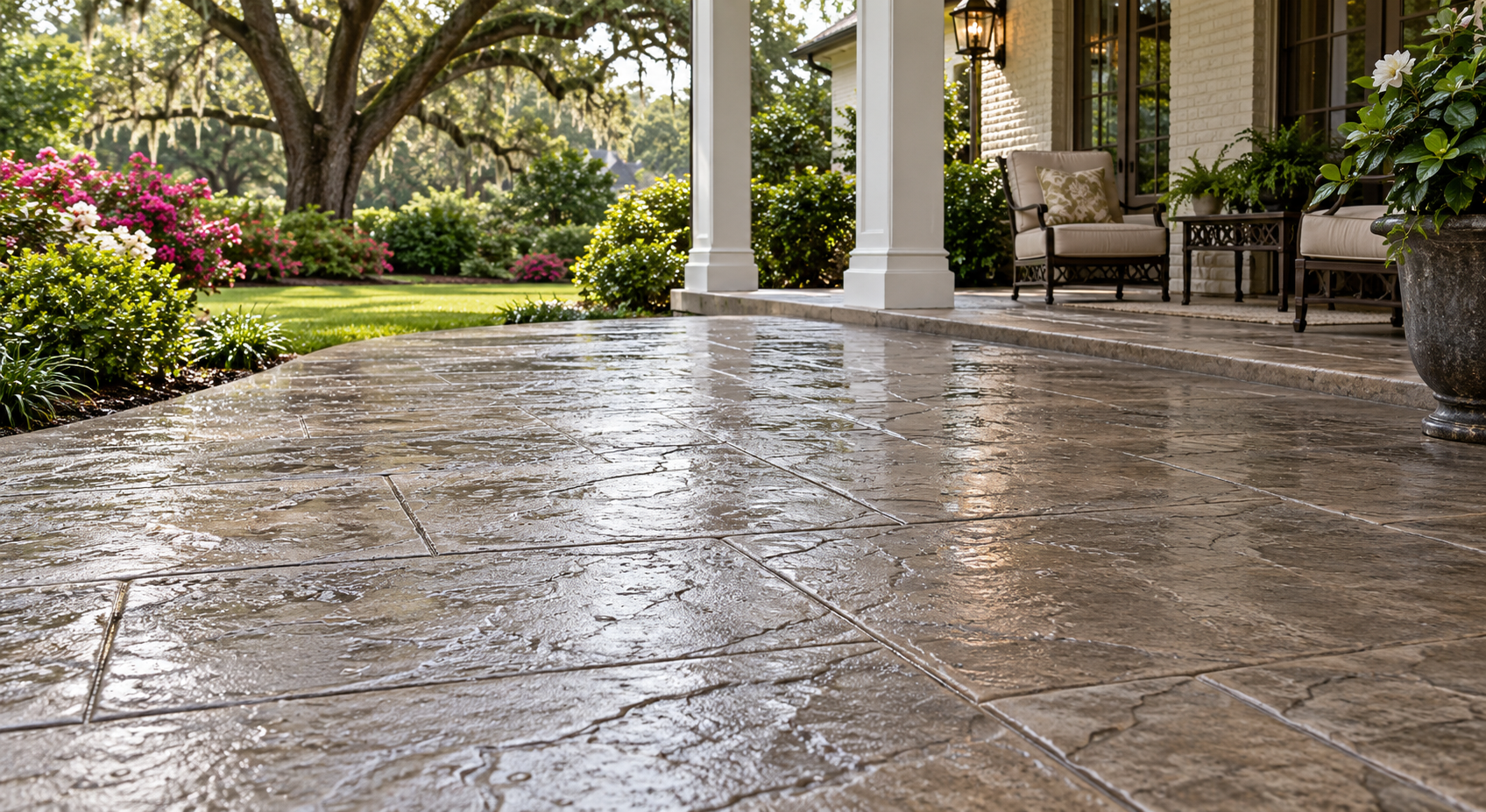
Pay attention to texture depth as well as appearance. Consider how chair legs and a small dining table will sit on the proposed surface. A pronounced stone texture may be attractive but less convenient beneath lightweight furniture.
The comparison of broom, stamped, and decorative concrete patio finishes in Lafayette helps connect those visual preferences with practical finish choices.
Keep Borders and Color Changes in Proportion
A dark border can frame a patio neatly, but a broad, strongly contrasting frame can also emphasize how small the central area is. Compare an unbordered layout with a narrow border before choosing a more elaborate design.
On a hypothetical 10-by-12-foot slab, a 1-foot border around every side leaves an 8-by-10-foot central field. The patio still has 120 square feet of usable surface, but only 80 square feet remain inside the frame. That distinction matters when the objective is visual openness.
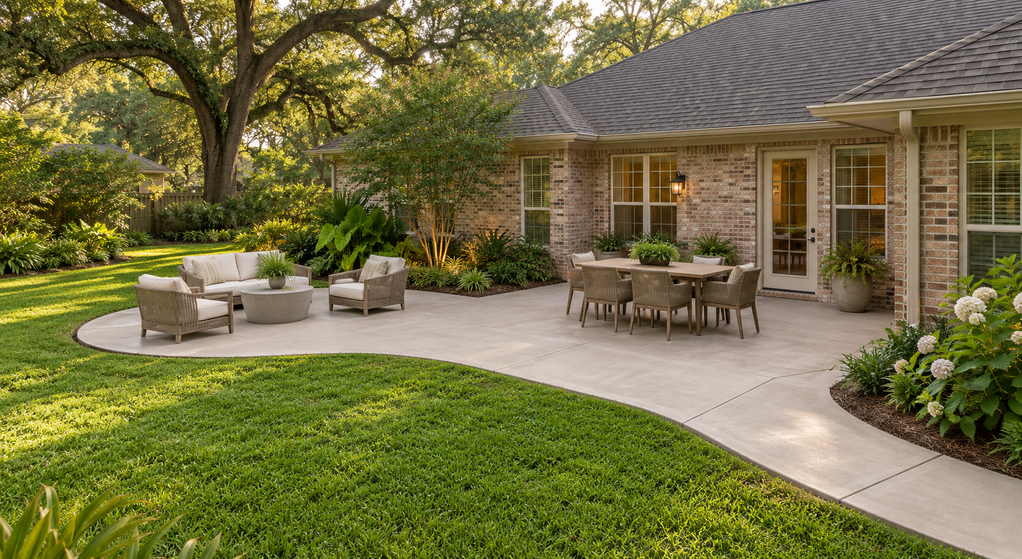
Consider a restrained palette with one main color and subtle variation. Beige, muted gray, or a tone related to the home's exterior can provide continuity without making the patio compete with its surroundings. These are design options, not rules that guarantee a larger-looking space.
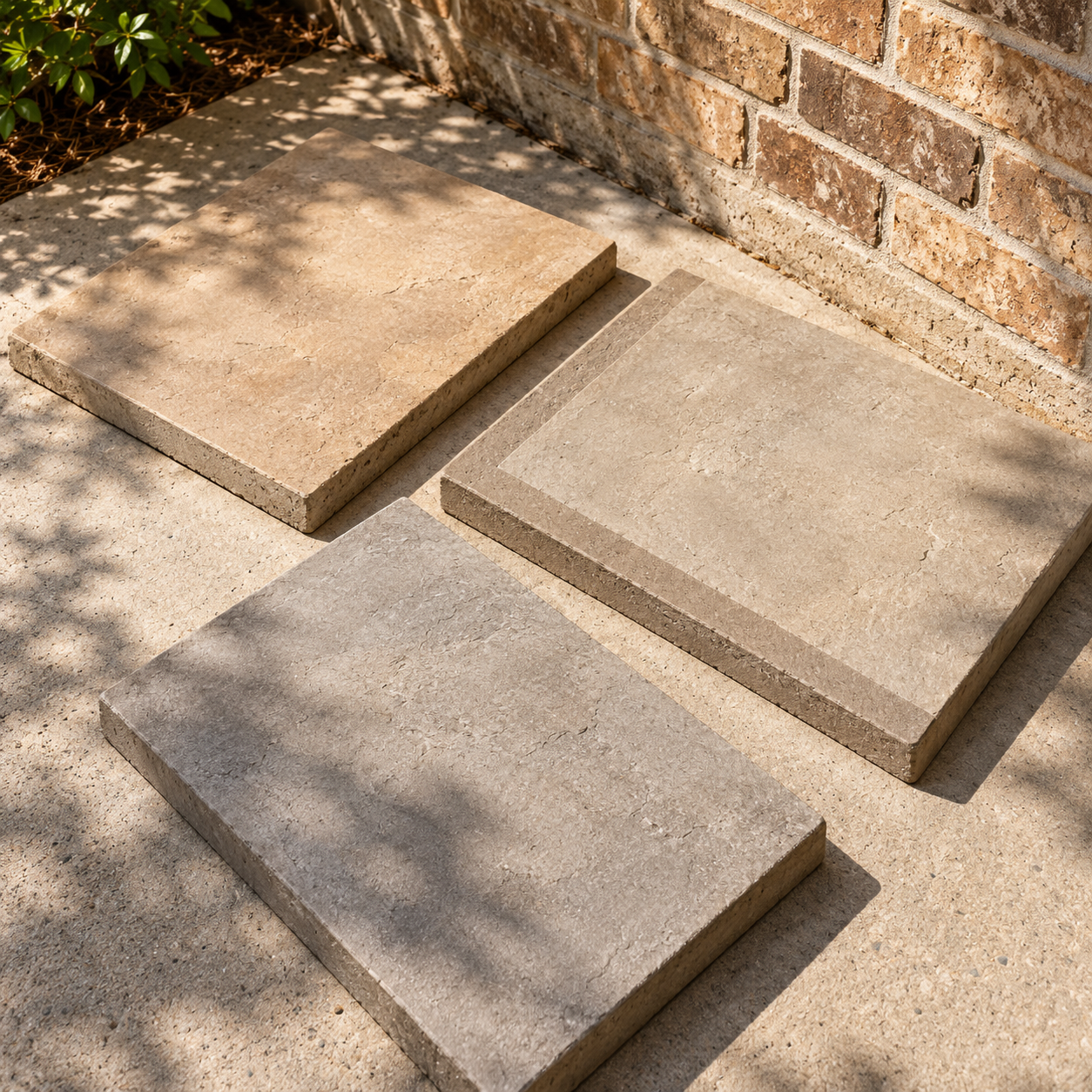
Review a physical sample outdoors beside the siding or brick. Ask to see the proposed sealed appearance, since the final finish can change the color and sheen. Compare it in both sunlight and the shade where you expect to sit.
Let Furniture Define the Seating Area
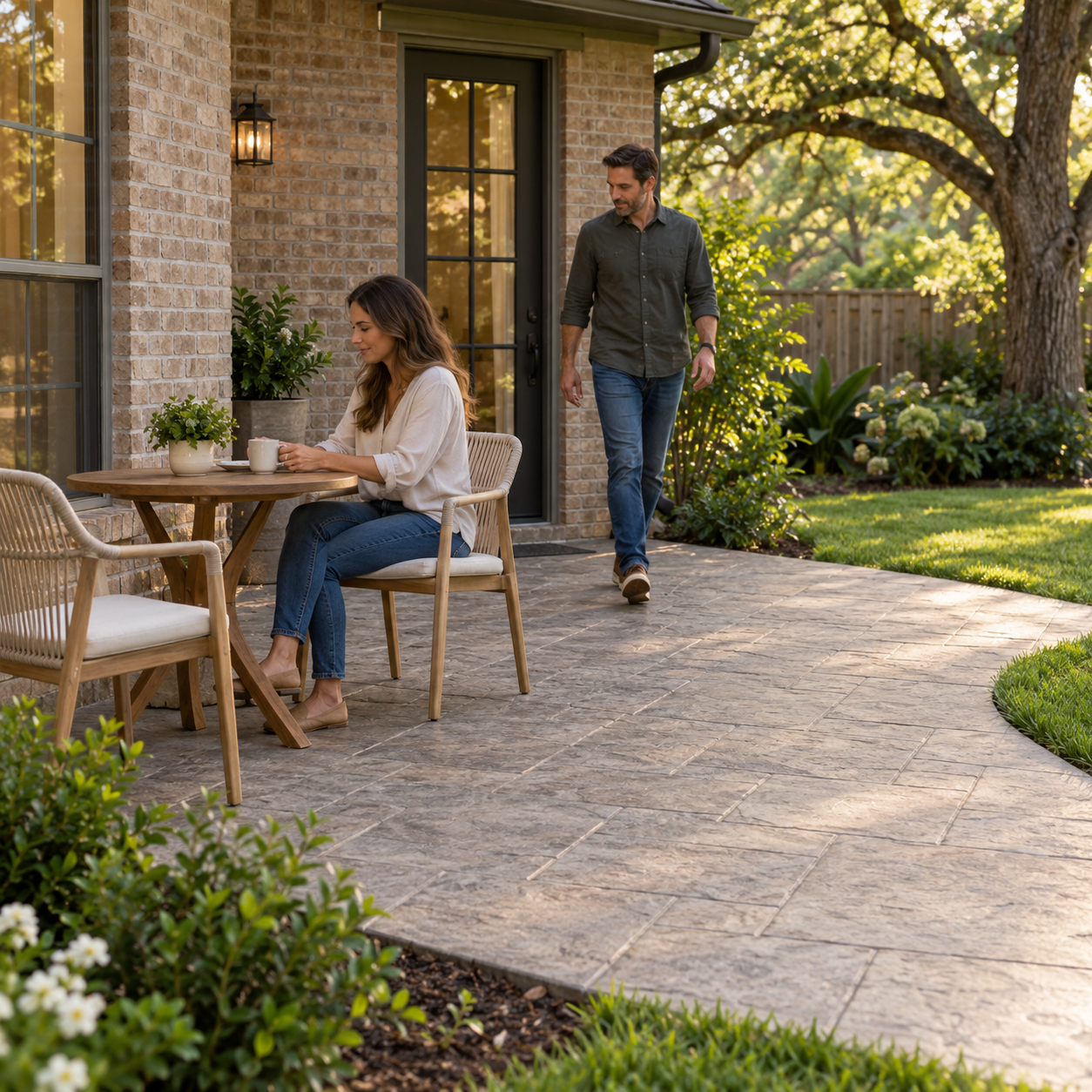
A compact patio can feel fragmented when a decorative circle, contrasting dining square, and border each establish a separate zone. One consistent stamped field allows furniture to define the activities with fewer permanent divisions.
Before approving the design, place your intended furniture in the footprint or mark its dimensions with tape. Pull the chairs out as though someone were sitting down. Walk from the door to the yard while another person remains seated.
If that route is cramped, simplify the furniture arrangement before adding decorative features. A smaller table or fewer planters may improve the space more than a different stamp pattern.
The guide on how to size a Lafayette concrete patio for furniture and comfortable circulation provides a more precise reference for checking chair clearance, walking routes, and the usable footprint before decorative details are finalized.
Include Real Joints in the Design Preview
A visually continuous patio still needs an appropriate joint plan. The National Ready Mixed Concrete Association explains in its guide to joints in concrete slabs on grade that contraction joints create weakened planes to help control where cracking occurs.
Ask the installer to show those joints alongside the stamp pattern. Decorative impressions should not be assumed to serve the same function. Discuss whether required joints can align with pattern lines without compromising their placement.
For your Lafayette property, also show where roof runoff reaches the patio and where rainwater needs to leave it. Border details and adjacent landscaping should be coordinated with that drainage route.
Approve One Complete Small-Space Layout
Before committing, review one drawing that combines the stamp dimensions, pattern direction, border width, colors, joints, and actual furniture footprint. Pair it with a representative finished sample.
The most convincing design will feel balanced from the doorway and comfortable when occupied. Stamped concrete can improve the impression of space, but a clear walking route and a restrained layout make that impression useful every day.

Written By:
Kurt Manalastas
Home & Property Research Journalist
Kurt is a Home & Property Research Journalist who researches and writes educational content on home services, property improvement, and residential decision-making. He focuses on translating real-world contractor experience, industry standards, and verified research into clear, practical guidance that helps homeowners understand their options and make informed decisions.