When Are Concrete Patio Cracks in Lafayette a Serious Concern?
Summary
Patio cracks deserve more attention when the slab is moving, edges are uneven, drainage has changed, or repairs keep failing. A fine stable crack may be mostly cosmetic. Lafayette homeowners should judge severity by change over time, displacement, support loss, safety, and what the patio is carrying.
Use a Three-Level Crack Triage
A crack does not become serious because it reaches one universal width. The more useful questions are whether it is changing, whether the adjoining concrete is level, whether water flow has changed, and whether the slab supports anything more consequential than ordinary patio use.
An assessment of concrete patio installation and repair services in Lafayette should connect the visible crack to movement, support, and drainage before a repair is selected. T&T Lafayette Concrete Contractors provides patio installation and repair in Lafayette; an existing crack still needs a property-specific diagnosis.
Lower concern: a fine crack that remains level, stable in dated photos, and does not interfere with drainage or normal use may be primarily cosmetic.
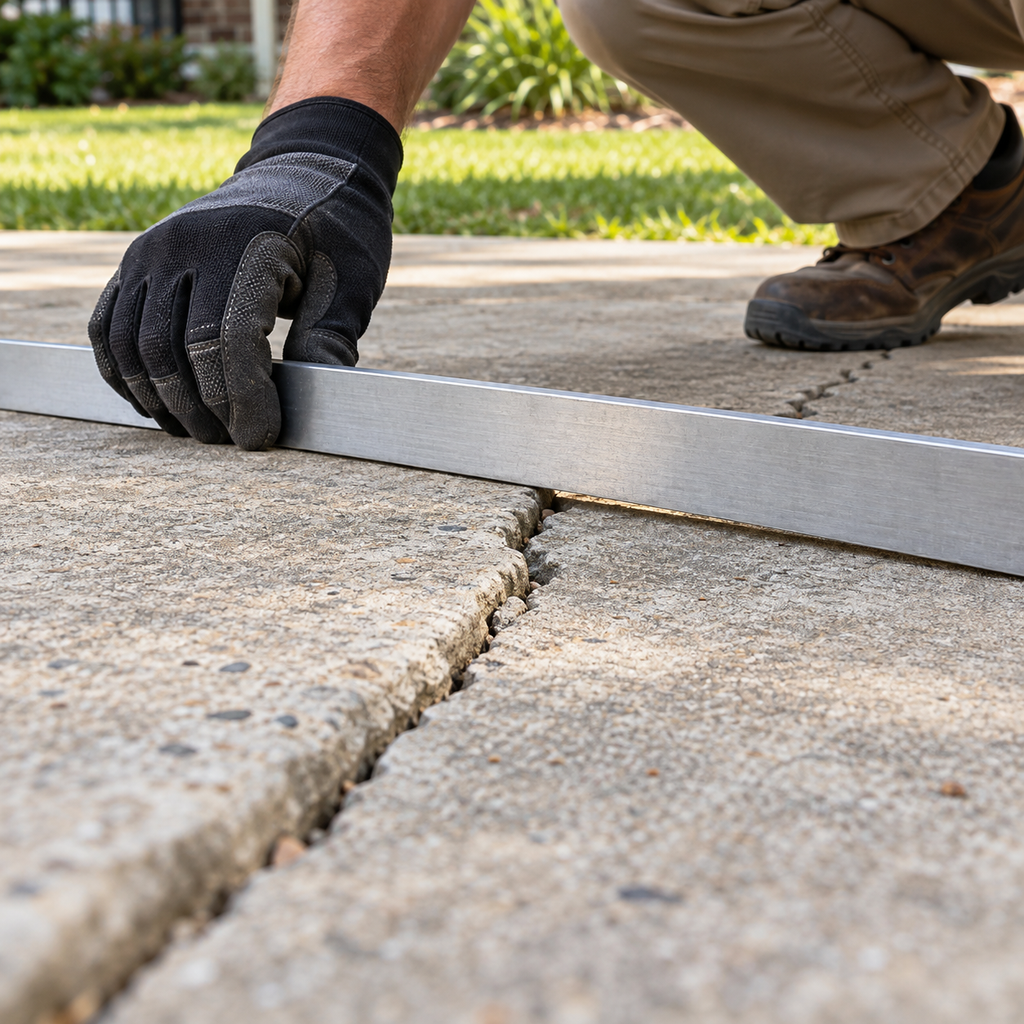
Needs assessment: a crack that widens, reopens after repair, starts collecting water, or develops a measurable height difference deserves closer evaluation.
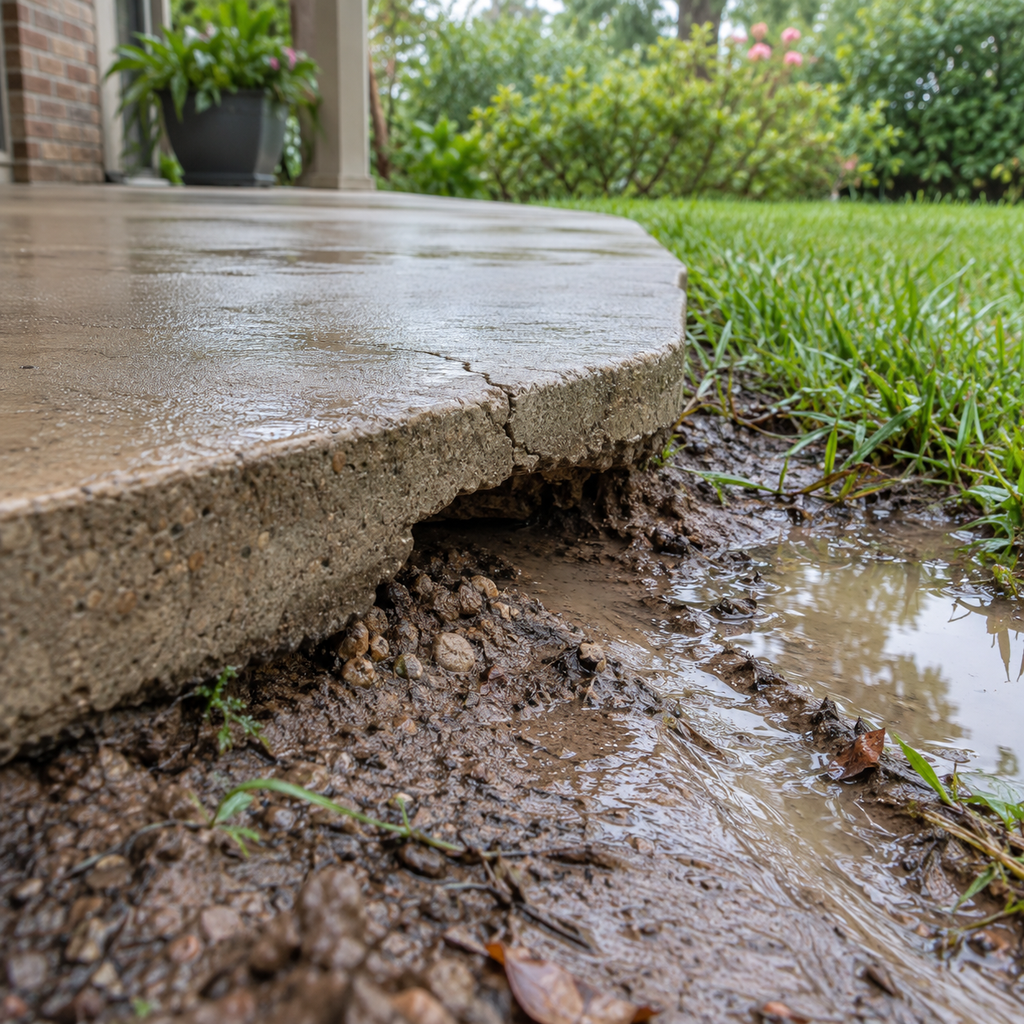
Prompt attention: a sharply displaced or unstable section, loose pieces, visible support loss, or cracking around a roof post or other structural support can create safety or structural consequences beyond appearance.
Understand What Ordinary Cracking Can Look Like
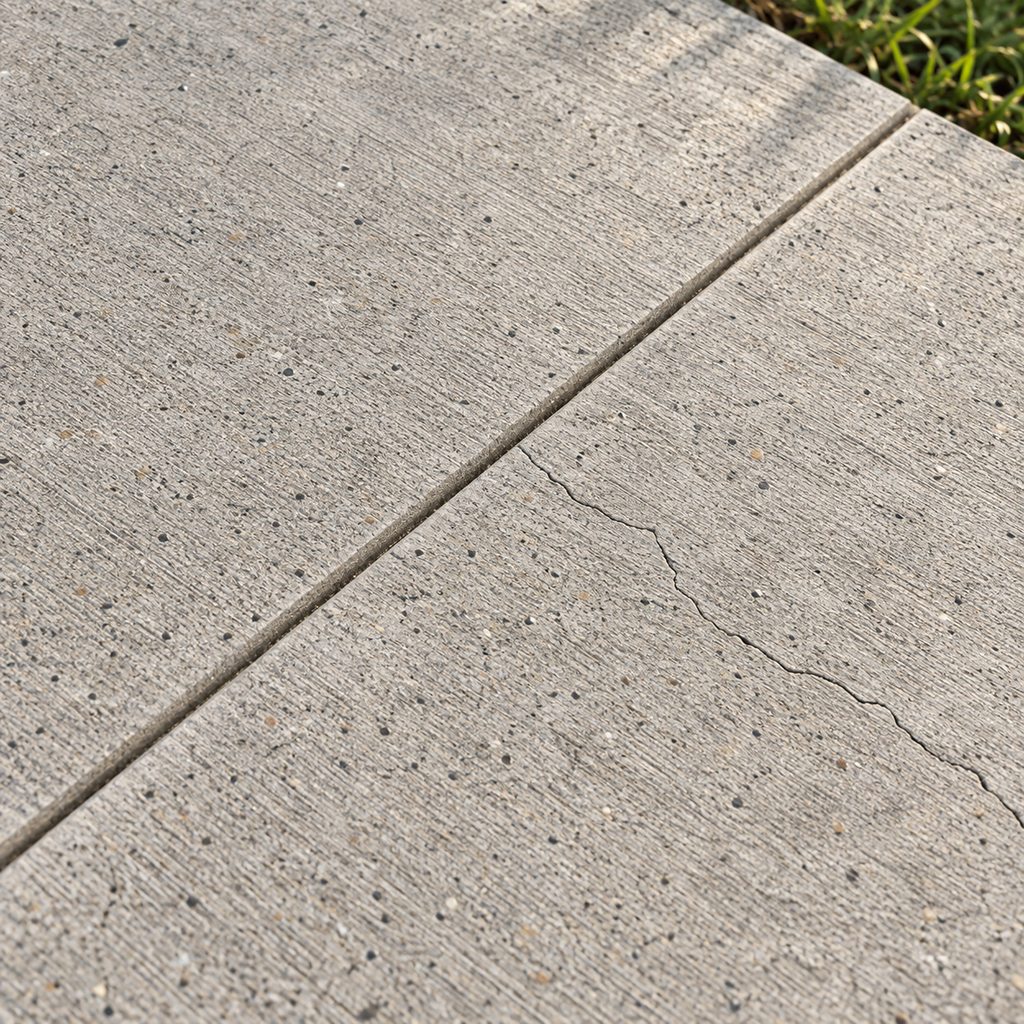
The NRMCA guide to cracking concrete surfaces explains that concrete changes dimension with moisture and temperature and that many random early-age cracks are unsightly without materially affecting structural integrity or service life. It also identifies jointing, subgrade preparation, finishing, and curing as factors that influence cracking.
That guidance supports avoiding a panic response to every hairline crack. It does not mean a stable-looking crack should be ignored if the slab is displaced or the condition is changing.
A straight groove intentionally formed or saw-cut into the patio is a control joint. A crack following a joint is different from an unplanned fracture crossing panels, but either deserves attention if the adjacent surfaces become uneven.
Measure Change, Not Just Width
Photograph the same crack from the same position and include a ruler or other scale. Record the date, approximate width, and any height difference. Repeat the observation after meaningful weather changes instead of relying on memory.
- Watch for one side rising or dropping relative to the other.
- Note new ponding or runoff toward the house.
- Check whether a repaired crack reopens or a patch separates.
- Look for soil loss, voids, or erosion at accessible slab edges.
- Record whether several nearby cracks begin changing at the same time.
A trip edge can be a serious usability issue even when the patio is structurally separate from the house. Restrict access to unstable or sharply displaced areas until they can be assessed.
Check Drainage and Support Before Filling the Crack
A patio crack may reflect a surface issue, slab movement, or both. Observe the area after rainfall and check downspouts, irrigation, edge erosion, and low spots. Standing water can contribute to support problems, but it can also appear after a panel has already settled.
The inventory page How to Prevent Concrete Patio Problems on Lafayette Properties covers drainage, soil preparation, joints, curing, and routine maintenance from a prevention perspective. A crack repair should not conceal an unresolved support or water problem.
Separate Patio Damage From House Foundation Concerns
A ground-level patio may move independently from the house. A patio crack alone does not establish foundation failure. Look for separate evidence inside and around the home before linking the two conditions.
If patio movement occurs alongside new floor changes, persistent door misalignment, widening masonry cracks, or movement at attached structural elements, seek a broader structural evaluation. The goal is to avoid both overreacting to an isolated patio defect and overlooking evidence that extends beyond the slab.
Match the Work to the Failure Mode
A stable crack in sound, level concrete may be suitable for a targeted repair. Resurfacing can improve appearance on an appropriate substrate, but it should not be presented as a fix for active settlement or heave.
Where panels are displaced, deteriorated, or no longer drain properly, compare localized replacement with a broader rebuild. If replacement is being considered, What Lafayette Homeowners Should Know Before Adding a Patio provides the planning checklist for elevations, drainage, base preparation, and future features.
Concrete patio cracks become a serious concern when they compromise safe use, continue changing, or accompany support and drainage problems. Let those conditions—not the crack’s appearance alone—determine the next step.

Written By:
Kurt Manalastas
Home & Property Research Journalist
Kurt is a Home & Property Research Journalist who researches and writes educational content on home services, property improvement, and residential decision-making. He focuses on translating real-world contractor experience, industry standards, and verified research into clear, practical guidance that helps homeowners understand their options and make informed decisions.