How Concrete Color Changes Stamped Patterns on Lafayette Patios
Summary
Concrete color changes how clearly a stamped pattern reads, which material it resembles, and how strongly it stands out against a home. Base color, accent shading, and sealer sheen work together. Comparing finished samples in the intended setting helps homeowners choose a combination that looks convincing at everyday viewing distances.
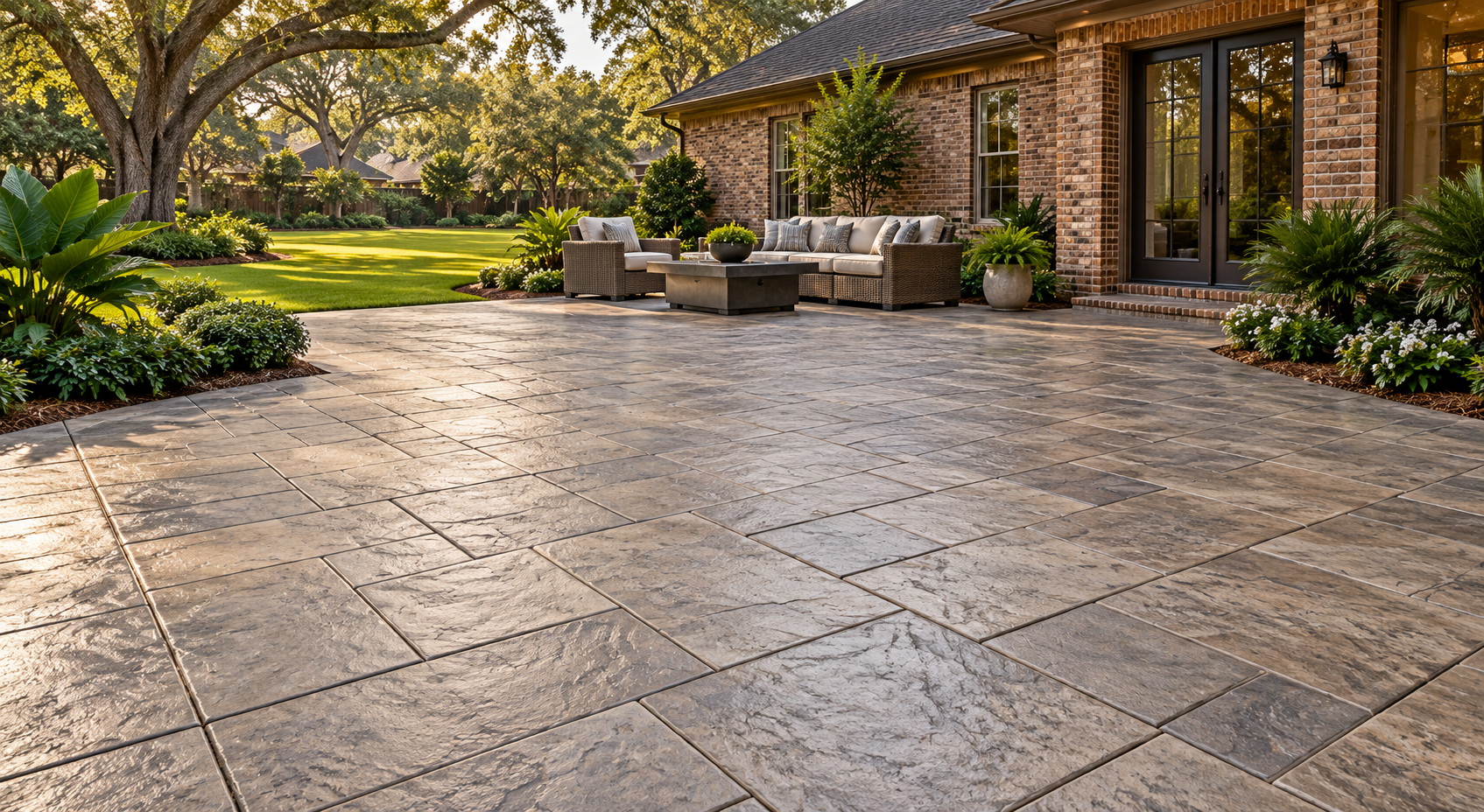
A slate stamp can look understated in warm gray or dramatic with charcoal accents. A brick pattern can suggest traditional clay paving in muted red or take on a more contemporary appearance in gray. The imprint stays the same, but the color changes how you interpret it.
When comparing stamped concrete installation and finishing in Lafayette, choose the pattern and color together. A stamp chosen from one photo and a color chosen from another may look nothing like the combination you expect.
T&T Lafayette Concrete Contractors offers stamped concrete for patios, walkways, driveways, and other residential surfaces. For any of these applications, the useful design question is specific: should the surface resemble individual pieces of stone or brick, or provide a quieter textured background?
Separate the Background Color From the Accent
The base color establishes the overall impression. Integral pigment colors the concrete mixture, while a dry-shake color hardener creates color at the surface. These are different coloring methods, so ask which system a proposed sample represents.
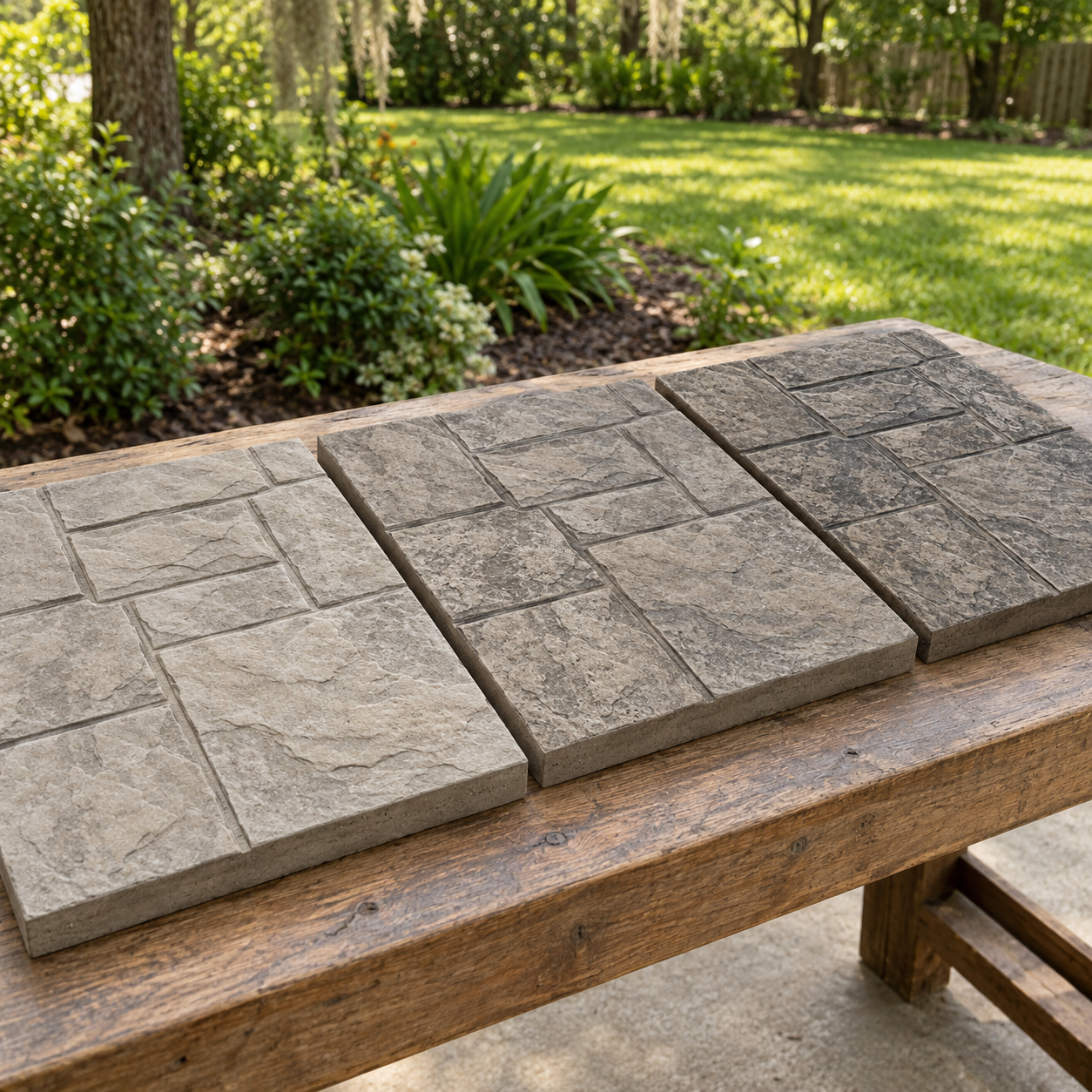
Accent color adds another visual layer. Release powder used during stamping can create subtle shading or bold contrast, making the impressions look deeper. The mix needs to be viewed as a complete sample, not selected from separate color cards.
For selection purposes, compare three versions of the same pattern: a close color match, a moderate contrast, and a strong contrast. This isolates the effect of shading instead of changing both the stamp and palette at once.
A warm gray base with a slightly deeper gray accent may look restrained. Pairing that base with a much darker accent can make the texture more prominent. Neither is automatically better; the choice depends on how much visual activity the space needs.
Match the Contrast to What the Pattern Represents
Color works best when it reinforces the material the stamp suggests. These are design directions to test, rather than fixed recipes:
| Stamped pattern | Color direction to test / What to watch for |
|---|---|
| Slate or irregular stone | Related grays, browns or earth tones with darker accents. Heavy contrast can make every crease compete for attention. |
| Ashlar stone | Restrained base with moderate variation. Strong outlines can read as a grid rather than stone. |
| Brick | Muted red, brown or gray with controlled accents. Excessive mottling can obscure the repeating brick shapes. |
| Wood plank | Wood-inspired base with subtle grain accents. Dark shading in every groove exaggerates repetition. |
shading that looks attractive in a close-up may disappear across a large patio. Conversely, bold accents may dominate the whole yard once repeated over the slab.
If the preferred color treatment still looks too busy, reconsider the finish itself. Comparing Concrete Patio Finishes in Lafayette: Broom, Stamped, and Decorative Options helps distinguish a color mismatch from a preference for less surface texture.
Let the House Set the Limits of the Palette
Start with fixed materials that will remain: brick, stone veneer, exterior paint, roofing visible from the patio, and adjacent paving. Bring samples beside those materials rather than choosing against a white showroom wall.
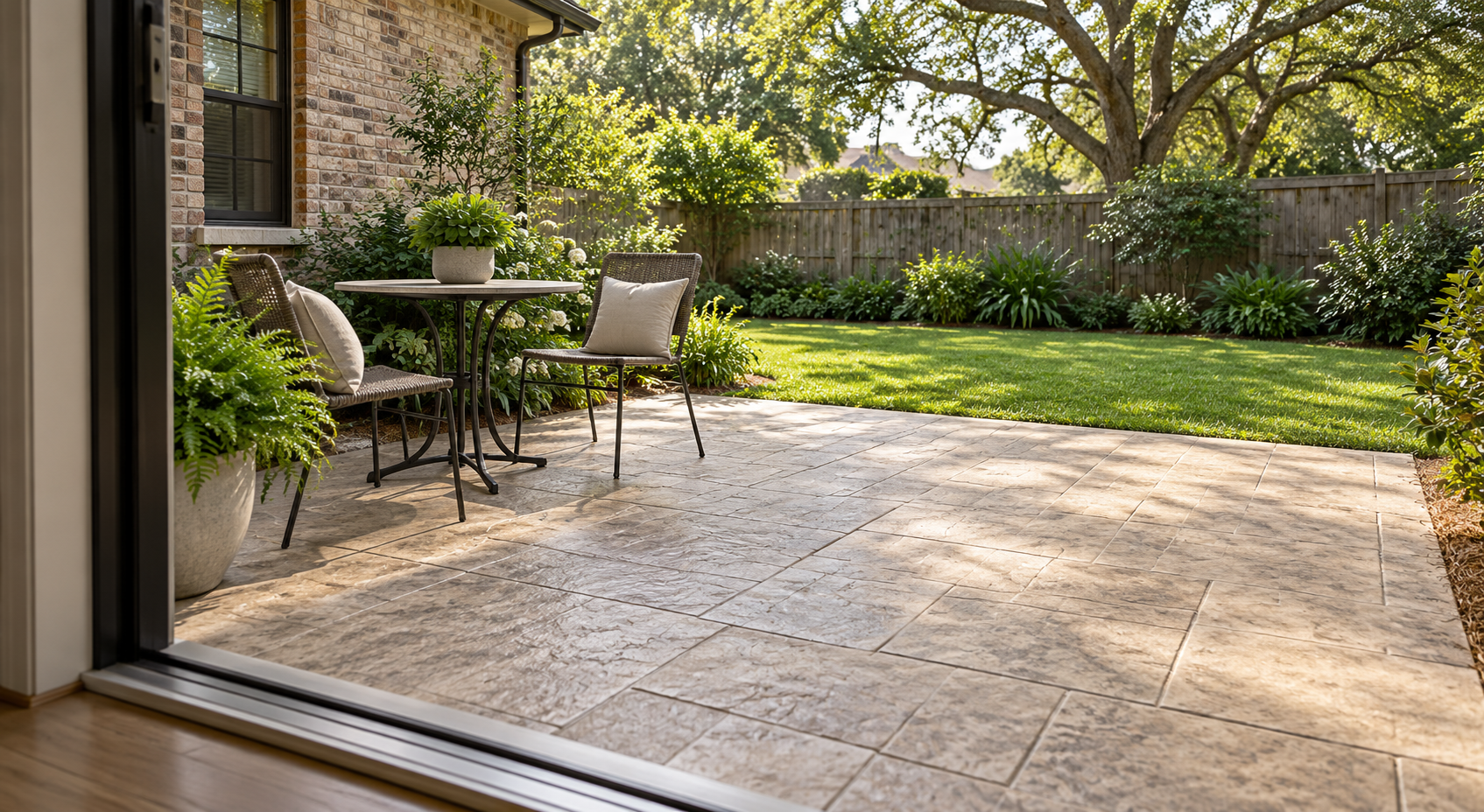
For a Lafayette home with red brick, a patio does not need to repeat the brick’s strongest red. A quieter tone drawn from the mortar may create a more balanced combination. Beside a simple painted exterior, a richer stamped surface may have more room to stand out.
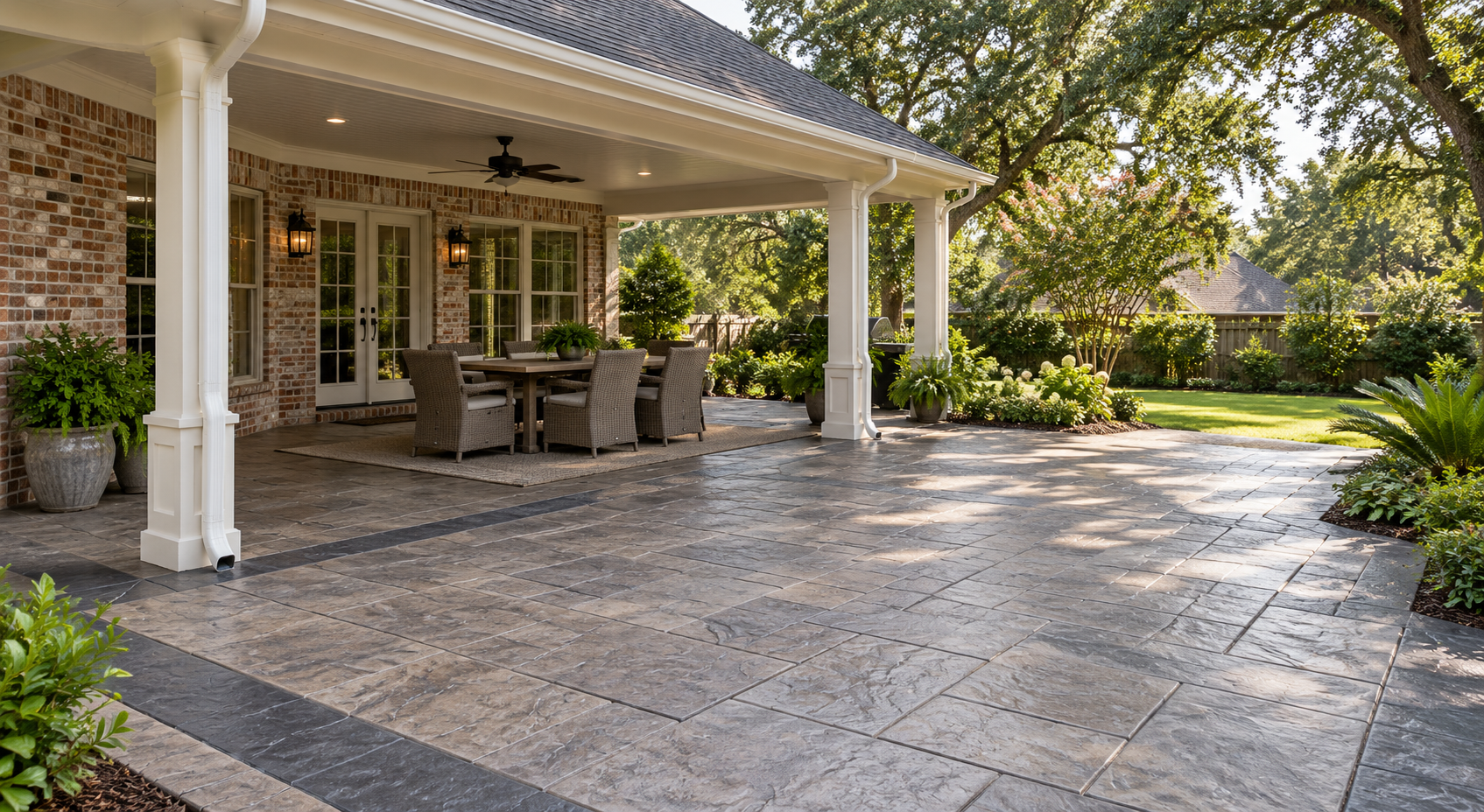
Also consider the border. A dark border can frame a pale field, but combining a bold border, strong antiquing, and busy house brick creates several competing features. Decide which element deserves attention before adding another color.
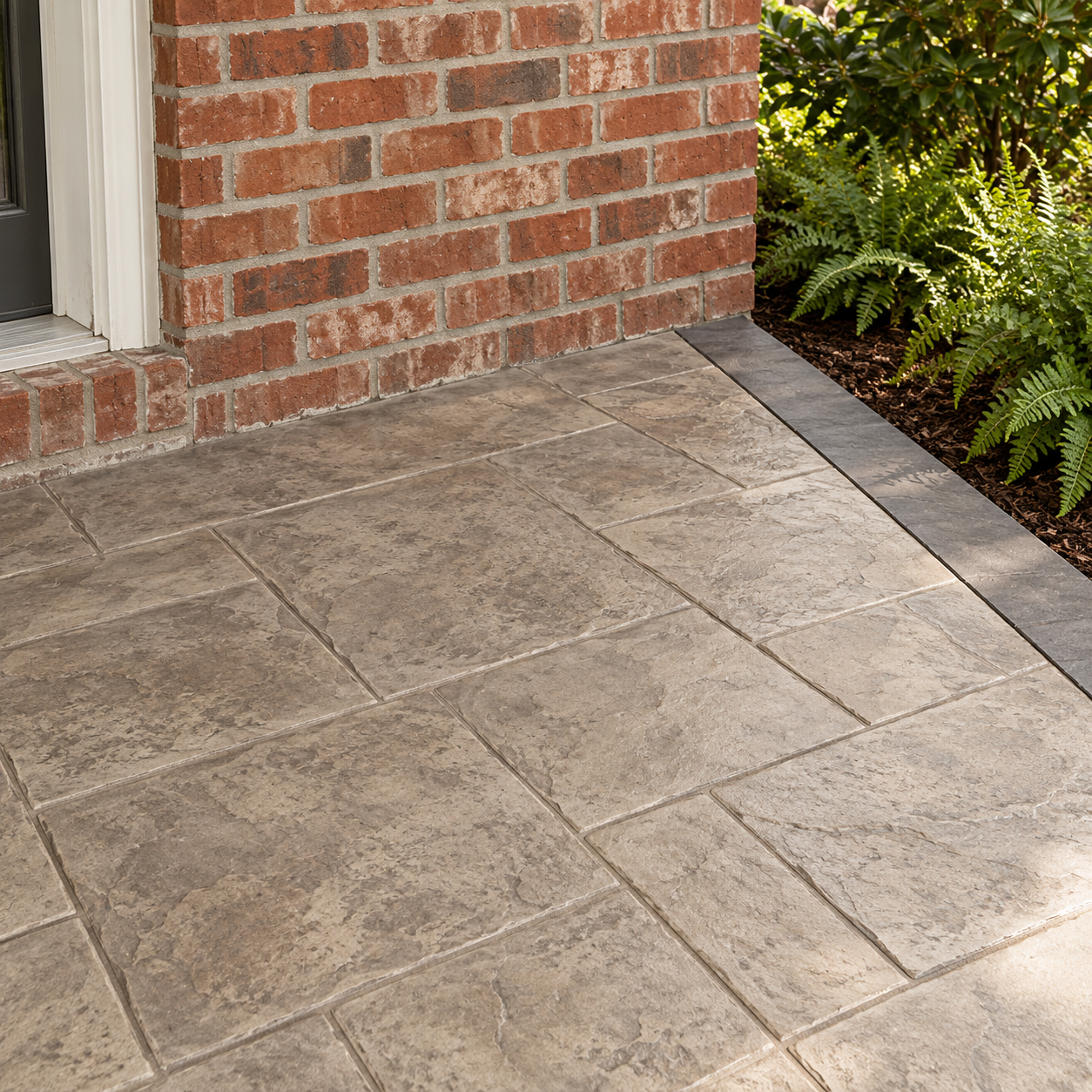
Keep photographs as references, not exact color standards. Screen settings, exposure, surrounding colors, and lighting can all change the apparent shade.
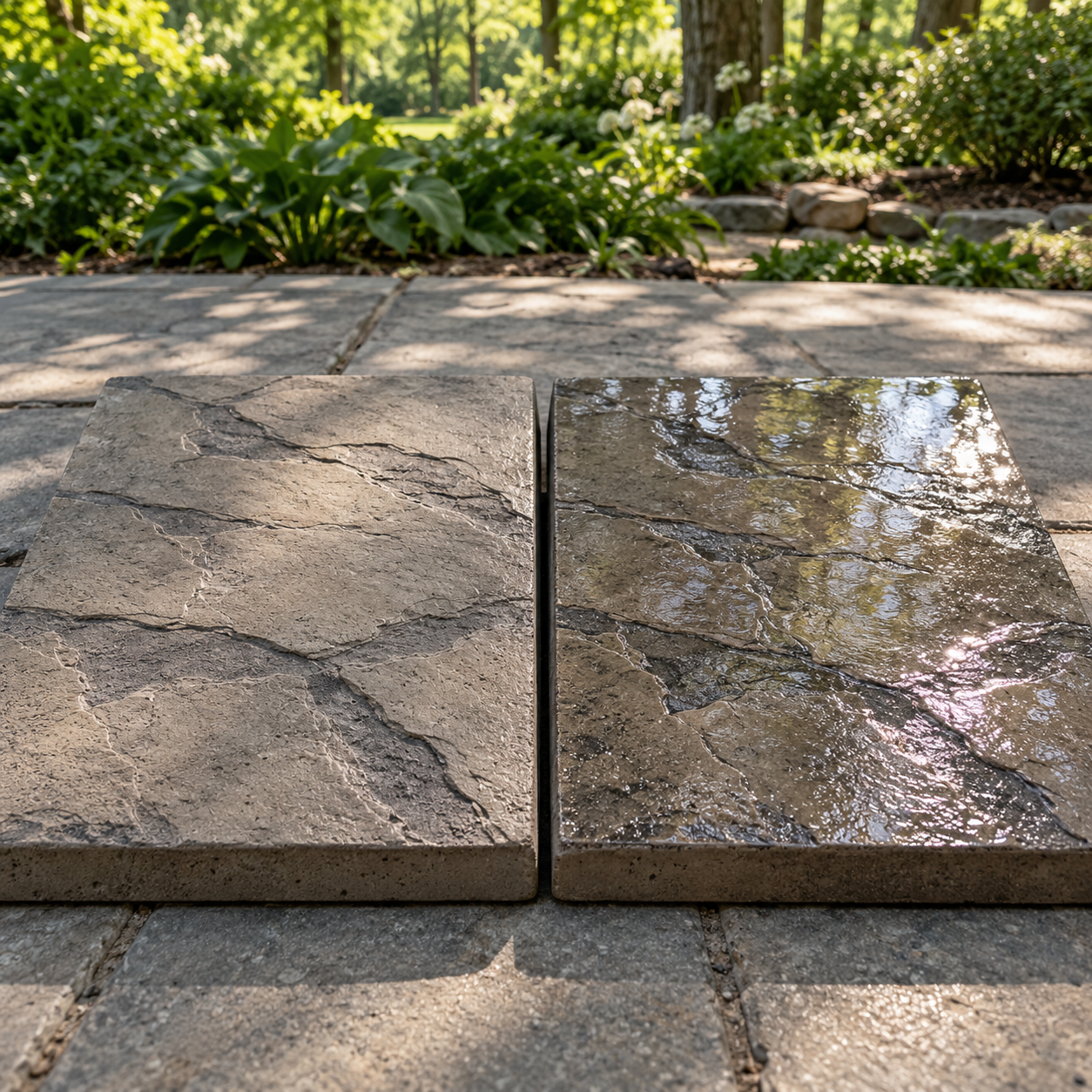
Include Sheen in the Color Decision
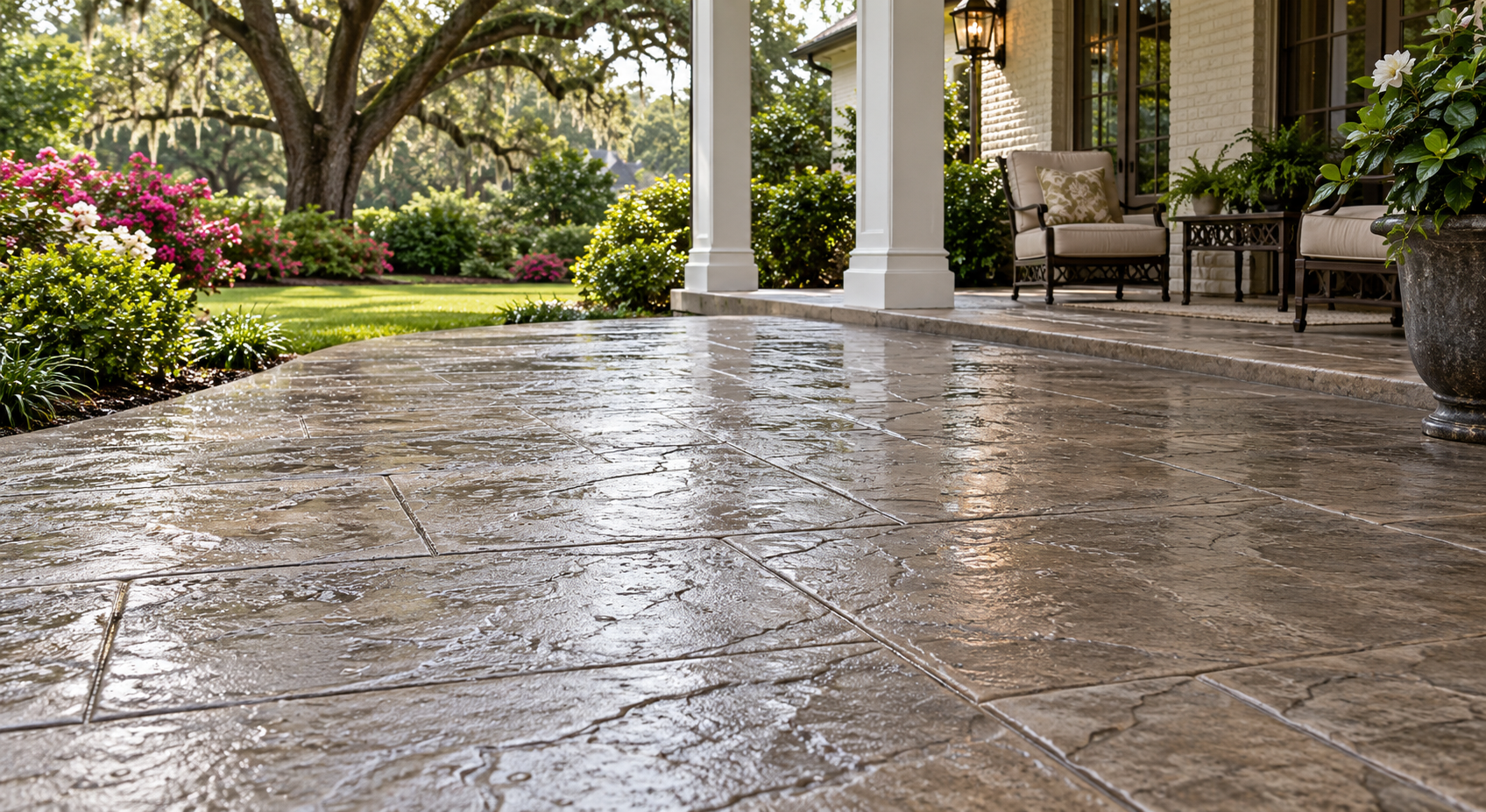
The same palette can look different with a low-sheen finish and a glossy, color-enhancing sealer. Reflections may also make fine texture harder to see from certain angles. Ask to see the proposed finished combination instead of assuming every clear sealer produces the same appearance.
For an exposed Lafayette patio, compare the sample in sunlight and shade and consider how it looks after rain. A dry, shaded showroom sample answers only part of the question.
Appearance should also be considered alongside wet traction. Sika cautions that sealed surfaces may become slippery when wet. The guide to How to Prevent Slippery Stamped Concrete Around Lafayette Homes expands on the practical relationship between surface condition, sealer, and maintenance. Choose the finish for how the area will be used, as well as how it photographs.
Sika’s antiquing-release product guidance confirms that antiquing release can create complementary or contrasting accents. Its product-specific guidance also calls for a job-site sample and assessment of wet and dry traction.
Approve a Combination You Can Describe
Before installation, request a representative sample that uses the intended stamp, base coloring method, accent treatment, and sealer. Make it large enough to judge several impressions and the relationship between textured faces and pattern lines.
Record the approved products and colors, desired contrast, border treatment, and sheen in the written scope. Describe the effect plainly, such as “warm gray with restrained darker shading,” rather than relying on “natural stone look.” Discuss acceptable variation; a sample establishes a reference, not a promise of identical shading everywhere.
The finish works when its parts agree. Color should make the stamped pattern readable, suit the surrounding home, and remain appealing from the places where you will actually see and use it.

Written By:
Kurt Manalastas
Home & Property Research Journalist
Kurt is a Home & Property Research Journalist who researches and writes educational content on home services, property improvement, and residential decision-making. He focuses on translating real-world contractor experience, industry standards, and verified research into clear, practical guidance that helps homeowners understand their options and make informed decisions.