How a Patio Cover Changes Stamped Concrete Design in Lafayette
Summary
A patio cover changes more than shade. On a stamped concrete patio in Lafayette, roof runoff, support locations, joints, mixed sun exposure, traction, and future maintenance all affect the decorative plan. Coordinate the cover and slab before finalizing borders, pattern direction, sealer, or post locations.
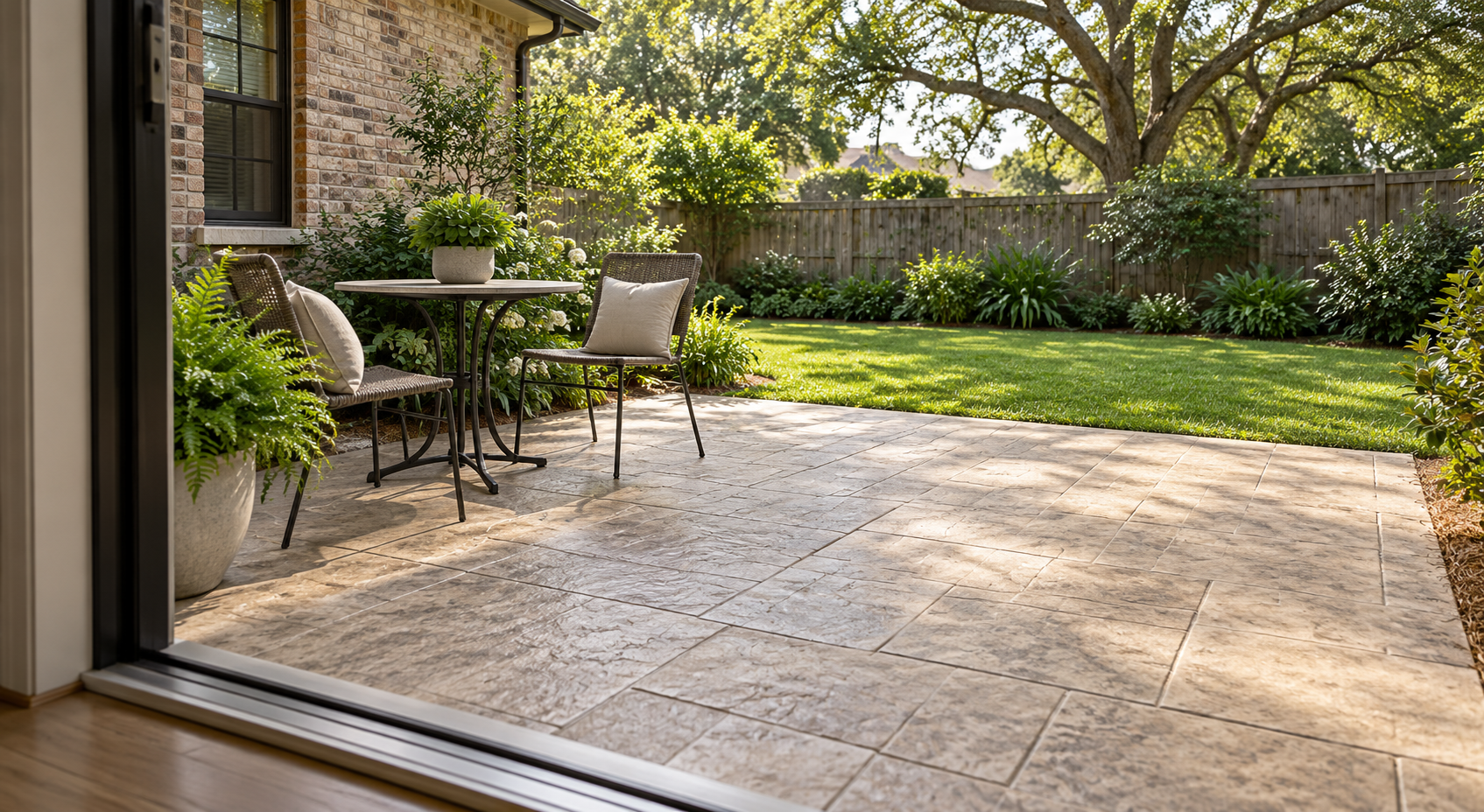
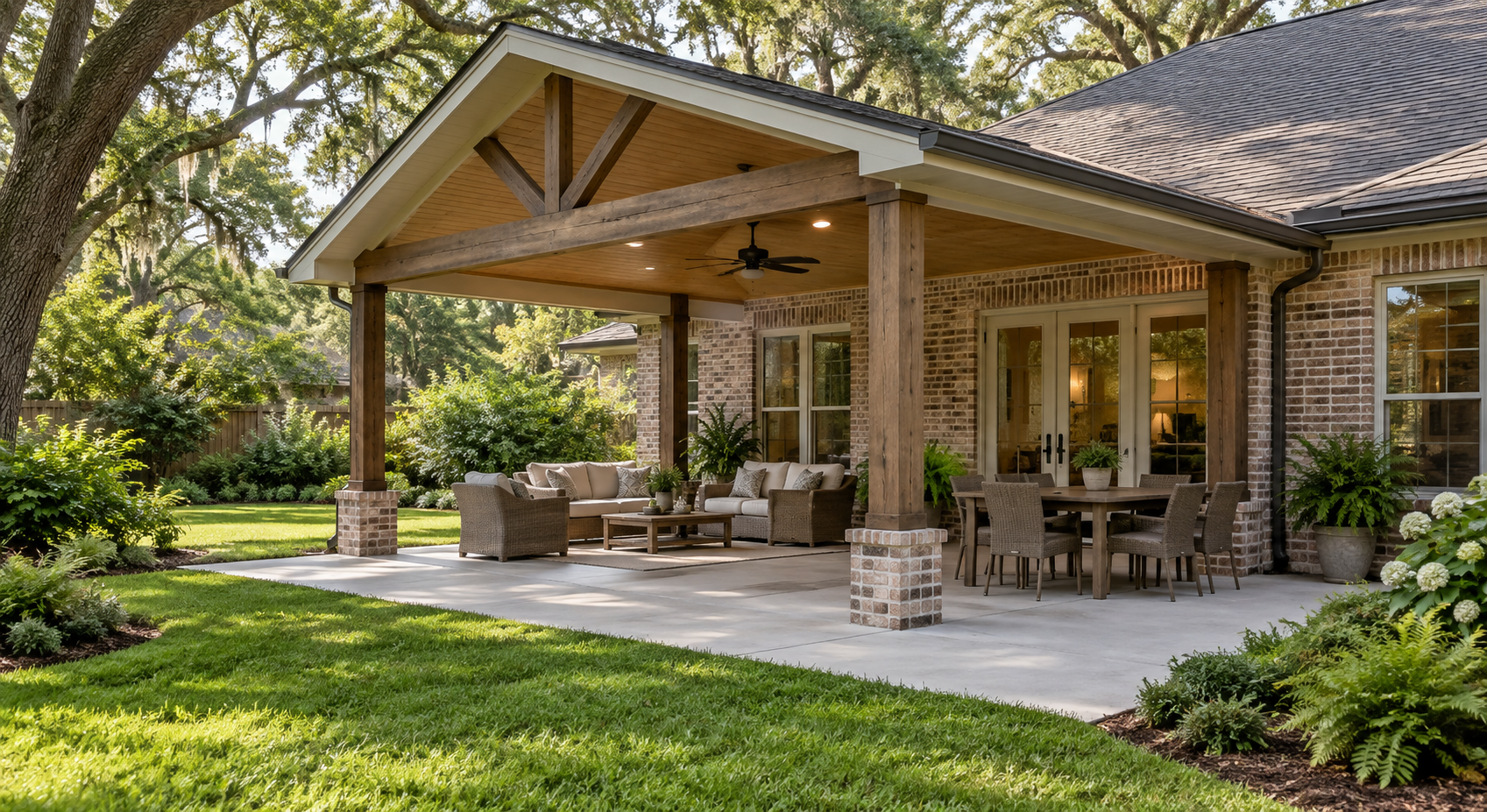
A patio cover changes the environment around a stamped slab. Posts can interrupt the pattern, roof runoff can concentrate water at one edge, and covered and uncovered sections can receive different amounts of sun, rain, and tracked-in moisture. Those conditions should be coordinated before the decorative layout is finalized.
Stamped concrete services in Lafayette include decorative patio surfaces with different patterns, textures, and resealing needs.
T&T Lafayette Concrete Contractors provides stamped concrete installation and resealing services. If a cover is planned now or later, the stamped-concrete layout should account for the cover footprint, drainage, and support locations before borders and pattern direction are approved.
Set the Cover Footprint Before the Stamp Layout
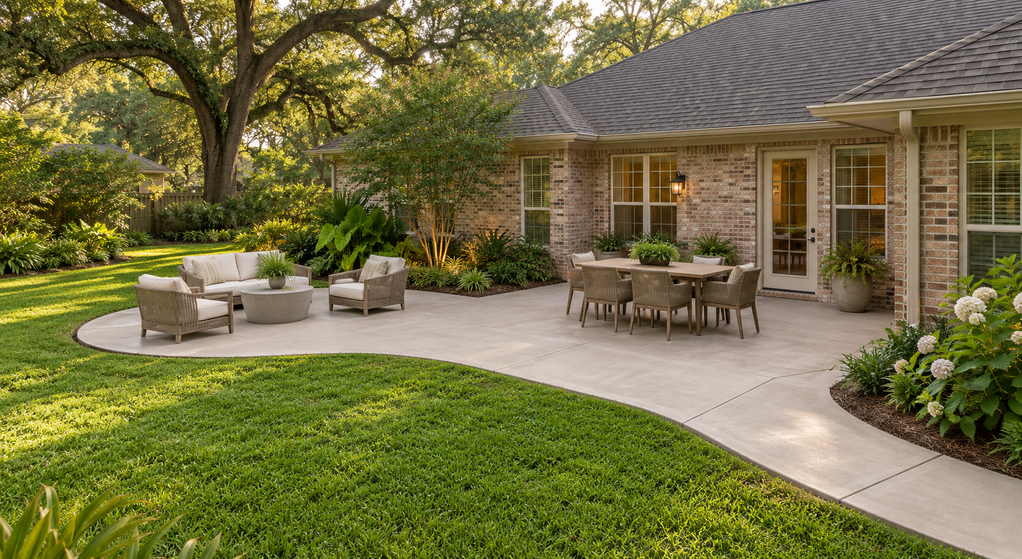
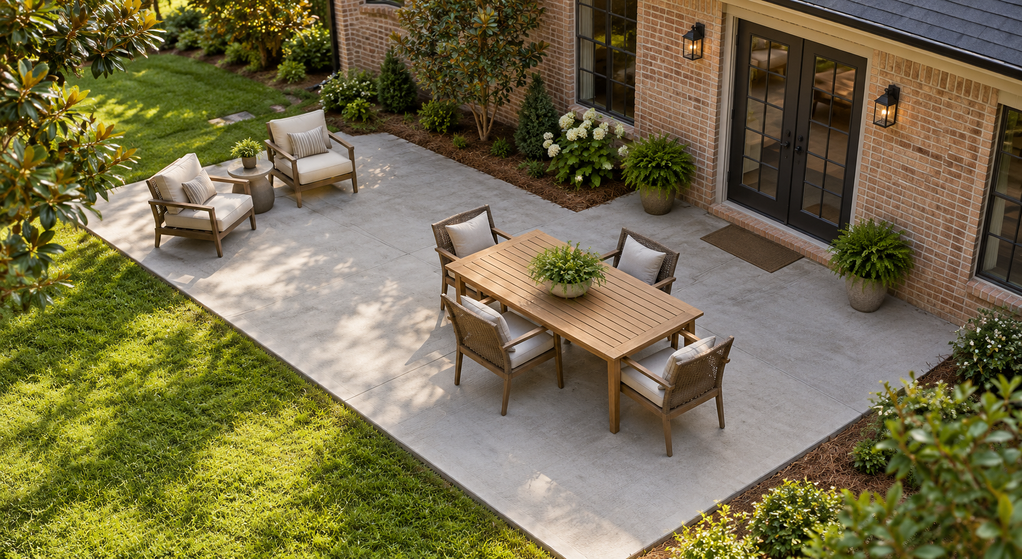
Start with the area that actually needs shelter. Mark the table, seating, door routes, windows, and any outdoor cooking or storage zones. A cover that protects the dining table may not need to span the entire slab.
A partial cover can create a sheltered zone and an open zone on the same patio. That makes the boundary between them important: posts, furniture routes, stamp borders, and required joints all need room without creating a narrow or awkward passage.
| Design factor | Covered / sheltered area | Uncovered / exposed area |
|---|---|---|
| Water | Roof runoff is concentrated at edges or downspouts | Rain falls directly on the slab |
| Finish exposure | More shade; still subject to tracked moisture and wind-driven rain | More direct sun and weather exposure |
| Layout | Posts and supports must coordinate with pattern, joints, and furniture | More open circulation but still needs joint/drainage planning |
| Maintenance | Dust, spills, and moisture near roof edges still require care | Weather exposure may change sealer wear and appearance |
Covered Concrete Patios in Lafayette: Comfort, Shade, and Function provides the broader planning context for shade, supports, airflow, utilities, and everyday use. This stamped-concrete page focuses on how those decisions change the decorative slab beneath the cover.
Route Roof Runoff Before Choosing Borders
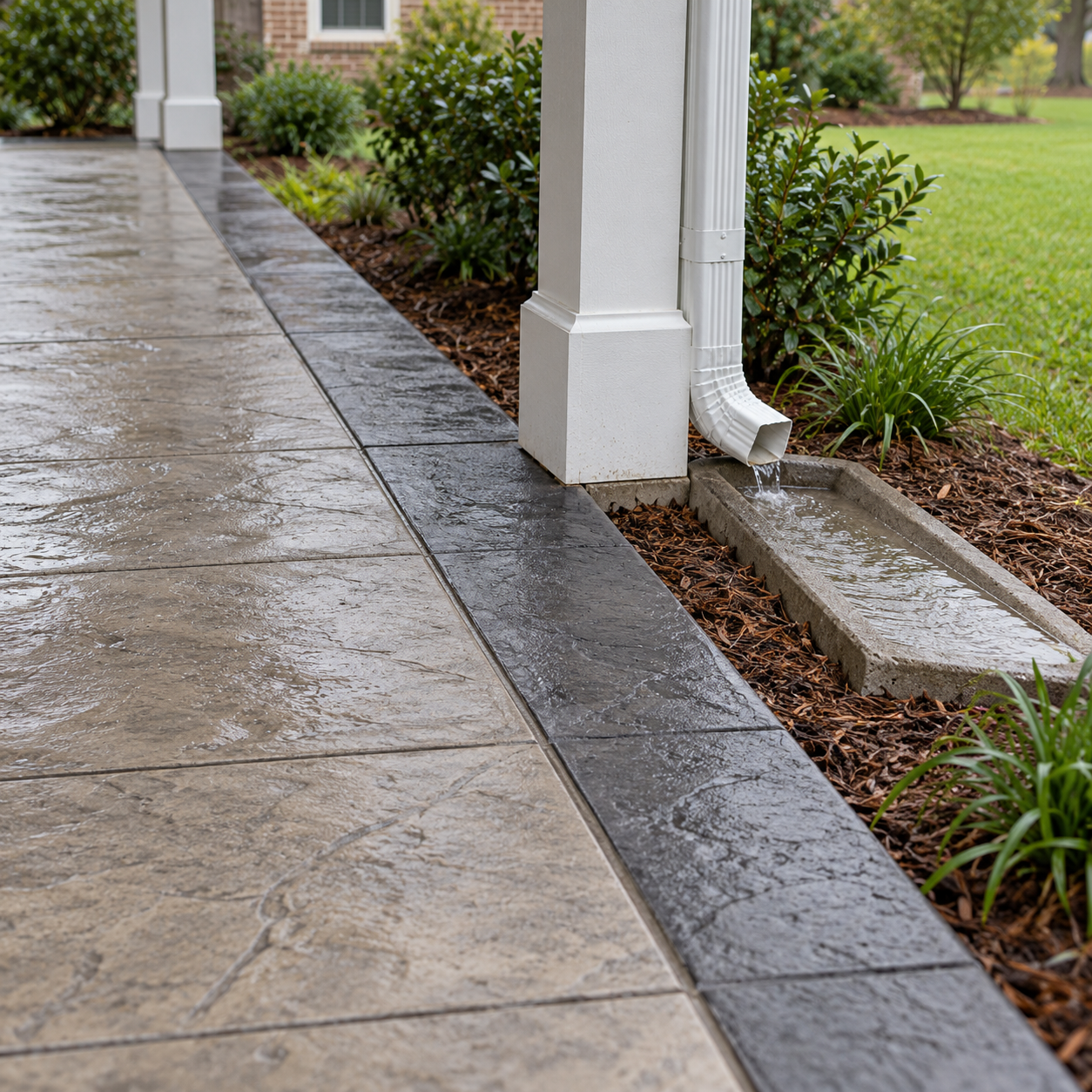
An uncovered slab receives rain across its surface. A roof collects that same rain and releases it at edges, gutters, or downspouts. The finished layout needs a complete route that moves water away from the house without creating a wet walking path or low spot beside the slab.
On the plan, mark roof edges, downspout outlets, door thresholds, slab slope, and the intended discharge direction together. Pay particular attention to the transition between covered and exposed concrete.
A stamped border should not become a raised feature that traps runoff. If a gutter or downspout will cross a walking route, resolve that routing before decorative edge details are locked in.
Use One Finish Plan for Mixed Exposure
Covered concrete is still an outdoor surface. Wind-driven rain, wet shoes, irrigation overspray, spills, and condensation can introduce moisture under a roof. The exposed portion may receive more direct sun and rain, while the sheltered portion may stay shaded longer.
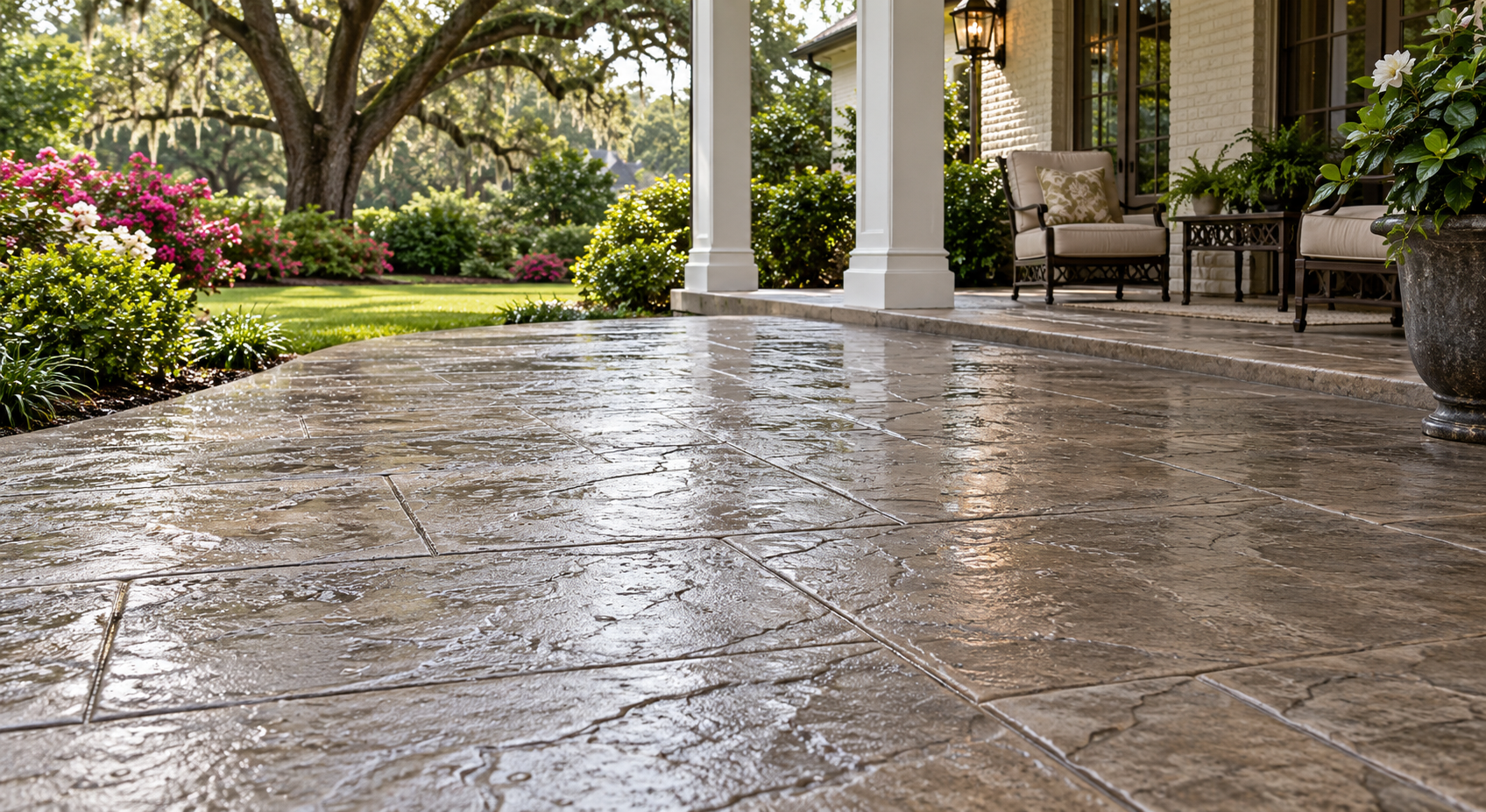
Concrete Patio Finishes in Lafayette: Broom, Stamped, and Decorative Options provides a broader comparison of texture, traction, heat, upkeep, and decorative choices. Use that context when selecting a stamped texture and sealer that must work across both sheltered and exposed areas.
Bob Harris of the Decorative Concrete Institute explains in his guidance on improving stamped concrete slip resistance that texture, suitable
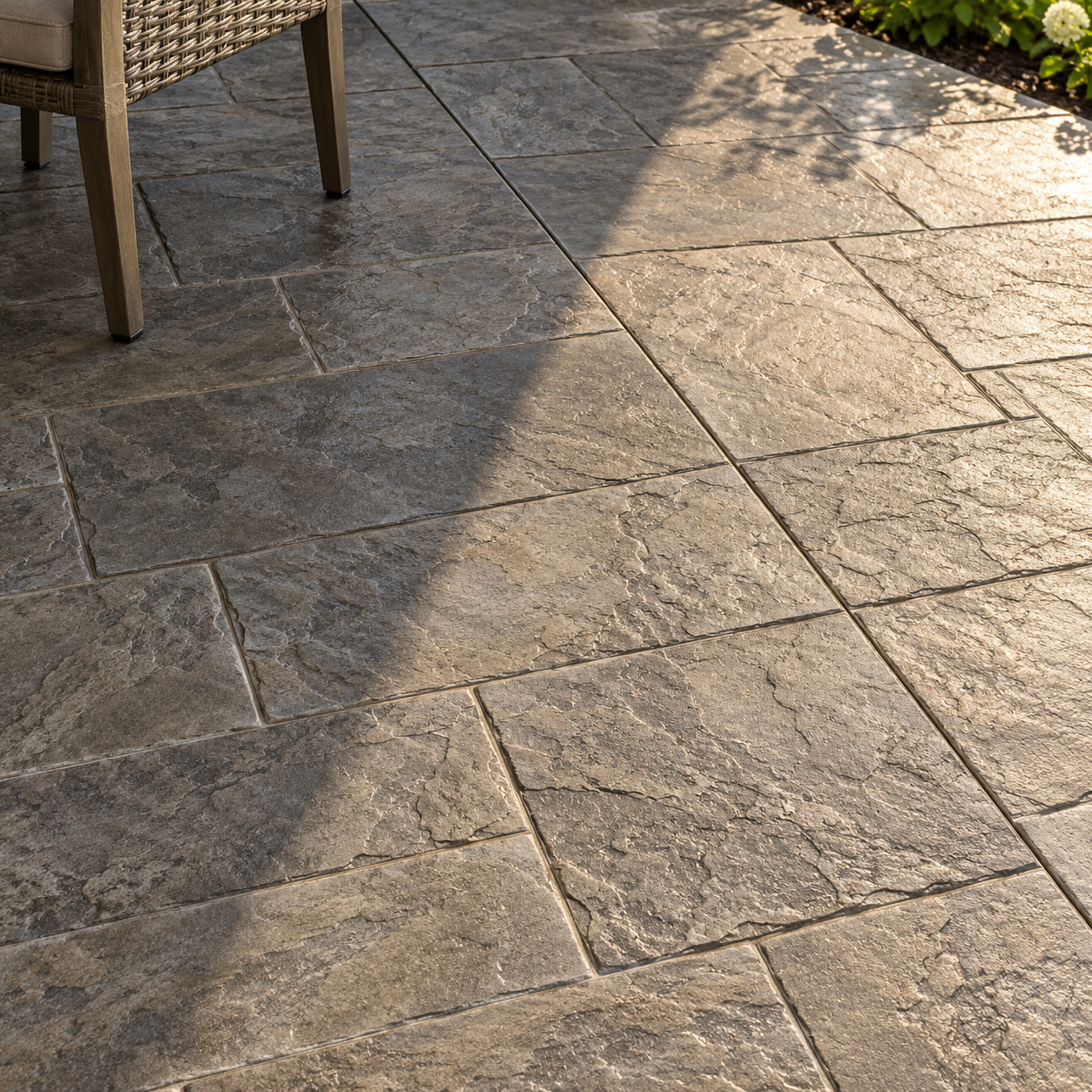
nonskid additives, and avoiding excessive sealer buildup can affect traction. A visible stone pattern alone does not establish how the finished surface will perform when wet.
Ask to review a representative sample with the proposed texture and sealer applied. Check how it feels underfoot, how chair legs sit on it, and whether the appearance works in both the shaded and sun-exposed portions of the patio.
Expect Covered and Exposed Areas to Weather Differently
The two zones may not age at the same rate. The open section can receive more direct weather, while the covered section still accumulates dust, tracked-in dirt, food spills, and moisture near roof edges.
Request cleaning and resealing instructions for the actual products used. Keep product names, color information, and installation records. If one section later looks duller or glossier than another, identify the cause before adding another coat simply to make the sheen match.
Keep cleaning access around posts and furniture in the design. A decorative recess or tight gap that cannot be reached easily can create unnecessary maintenance work.
Plan Supports, Joints, and a Future Cover Before Pouring
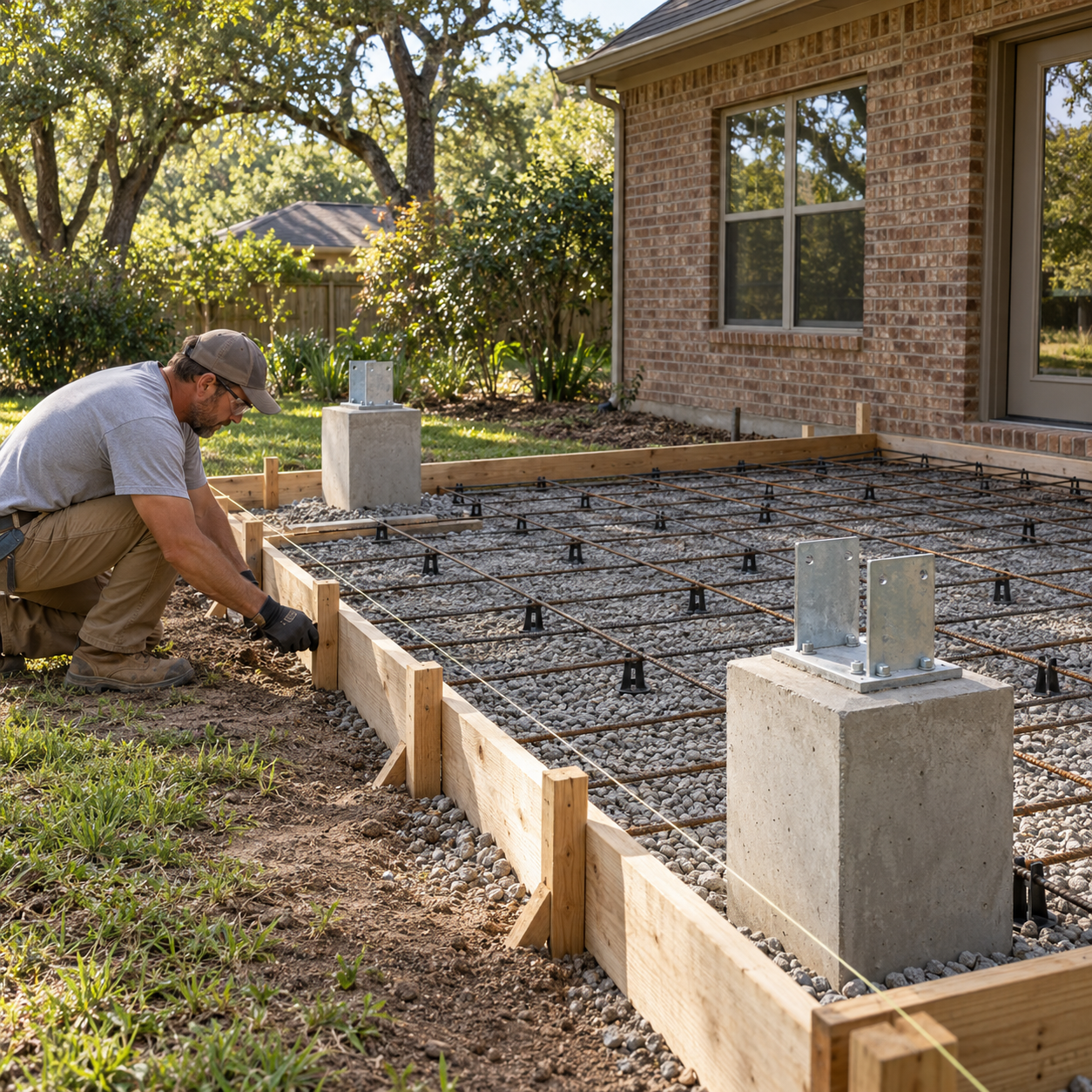
If the cover is part of the current project, coordinate support locations with the slab and stamp layout before placement. Do not assume an ordinary patio slab can support roof posts without the required assessment and support design.
If a cover may be added later, discuss likely support locations now. Planning can help avoid cutting through a finished decorative border or placing future posts where they interfere with circulation.
Required slab joints also need to be shown on the same drawing as stamp borders and cover supports. Decorative pattern lines should not be treated as a substitute for the joint plan.
Before approving the work, review one plan that shows the cover footprint, support locations, furniture, runoff route, joints, borders, pattern direction, and sealer system. The cover and the stamped slab should function as one coordinated outdoor space rather than two separate design decisions.

Written By:
Kurt Manalastas
Home & Property Research Journalist
Kurt is a Home & Property Research Journalist who researches and writes educational content on home services, property improvement, and residential decision-making. He focuses on translating real-world contractor experience, industry standards, and verified research into clear, practical guidance that helps homeowners understand their options and make informed decisions.