Stamped Concrete Problems in Lafayette: Identify the Failed Layer Before Repair
Summary
Stamped concrete problems can involve the protective sealer, decorative surface, or supporting slab. Prevention involves more than a pattern choice: joint planning, consistent finishing, drainage, curing, and compatible maintenance all matter. Identify which layer is failing before paying for resealing, cosmetic repairs, or replacement on a Lafayette property.
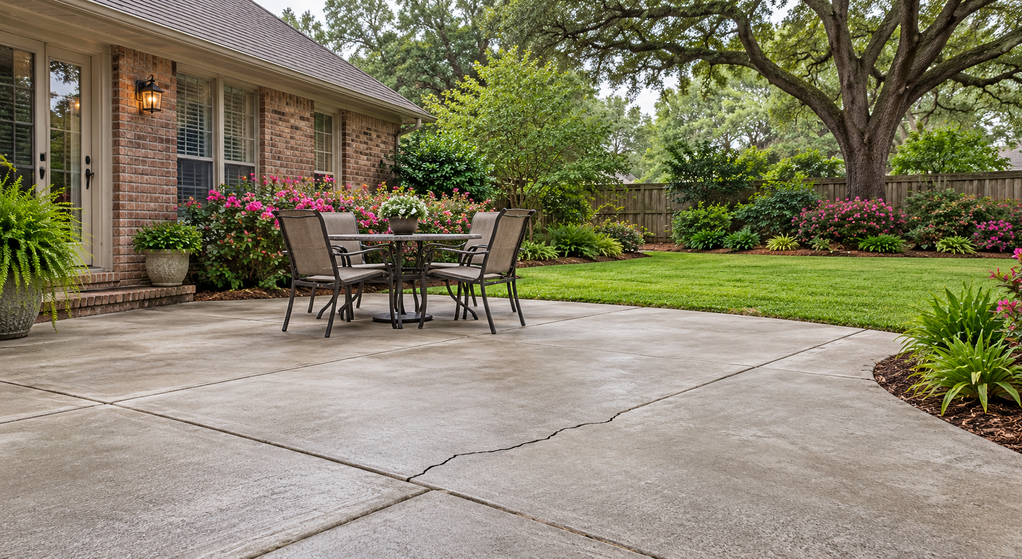
A cloudy patio, a crack crossing a stone pattern, and a shallow puddle may look like related deterioration. They may have little in common once you look beneath the finish. Adding sealer may improve worn gloss, but it will not restore missing concrete or correct a low spot.
When comparing stamped concrete installation and finishing in Lafayette, ask how the proposal addresses performance alongside appearance. T&T Lafayette Concrete Contractors offers stamped concrete, repairs, and resealing. Distinguishing those scopes helps property owners request work that matches the actual problem.
Cloudy, Bubbling, or Peeling Sealer
A milky film does not necessarily mean the concrete’s color has disappeared. Moisture beneath a poorly bonded coating can create whitening. Heavy applications and accumulated coats can also contribute to peeling, while hot surfaces can encourage bubbling.
The sealer formulation and application conditions matter. Moisture, surface temperature, relative humidity, and the thickness of each coat can affect the film, so record the exact product before assuming that every cloudy finish needs the same treatment.
For Lafayette work, the surface condition and the sealer’s own weather limits should drive the sealing date. A rain-free afternoon alone does not establish that recently washed concrete is ready.
Prevention starts with identifying the existing product, checking compatibility, and following its preparation, coverage, and recoat instructions. Avoid adding another coat simply because the finish looks dull. If the existing film is failing, have the removal or restoration method determined before coating the entire area.
Uneven Color and Disappointing Stamp Impressions
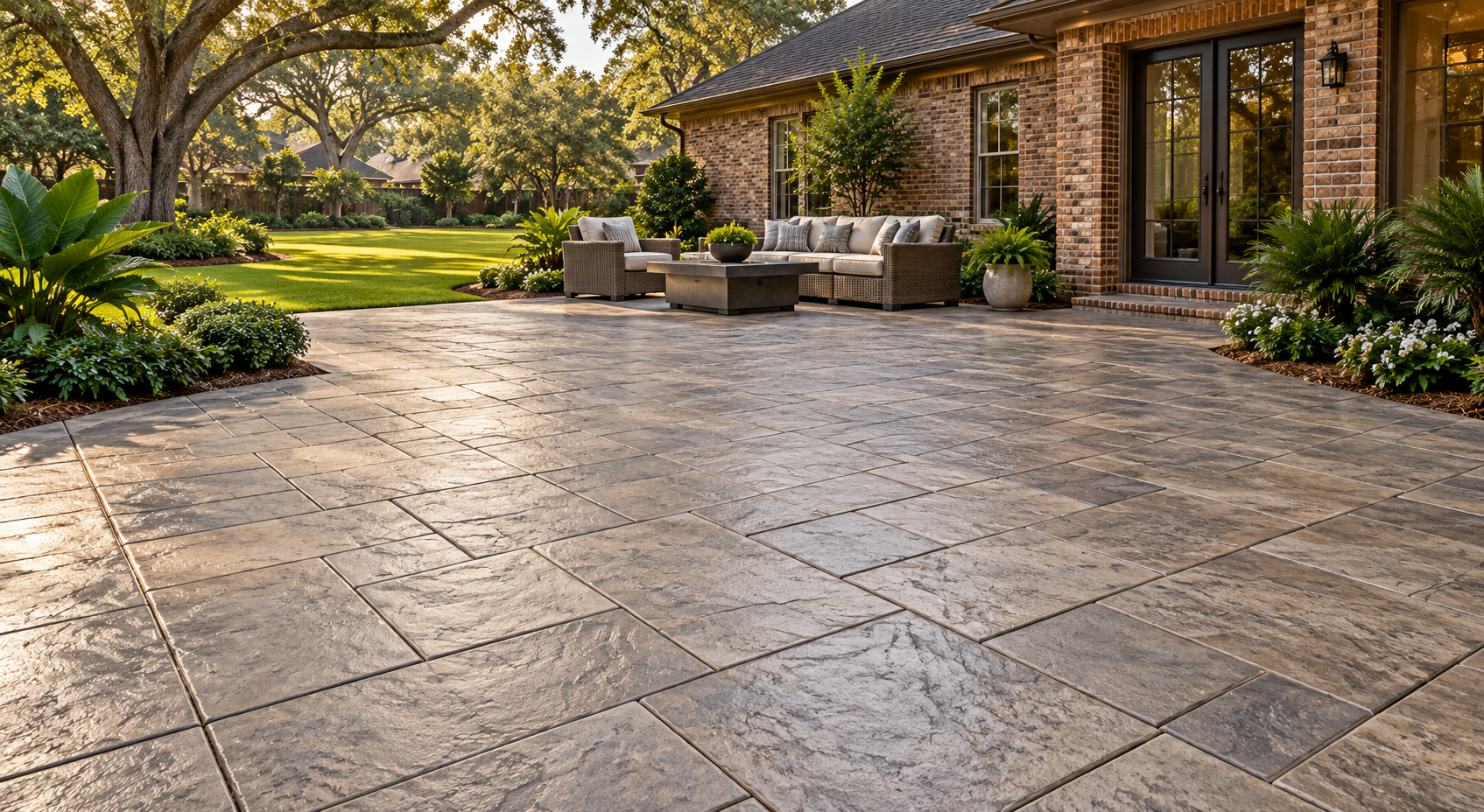
Some variation belongs in a finish intended to resemble natural stone. Abrupt color bands, incomplete impressions, or obvious stamp misalignment are different concerns. Agree on an acceptable appearance before installation, using a representative sample that includes the intended texture, color treatment, and final sealer.
Stamping has a limited working window. Concrete that is too soft may not hold clean impressions; concrete that has stiffened too far may resist the stamps. Crew coordination, access, placement size, and changing conditions therefore matter as much as the chosen pattern.
Ask how borders, steps, corners, and the final stamp pass will be finished. These details deserve planning before concrete arrives.
For existing work, compare cleaned, dry areas before deciding that pigment has faded. Request a small repair trial that includes the proposed final finish. A patch can match the general color yet remain visible because its texture, edges, or weathering differ. An invisible repair should not be assumed.
Cracks Cutting Across the Pattern
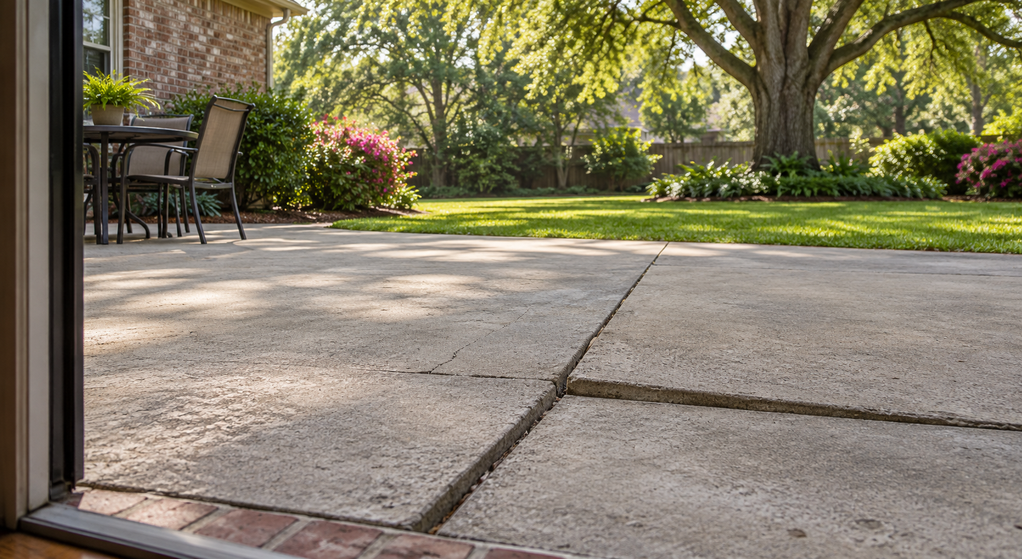
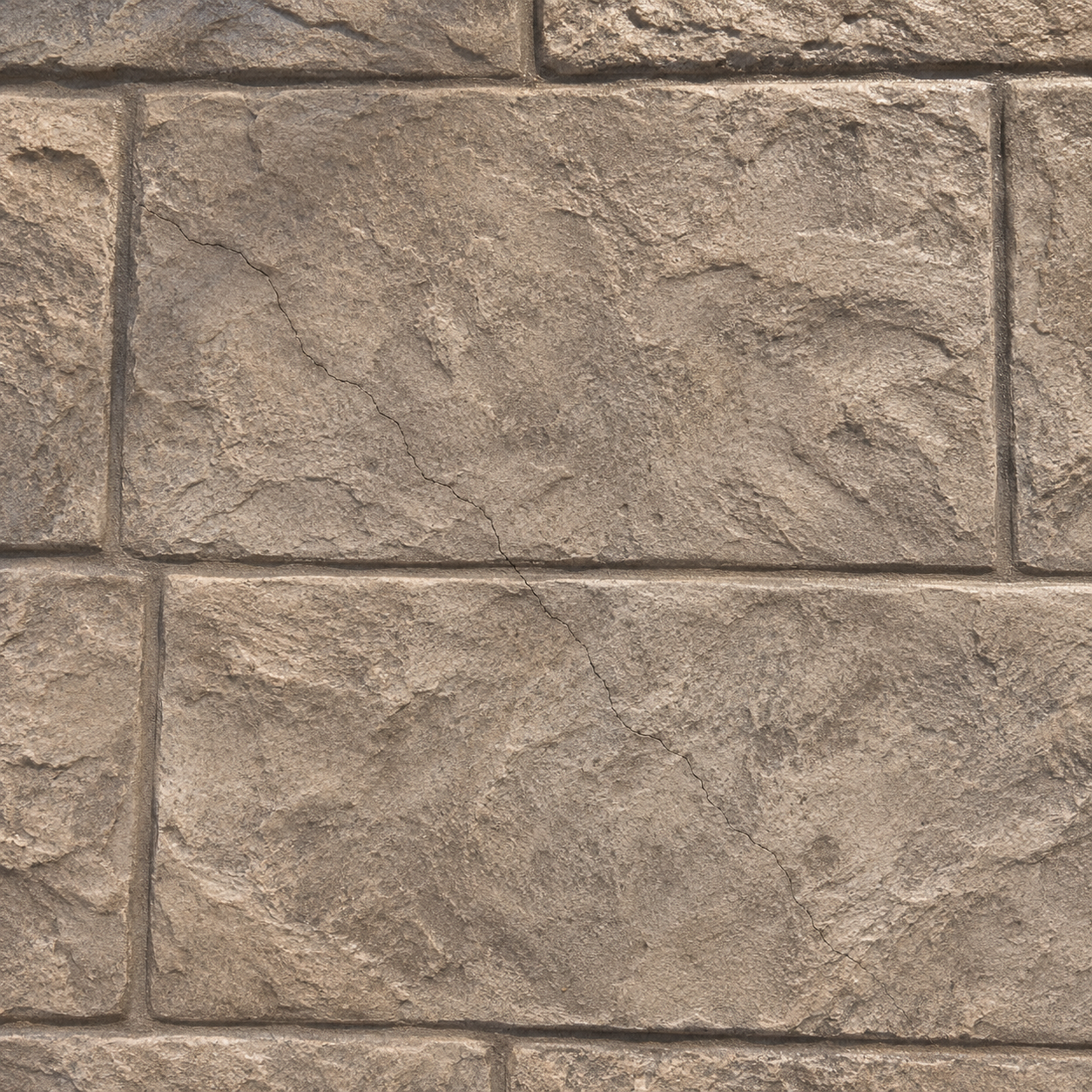
Stamped concrete remains a concrete slab, even when it resembles individual pavers. Decorative grooves are not automatically functional contraction joints. The joint layout must accommodate the slab’s geometry and movement rather than merely follow attractive pattern lines.
Prevention includes stable, properly prepared support, appropriate joint placement and timing, controlled water addition, and suitable curing. Reinforcement does not make concrete crack-proof. Ask to see how joints will interact with the pattern, particularly at corners and narrow connections.
An existing crack needs more than a cosmetic judgment. Photograph
it with a scale, note any height difference, and check whether it changes or starts collecting water. The guide to When Are Concrete Patio Cracks in Lafayette a Serious Concern? explains why movement and displacement deserve closer attention.
A stable hairline crack and a growing, uneven opening should not receive the same repair recommendation. Address continuing movement before investing in color matching.
Puddles and Slippery Walking Areas
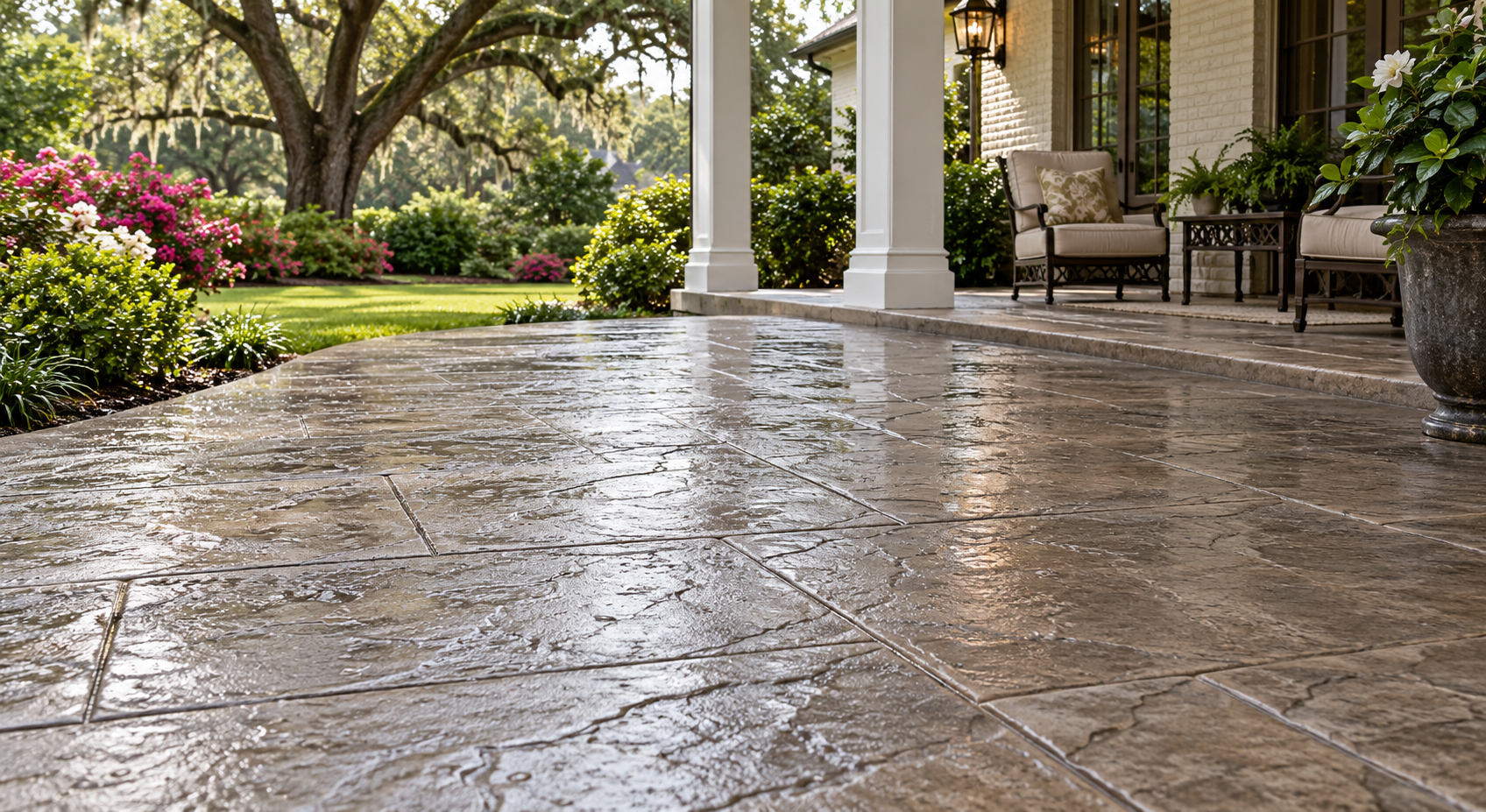
A stamped texture does not establish that a surface will provide adequate wet traction. Water, organic buildup, and the coating system can affect footing, especially near steps, doors, and pool access routes.
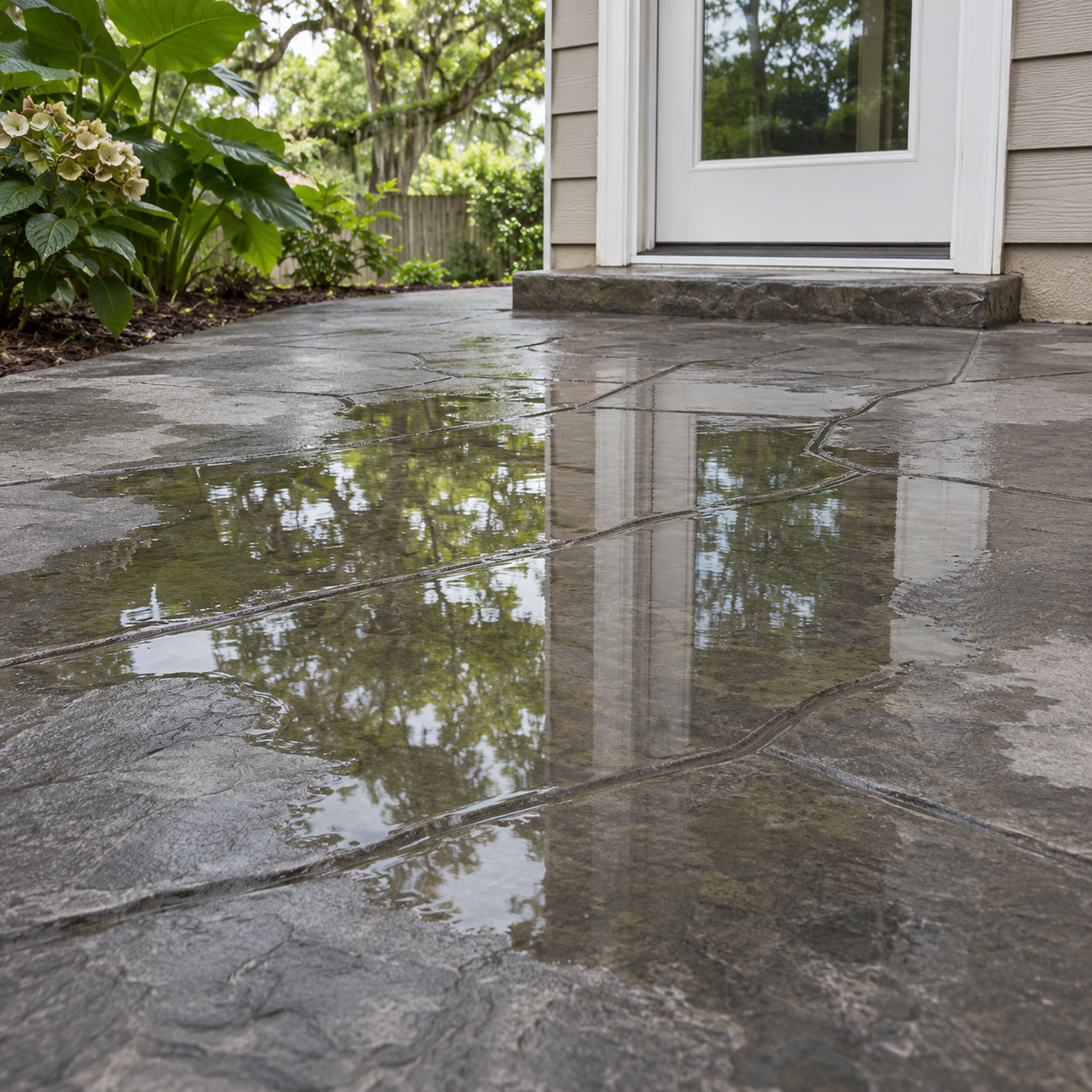
After rainfall, observe where runoff enters and where it stops. Small amounts of water in textured recesses differ from a broad depression that blocks drainage. Record whether the problem existed from installation or appeared later; later ponding can warrant checking for settlement.
Plan elevations and a usable discharge route before pouring. Keep drainage paths clear and redirect irrigation that repeatedly wets walking areas. Resealing cannot correct the slab’s slope.
For coating-related concerns, How to Prevent Slippery Stamped Concrete Around Lafayette Homes provides a focused next step. Ask about a manufacturer-approved traction additive compatible with the chosen sealer. Assess a sample for appearance, cleaning effort, and footing before treating the whole surface.
For concrete coating symptoms, Euclid Chemical’s sealer troubleshooting guide distinguishes trapped-moisture whitening, bubbling, and water-based film-formation problems. It is a diagnostic framework, not proof of the cause on this patio.
Flaking Concrete and Worn Decorative Detail
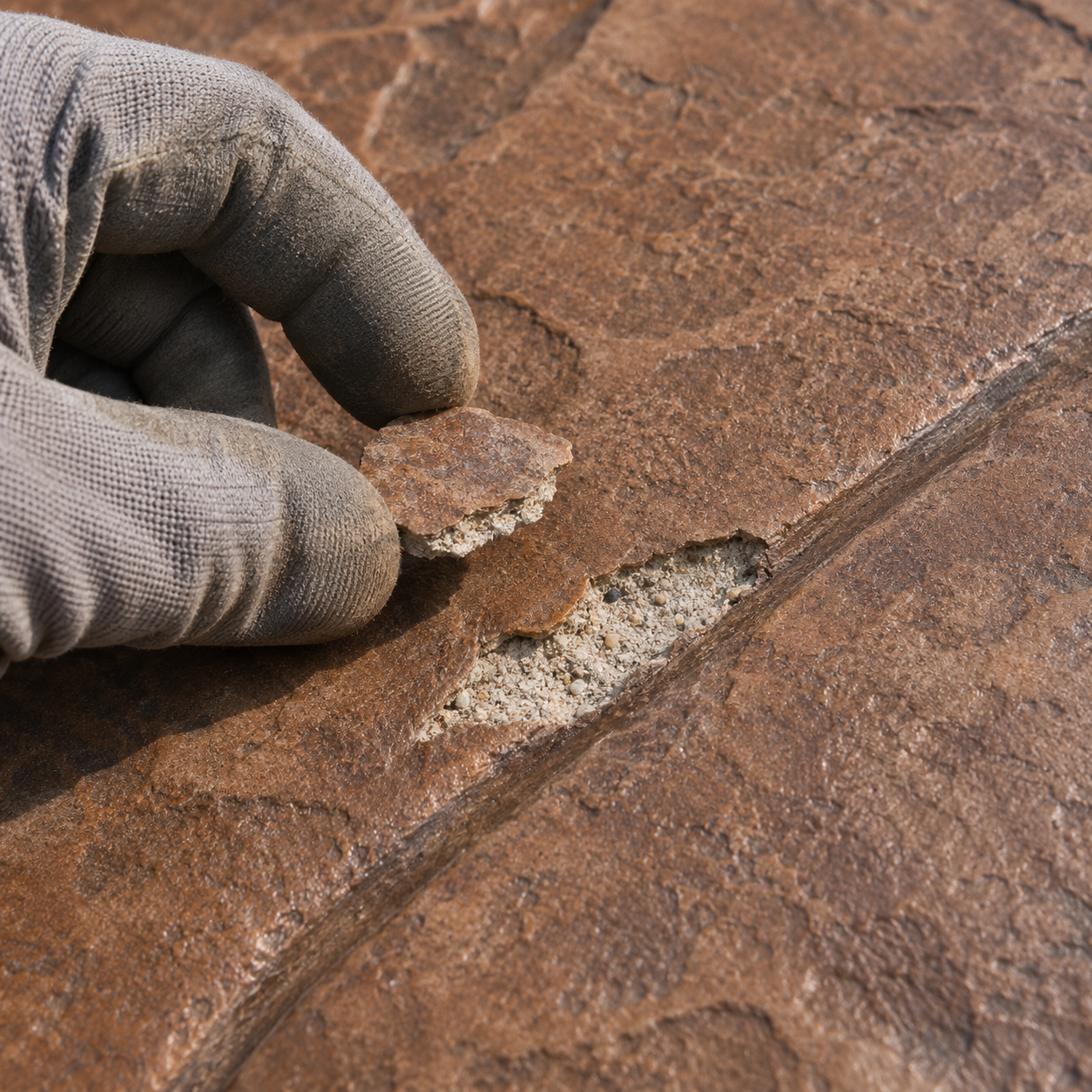
Determine what is coming loose. Thin coating flakes suggest a different problem from gritty concrete fragments or crumbling stamp edges. Photograph loose material and the exposed area before cleaning removes useful evidence.
Surface deterioration can involve finishing or curing problems, exposure, or later damage. Aggressive cleaning can also damage vulnerable decorative surfaces. Start with a cleaning method approved for the finish, test discreetly, and avoid escalating pressure to remove a stubborn mark without identifying it.
Where concrete itself is deteriorating, fresh sealer will not rebuild the lost texture. Ask whether a localized repair can bond to sound material and reproduce the pattern. Widespread deterioration may require a broader restoration or replacement assessment.
Make the Proposed Fix Match the Failed Layer
Before approving work, gather installation records, color information, sealer names, maintenance dates, and photographs showing changes. Ask the proposal to identify the affected layer, likely cause, preparation method, expected appearance, and conditions that could limit the repair.
For new installations, document the sample, joint layout, drainage approach, curing plan, and maintenance requirements. Stamped concrete is easier to protect when those decisions happen before the pour. For existing surfaces, correcting the cause first gives cosmetic work a better chance of lasting.

Written By:
Kurt Manalastas
Home & Property Research Journalist
Kurt is a Home & Property Research Journalist who researches and writes educational content on home services, property improvement, and residential decision-making. He focuses on translating real-world contractor experience, industry standards, and verified research into clear, practical guidance that helps homeowners understand their options and make informed decisions.