What to Know Before Installing Stamped Concrete in Lafayette
Summary
Before installing stamped concrete in Lafayette, settle the slab layout, drainage, pattern, color expectations, and maintenance plan. The most useful estimate explains what happens beneath the decorative surface and after installation. Compare complete scopes, inspect realistic samples, and understand how joints, weather, and future repairs affect the finished result.
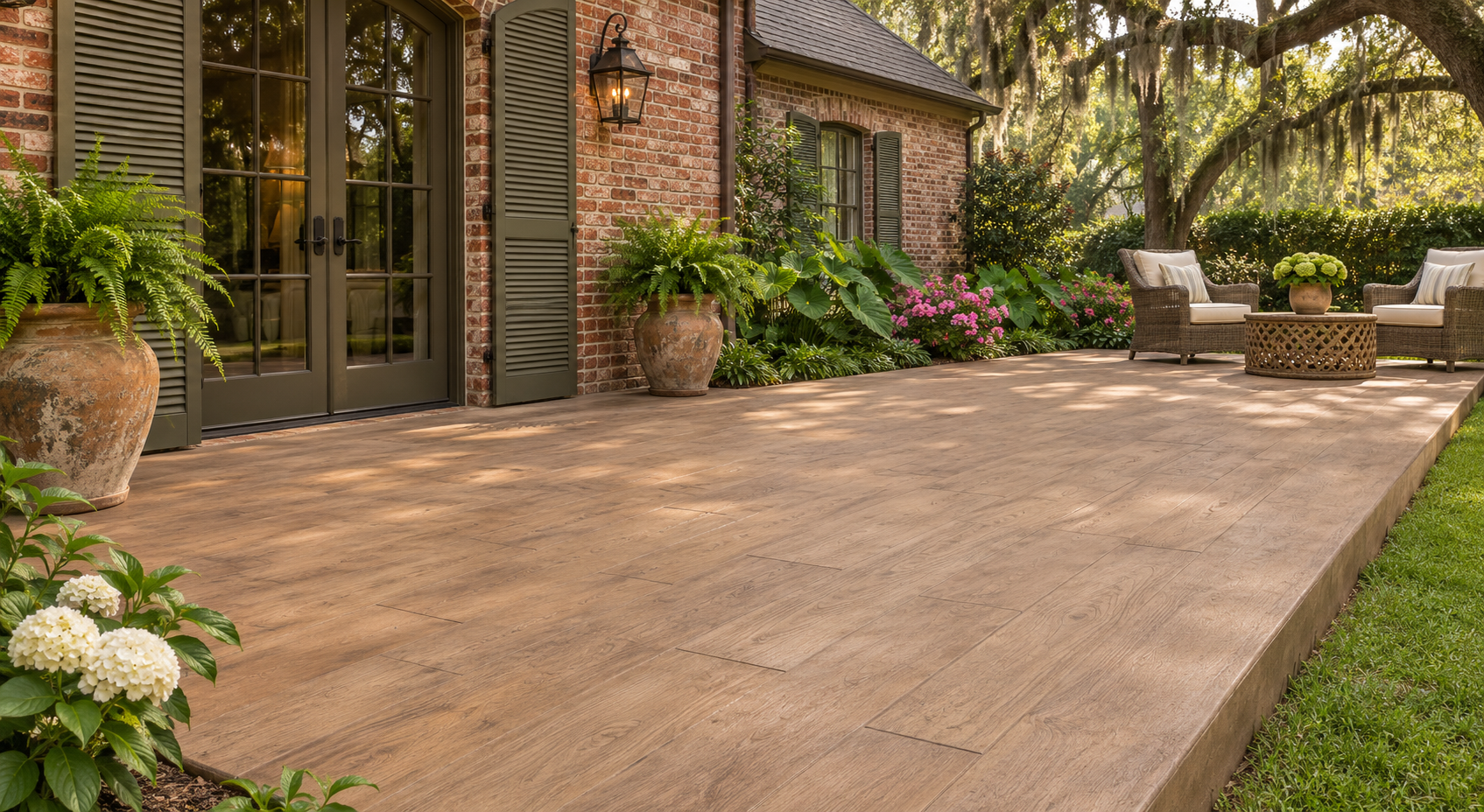
A stamped concrete sample can make the decision look simple: choose a stone pattern, select a color, and schedule the pour. The harder choices involve the finished elevation at your back door, where rainwater will go, and how visible joints will cross the design.
Before comparing stamped concrete installation and finishing in Lafayette, decide how the space must function. A dining patio, pool surround, and driveway need different conversations about loads, texture, access, and maintenance. Set those requirements before paying for decorative upgrades.
Settle the Slab and Drainage Before Choosing the Stamp
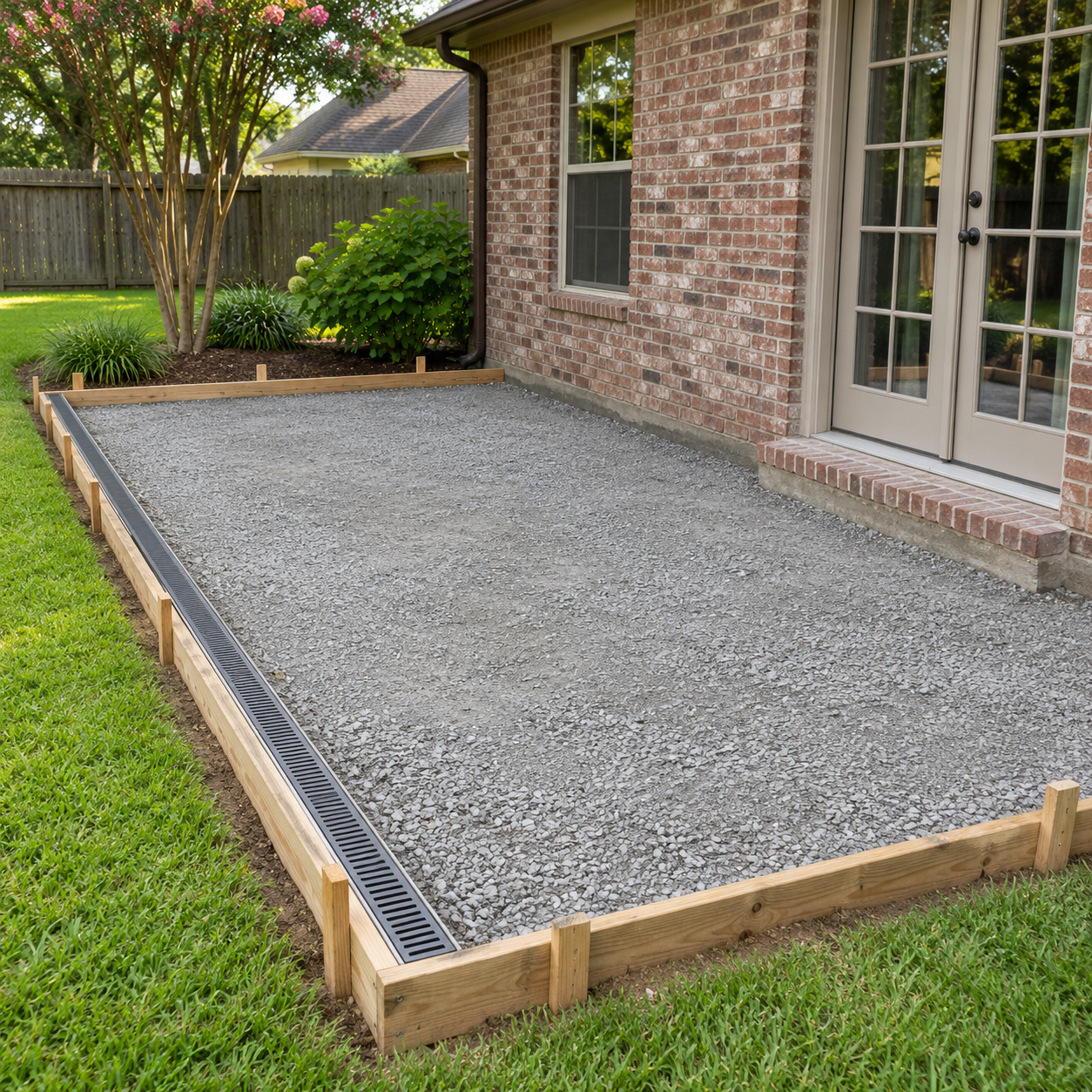
Stamping decorates the concrete surface; it does not redesign the slab beneath it. It does not compensate for inadequate support or a layout that traps water beside the house. Ask the contractor to explain the proposed excavation, support preparation, slab thickness, reinforcement, and finished elevations for your intended use.
T&T Lafayette Concrete Contractors offers stamped patios, walkways, and driveways, along with concrete repairs and resealing. When discussing a project, distinguish the work required to build a dependable slab from the choices that determine its appearance. Both should be clear in the proposal.
Walk the site after rain if possible. Note downspout discharge, water collecting near thresholds, and runoff crossing the proposed footprint. Ask where water leaving the new slab will go, including what happens along the adjoining lawn. A patio should not solve its puddle problem by sending water toward the back door.
Also clarify what you are buying: newly poured stamped concrete or a decorative overlay on an existing slab. An overlay requires evaluation of the existing concrete; covering moving cracks or settlement does not correct the underlying problem.
Approve the Whole Appearance, Including the Joints
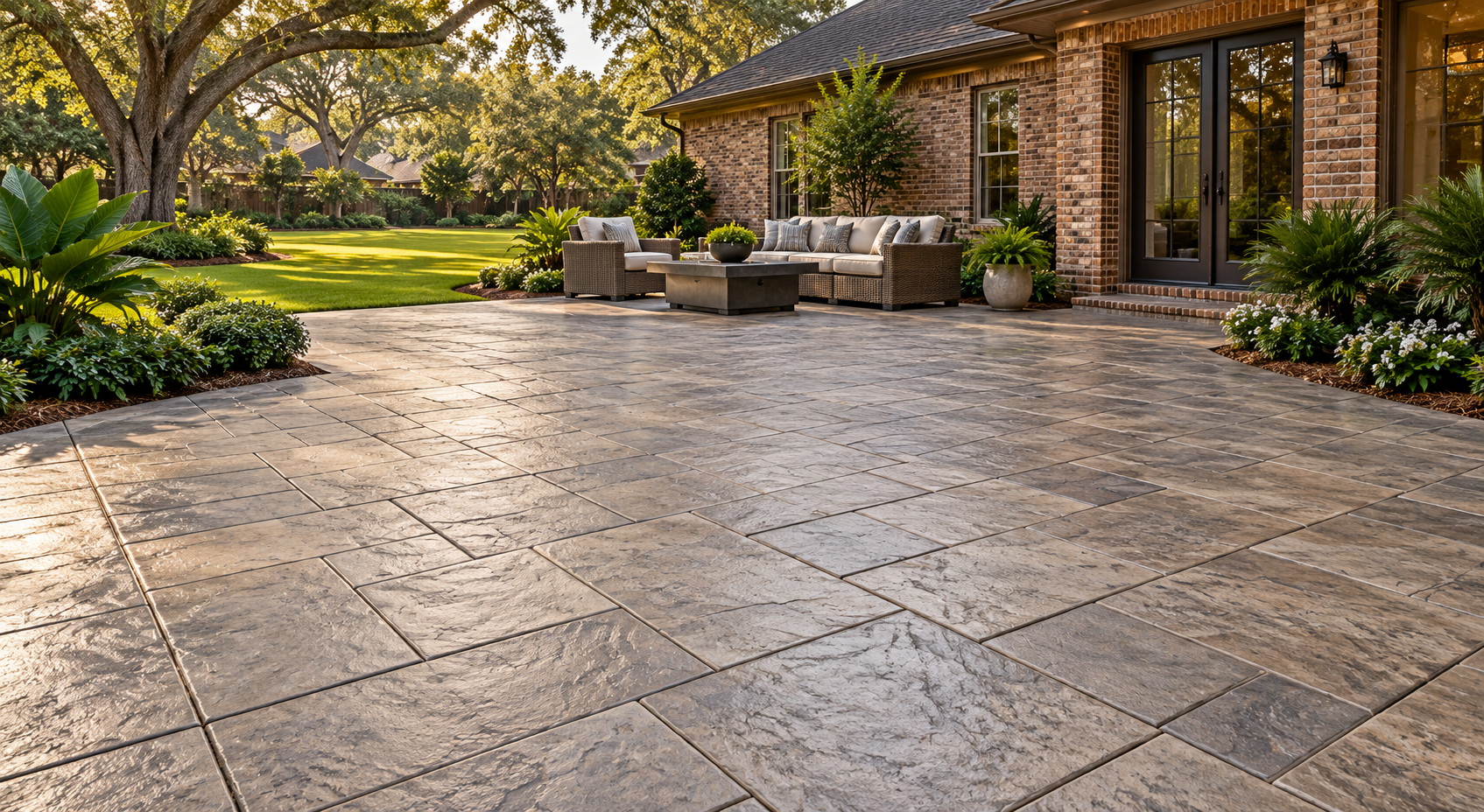
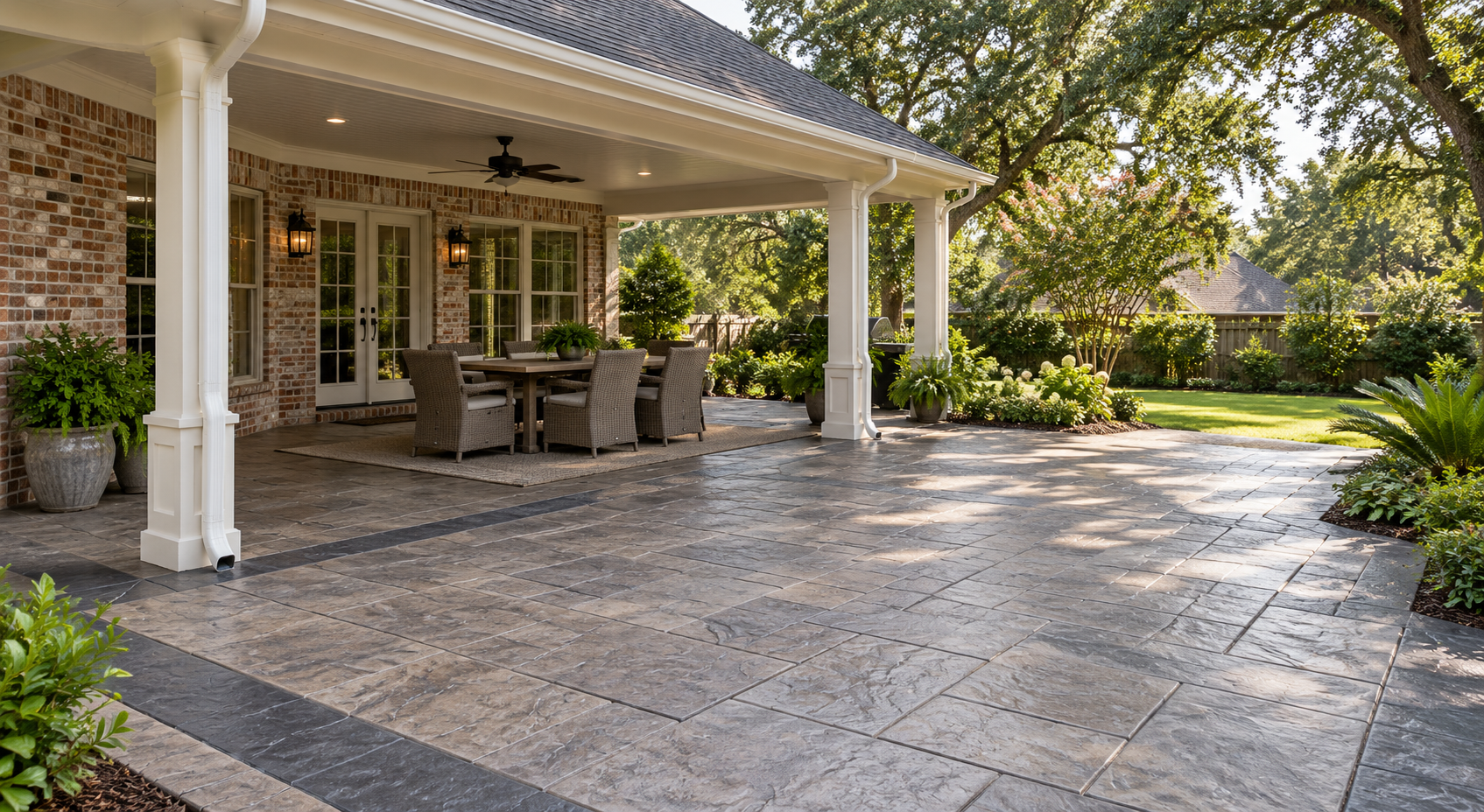
A small sample cannot show how a repeating pattern will look across your entire patio. Request a layout showing pattern direction, borders, steps, and joint locations. Look at where the design meets doors and narrow passages, where awkward cuts or crowded borders become conspicuous.
Stamped lines that resemble mortar joints are decorative impressions. They do not automatically replace properly designed contraction joints. Ask how functional joints will fit the design and what visible lines to expect. Reinforcement does not make a slab crack-proof, and attractive stamping cannot guarantee that every crack will follow a planned joint.
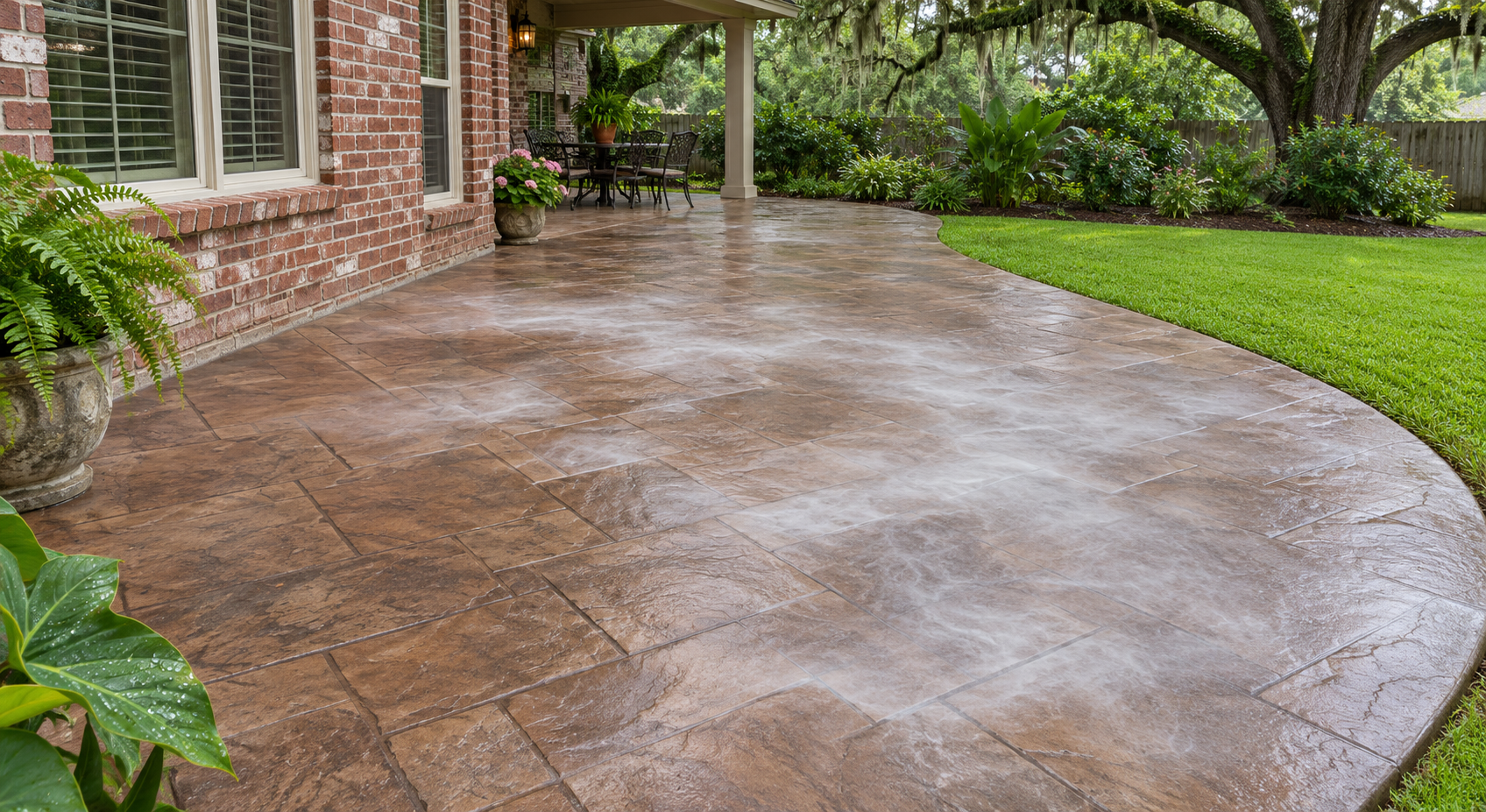
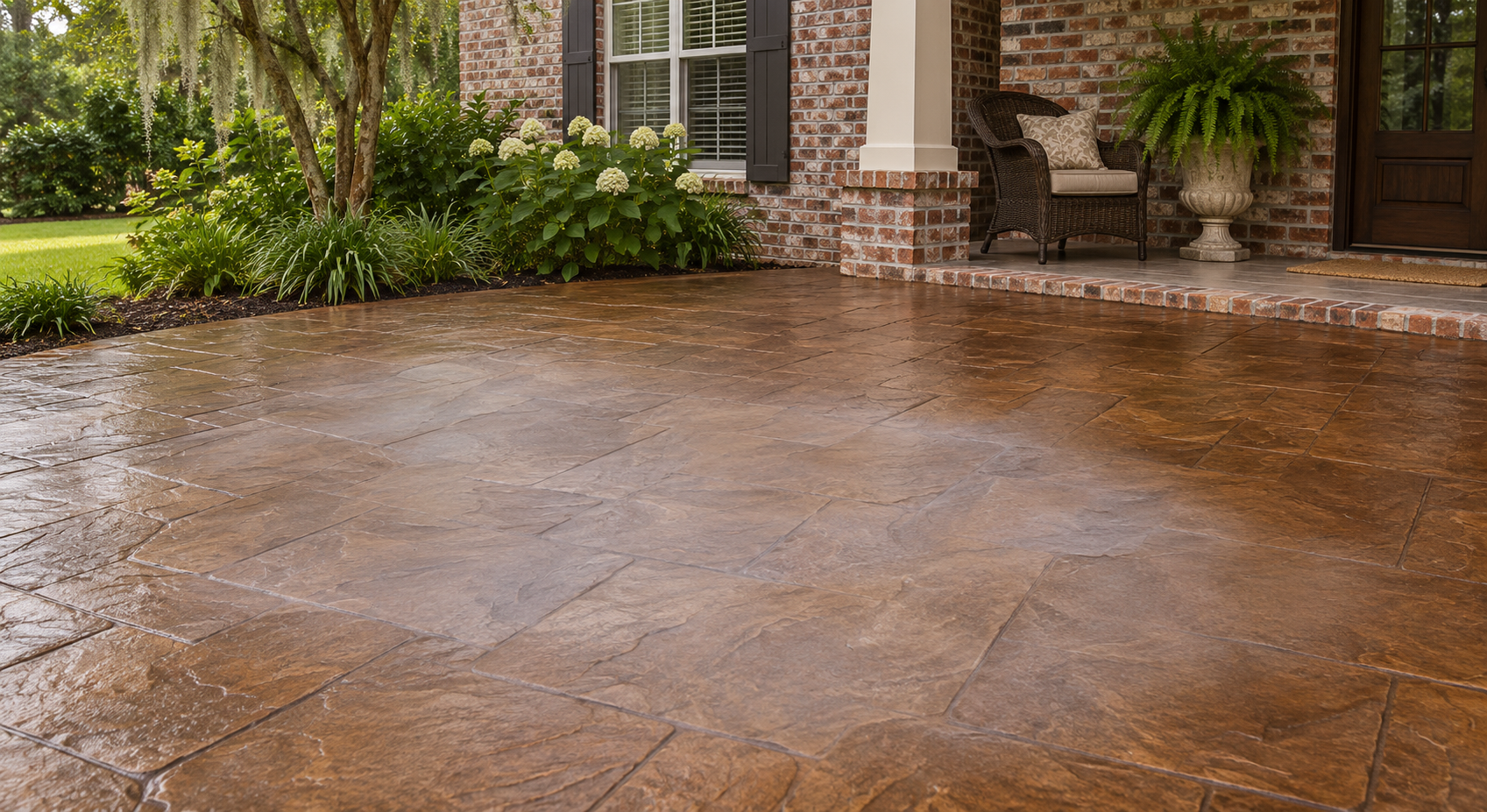
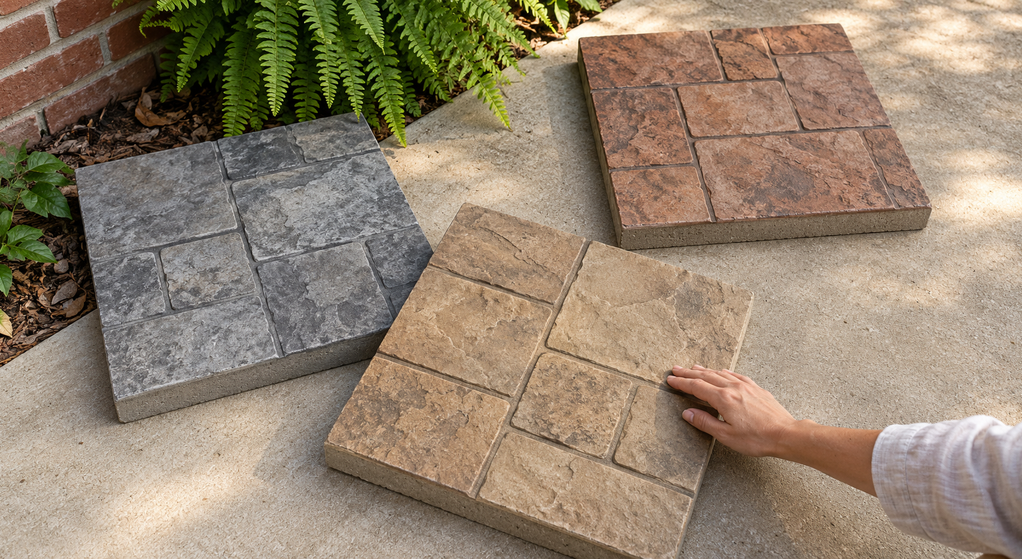
Review a physical sample with the proposed coloring and sealer, preferably outdoors. Treat it as an agreed reference rather than a promise of identical color everywhere. Clarify the acceptable degree of variation, including darker accents and differences between pours. Phone screens and wet photographs can make colors appear richer than the finished surface normally looks.
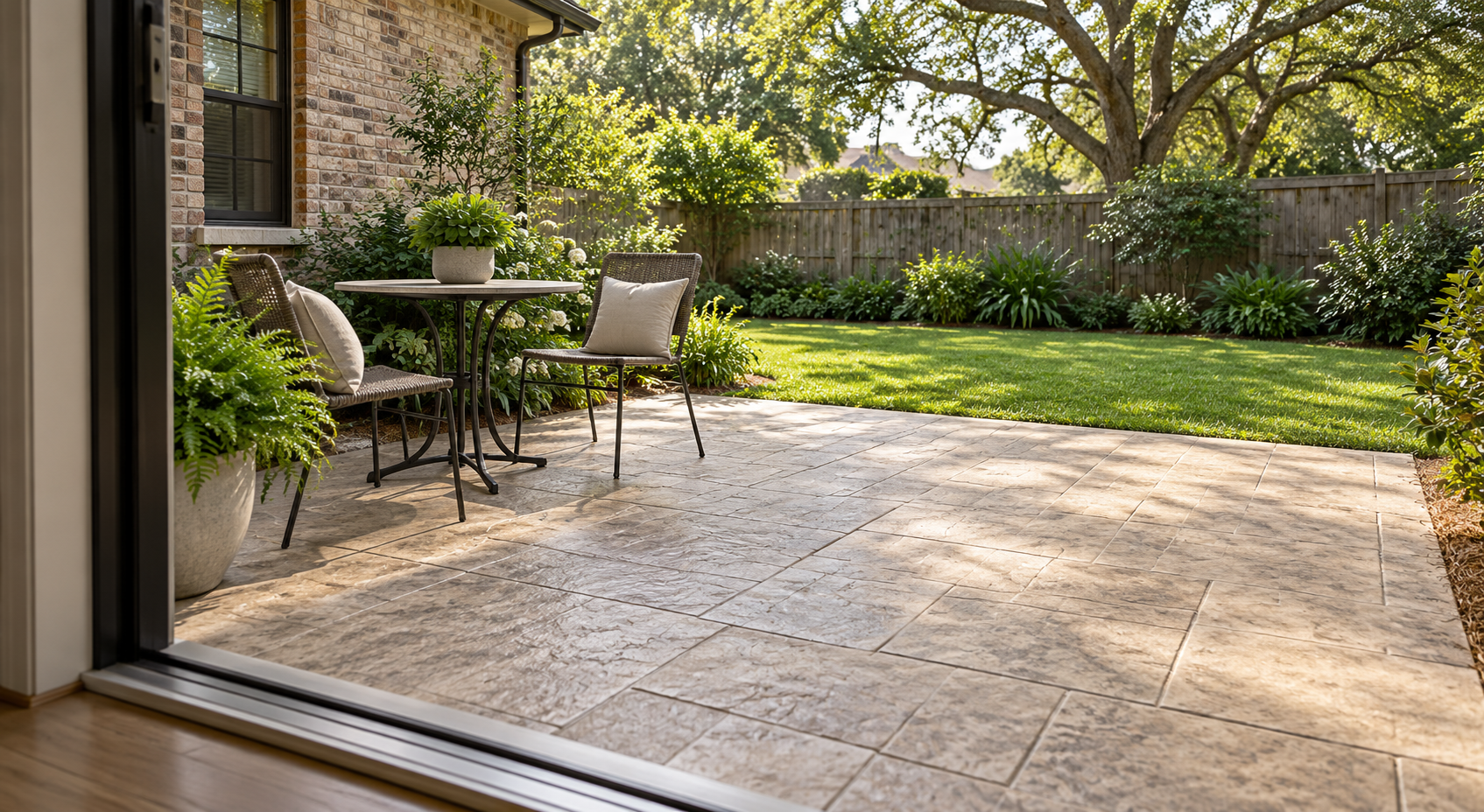
For a compact space, pattern scale and border width deserve particular attention. To learn more, read How to Make a Small Lafayette Patio Look Bigger with Stamped Concrete.
Judge Texture by Daily Use
Choose texture with the actual users in mind. Deep impressions may create an appealing stone effect, but consider chair legs, wheeled equipment, bare feet, and routine sweeping before approving them. Ask to see a completed installation with a similar finish, ideally one that has been in use for a while.
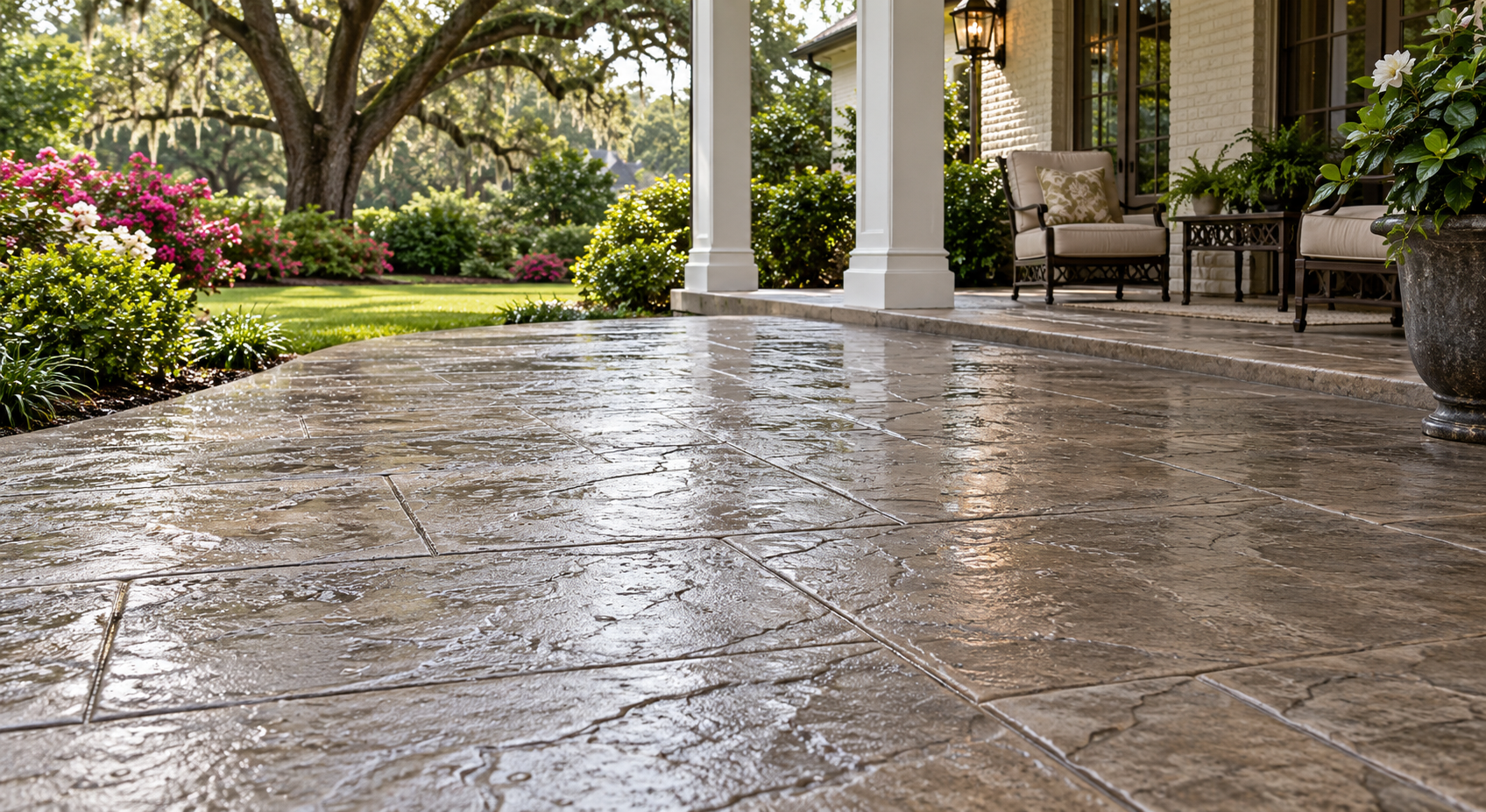
A textured appearance alone does not establish wet traction. Discuss the proposed sealer, any compatible traction additive, and the intended use of the surface. A shaded walkway and a frequently wet poolside area deserve more attention than a decorative strip nobody walks across.
Plan for cleaning access as well. Leaves and dirt should be easy to remove around furniture, planters, and drainage outlets.
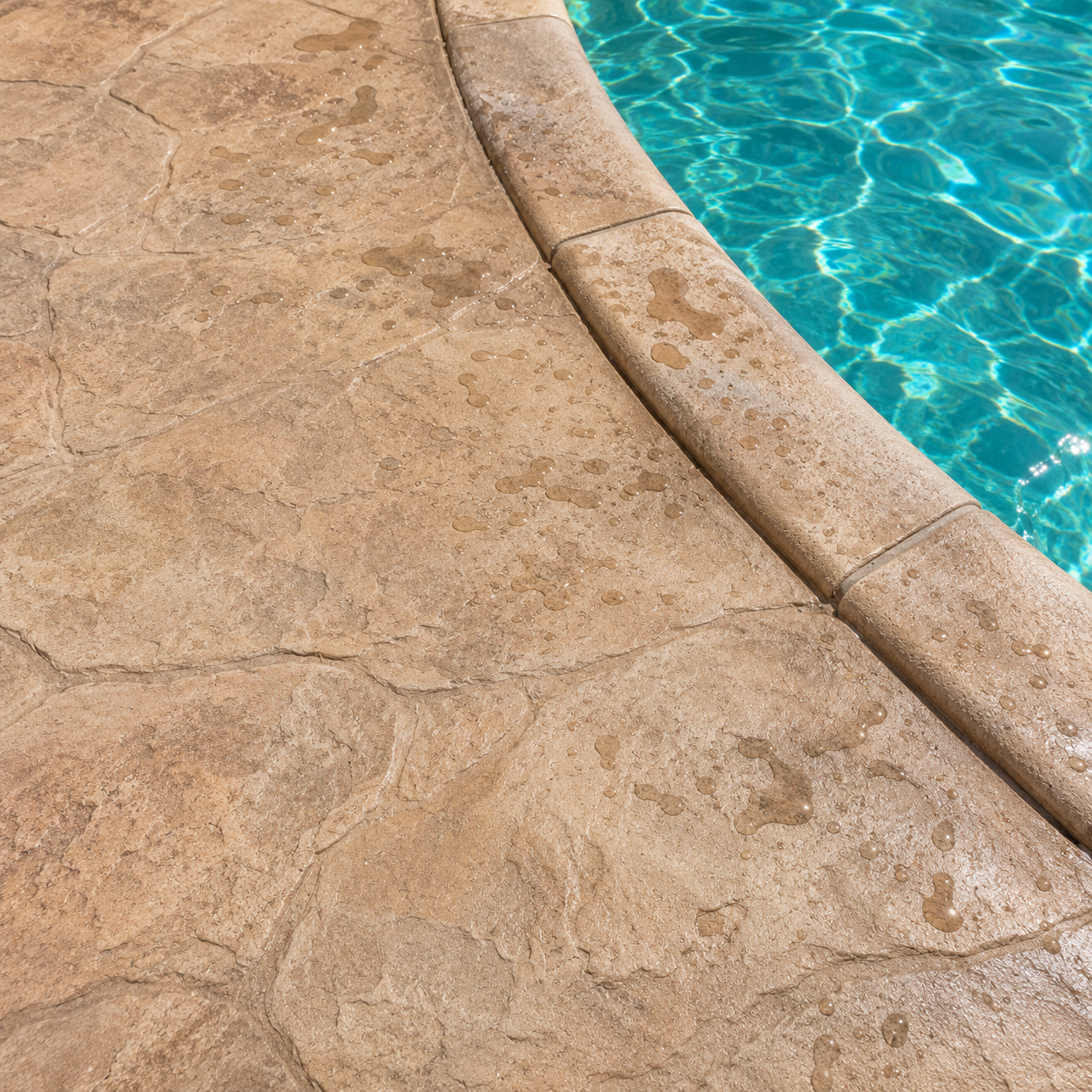
To learn more about the relationship between surface buildup, sealer, and wet footing, read How to Prevent Slippery Stamped Concrete Around Lafayette Homes.
Make Curing and Sealing Part of the Schedule
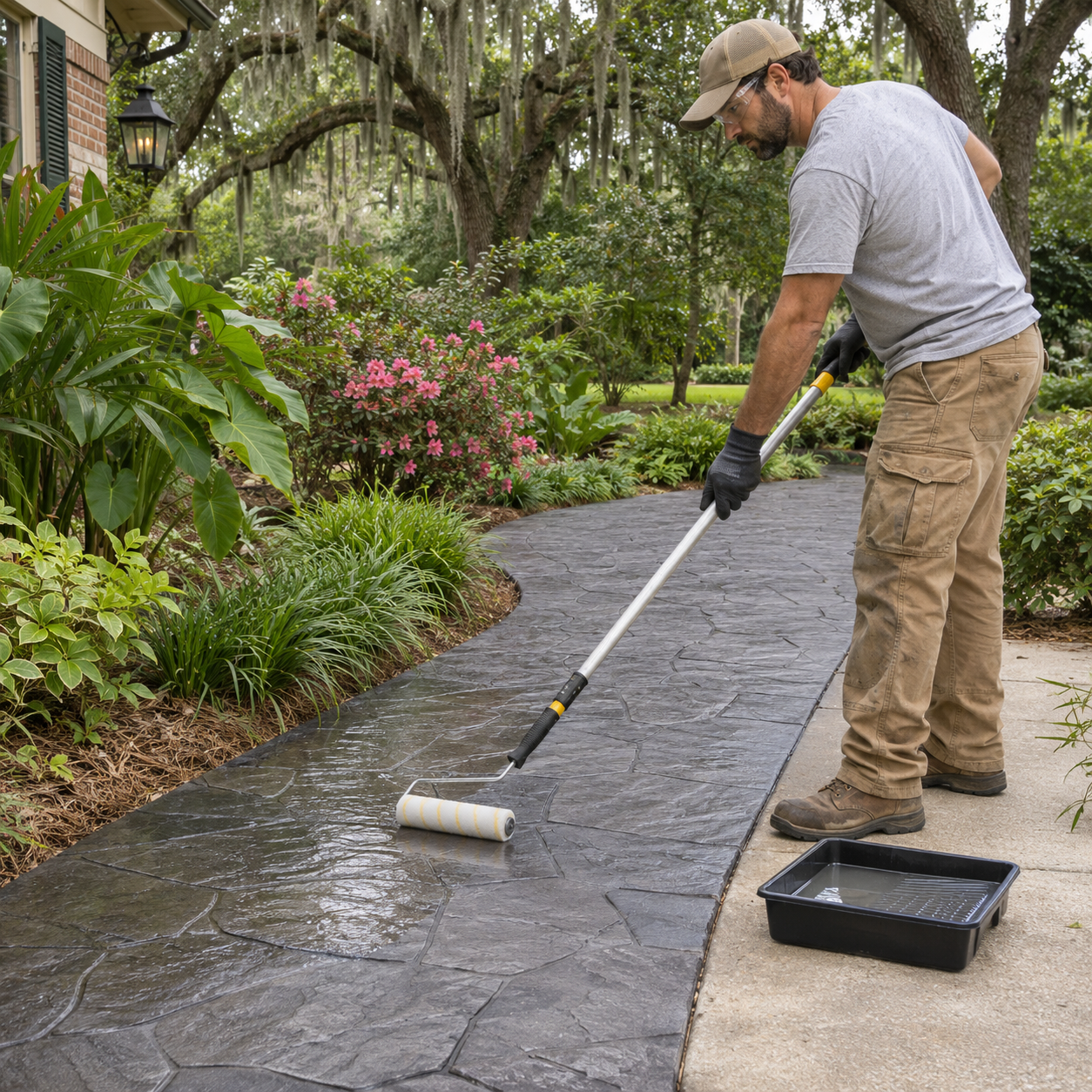
The installation schedule should extend beyond the day the pattern is stamped. Ask how curing will be handled, when cleaning and sealing will occur, and what conditions would delay each stage. For an outdoor Lafayette project, discuss rain protection and the effect of surface temperature on the selected products.
The American Society of Concrete Contractors’ guidance on sealing stamped concrete emphasizes product-specific curing requirements, surface preparation, and application rates. It also recommends resealing according to need rather than automatically following a fixed calendar. Excessive applications can create buildup and bonding problems.
Request separate instructions for walking, placing furniture, and driving on the finished concrete, as applicable. Do not assume that a surface ready for foot traffic is ready for vehicle loads. Get the sealer’s product name and maintenance instructions in writing so future work can account for compatibility.
Compare the Complete Price and Future Repair Options
A useful quote identifies demolition and disposal, access arrangements, ground preparation, drainage work, concrete specifications, coloring, stamping, joints, curing, sealing, and cleanup. Confirm which items are included and how unexpected unsuitable ground would affect the price.
Decorative complexity can also affect future repairs. A patch or replacement section may remain visible because matching an aged color and pattern is difficult. Ask how damage would be addressed and what the written warranty covers, particularly regarding cracking, color variation, and sealer performance.
Before signing, resolve three things on paper: the finished layout, an appearance reference, and the full installation scope. Stamped concrete is easier to evaluate when you know what you are approving. A photograph may start the conversation, but the drawing and scope should decide the purchase.

Written By:
Kurt Manalastas
Home & Property Research Journalist
Kurt is a Home & Property Research Journalist who researches and writes educational content on home services, property improvement, and residential decision-making. He focuses on translating real-world contractor experience, industry standards, and verified research into clear, practical guidance that helps homeowners understand their options and make informed decisions.