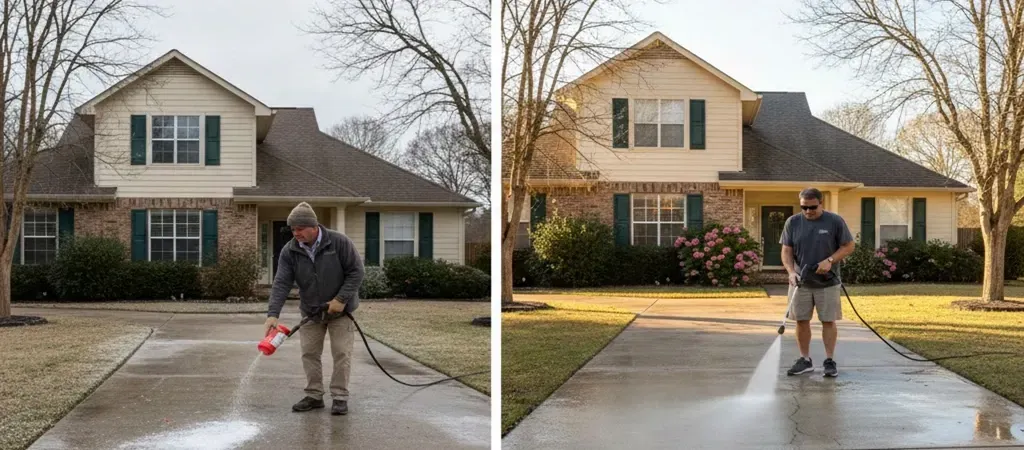
Concrete Patio Finishes in Lafayette: Broom, Stamped, and Decorative Options
Summary
Broom-finished concrete offers practical traction and lower upkeep, while stamped and other decorative finishes provide more control over color and character. For a Lafayette patio, the right choice depends on wet-surface grip, appearance, maintenance expectations, budget, and how the finish works with the patio’s drainage and layout.
A patio finish affects grip, cleaning, stain visibility, and maintenance as well as appearance. Those details matter in Lafayette, where outdoor patios face strong sun, warm conditions, humidity, and rain.
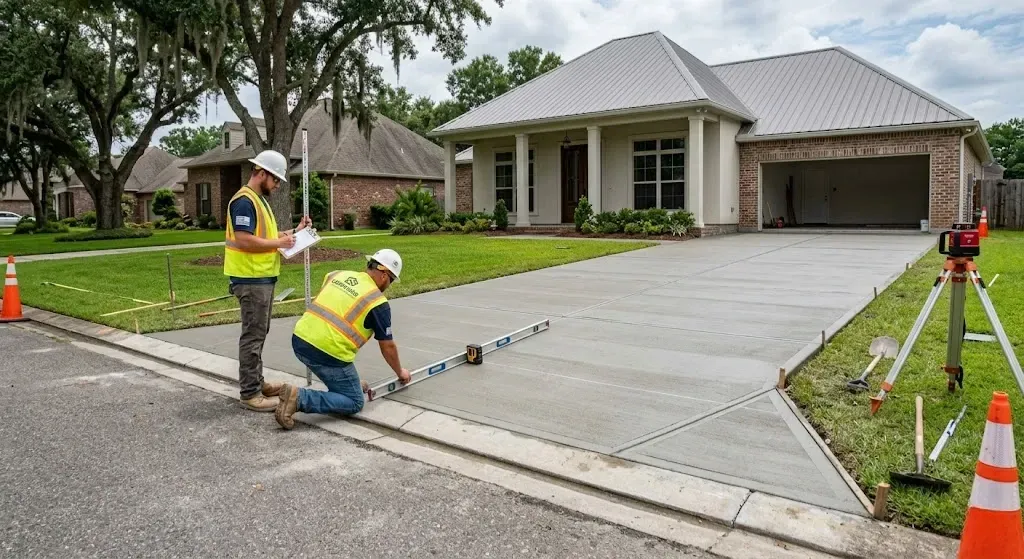
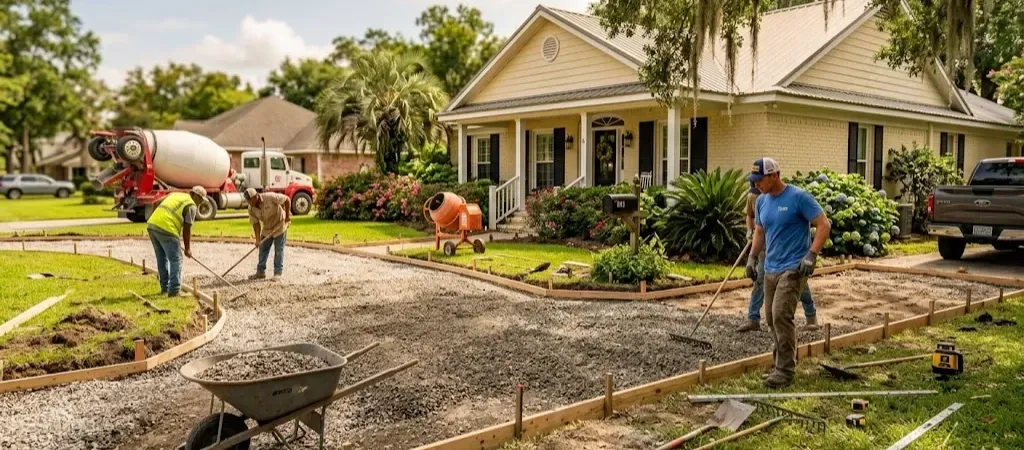
Finish selection should happen as part of the overall patio design. Planning a custom concrete patio installation in Lafayette includes decisions about placement, drainage, joints, color, texture, and daily use. T&T Lafayette Concrete Contractors brings a third-generation Louisiana concrete background and more than 20 years of hands-on experience to residential and commercial work.
Broom Finish for Practical Traction and Simple Upkeep
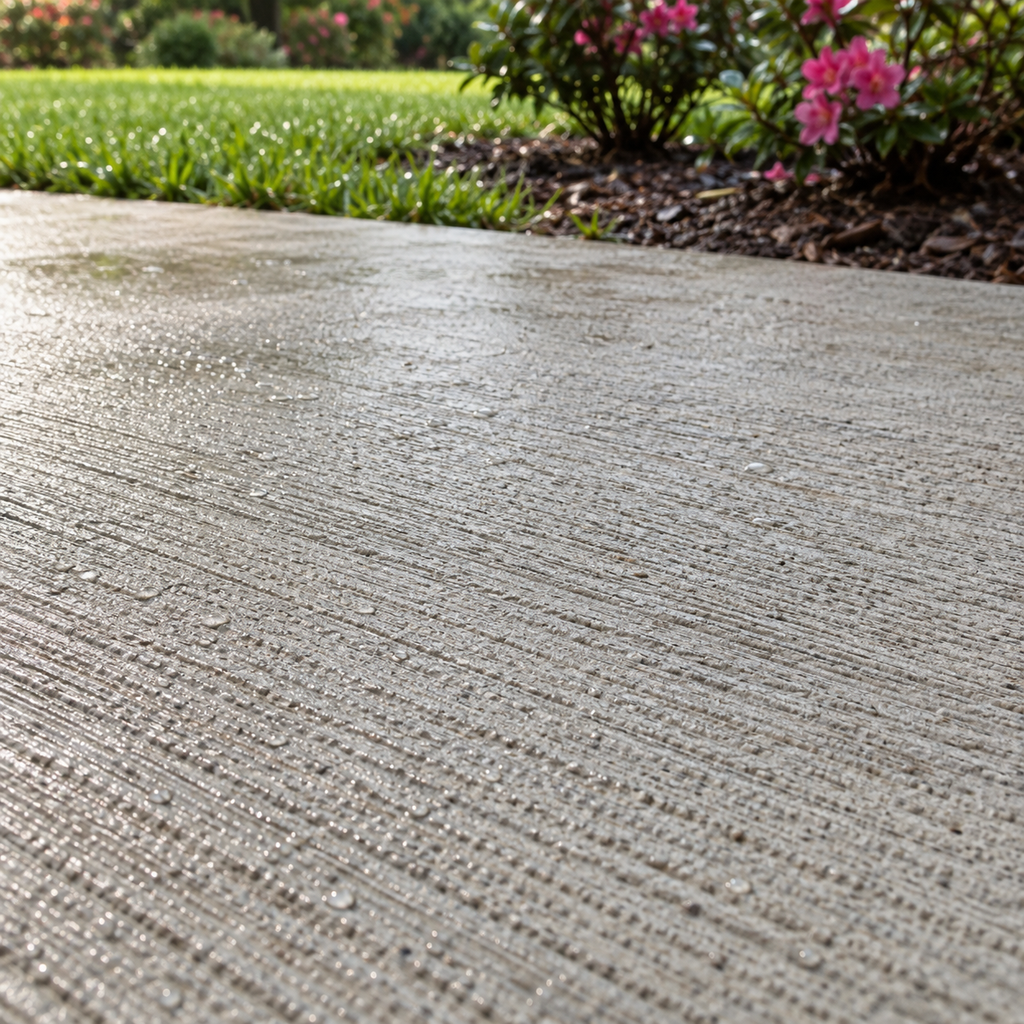
A broom finish is created by drawing a concrete broom across the surface while the slab is still workable. The resulting fine ridges make it less slick than a smooth steel-troweled surface. The American Cement Association’s guidance on working with concrete confirms that brooming can produce a slip-resistant surface when the concrete is firm enough to retain the texture.
That texture is practical near pools, outdoor kitchens, and frequently watered planting beds. Broom-finished concrete is also usually economical because it requires fewer decorative steps and materials.
The tradeoff is a more utilitarian appearance. Deep broom lines may feel rough under bare feet and hold more dirt. Ask to see light, medium, and heavy samples so the texture matches the patio’s use.
Stamped Concrete for Pattern and Stronger Visual Character
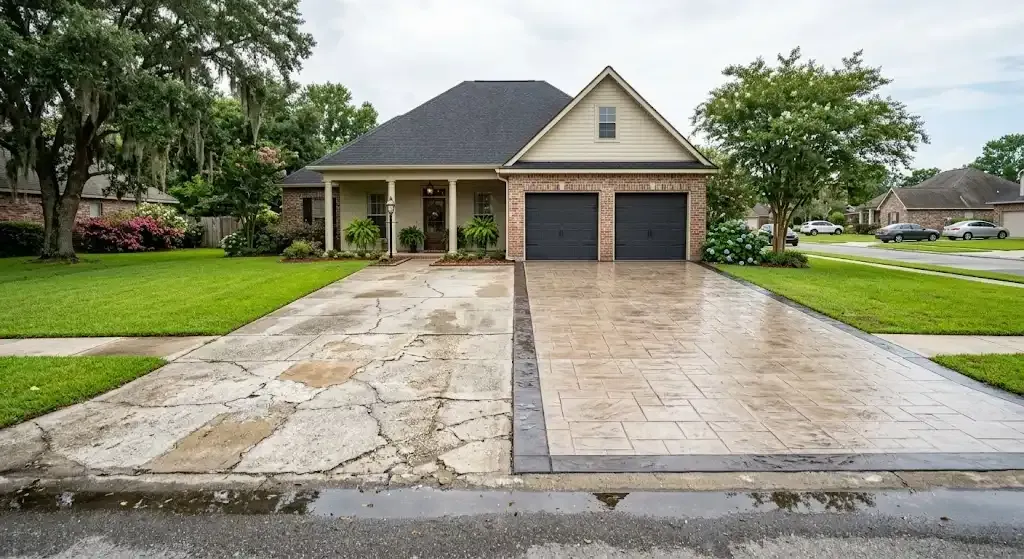
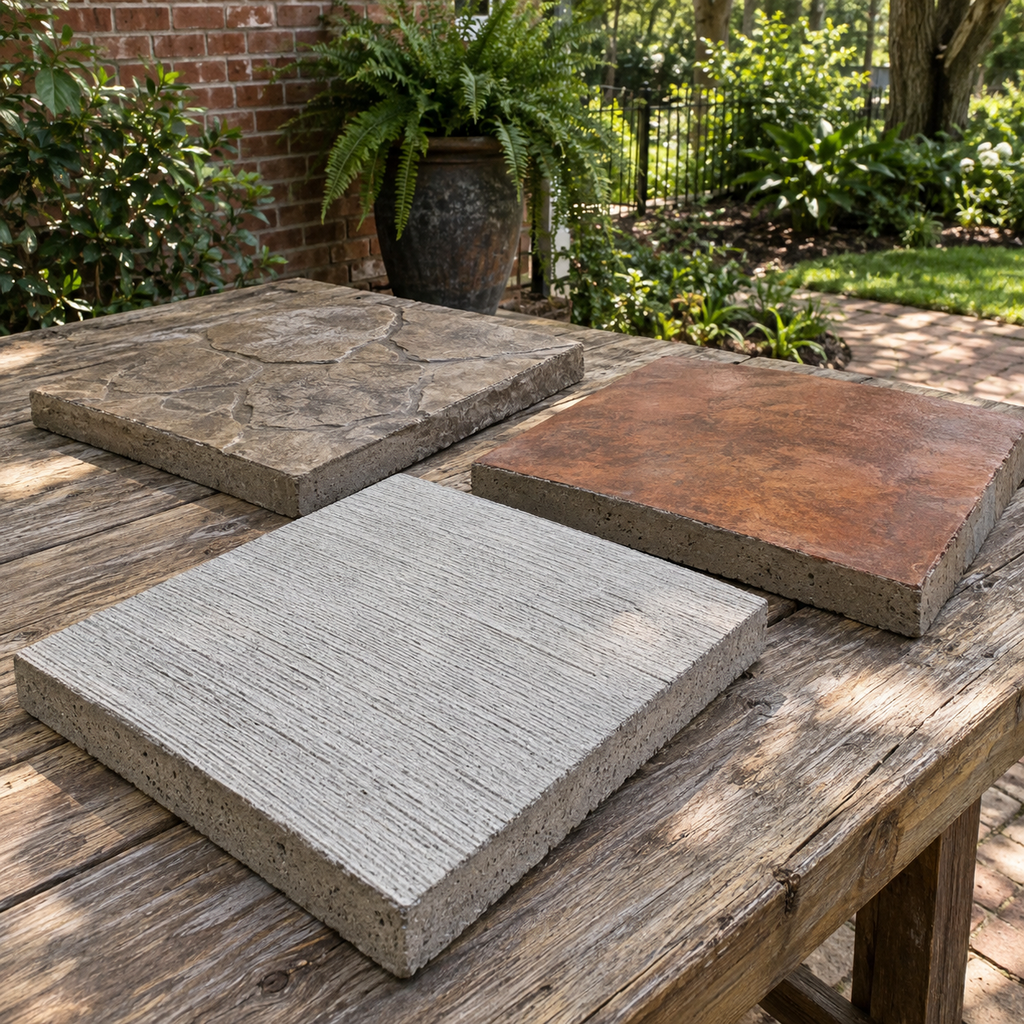
Stamped concrete uses textured mats pressed into fresh concrete to resemble flagstone, slate, brick, or wood planks. Integral pigment, surface-applied color hardener, release product, or a combination can coordinate the patio with the home and landscape.
The tradeoffs are higher installation cost, more variables during placement, and greater maintenance. A sealer commonly enriches the color and protects the surface, but its sheen and formulation affect how the patio feels when wet. High gloss may not suit a regularly wet walking area. Discuss texture and any compatible slip-resistant additive before work begins.
Stamped concrete will have some variation in tone and texture. View a sample or completed surface in sun and shade instead of relying only on a small color chart.
Decorative Options Beyond a Full Stamped Finish
Decorative concrete does not have to mean stamping the entire patio. Several options can add interest while keeping the design restrained:
- Integral color changes the concrete’s base tone throughout the mix.
- Stains add translucent or more controlled color to prepared concrete.
- Exposed aggregate reveals stone at the surface for texture and visual depth.
- Saw-cut patterns, borders, and contrasting bands can organize a large patio without covering every section in a pattern.
- A broom-finished field paired with a colored or stamped border can concentrate decorative work where it has the most visual effect.
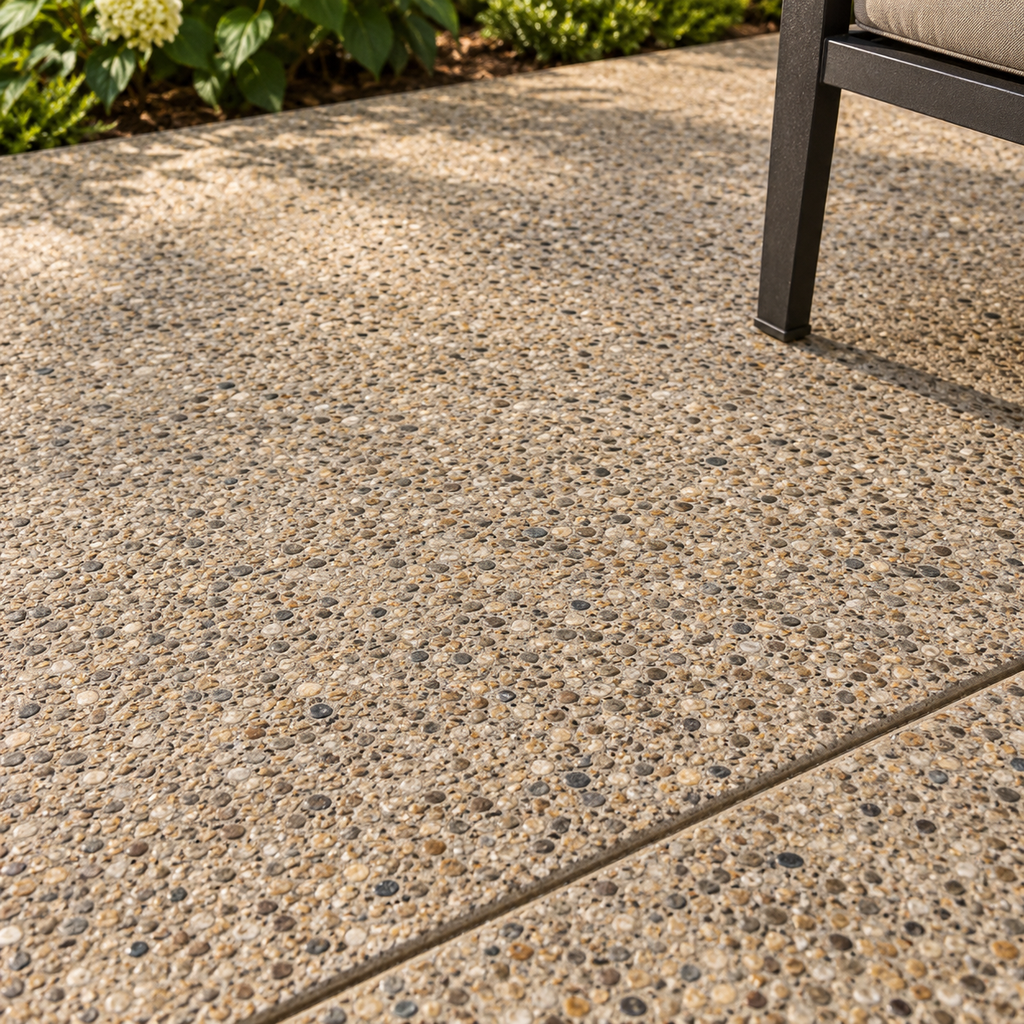
These choices have different limits. Stain adds color but does not hide existing cracks, patches, or surface variation. Exposed aggregate can provide useful texture, but a coarse exposure may be uncomfortable for bare feet or difficult to move lightweight furniture across. Decorative saw cuts must also be coordinated with the slab’s planned joints rather than placed only for appearance.
Settle Placement and Drainage Before Choosing the Finish
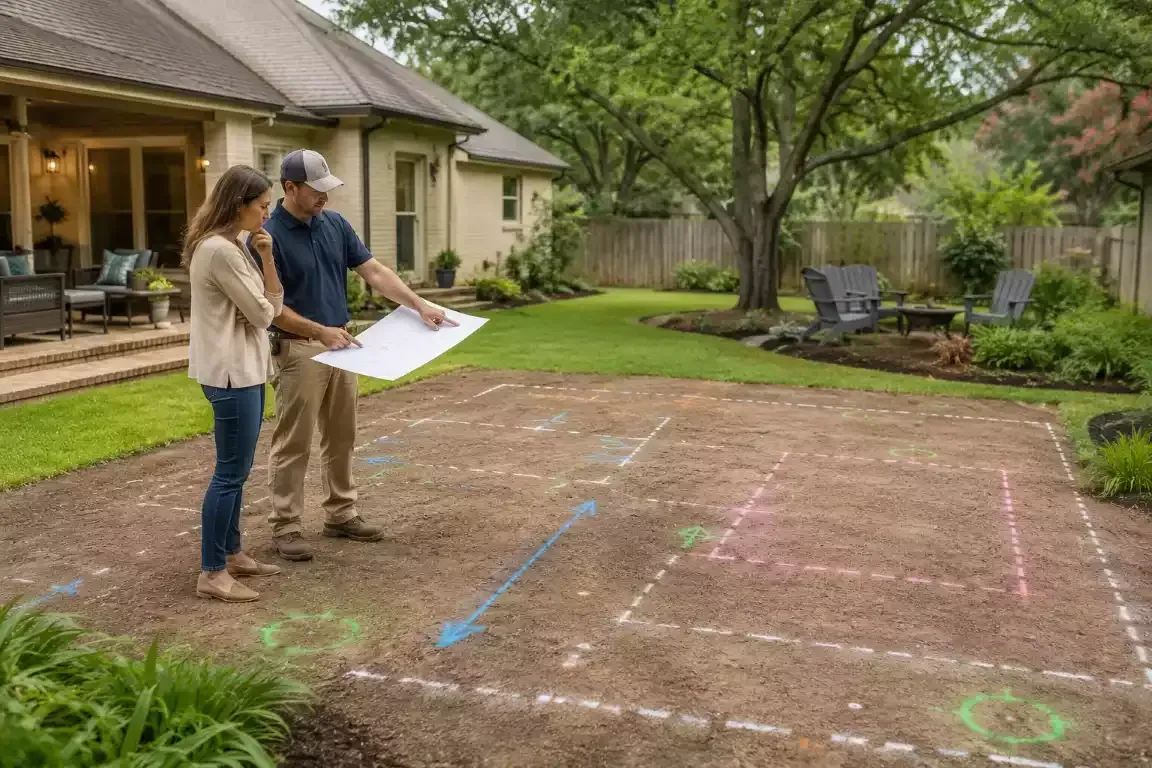
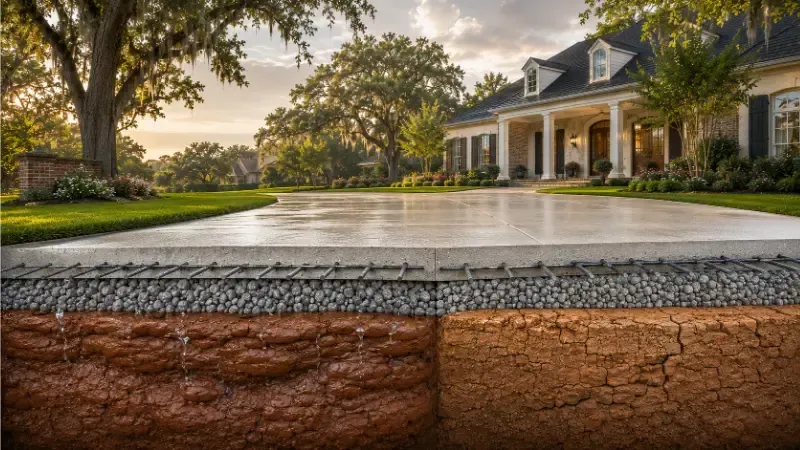
A finish cannot correct a poorly planned slope or redirect water that collects beside the house. Determine patio elevation, drainage direction, door clearance, furniture zones, and connections to walkways before selecting a pattern. The guide on what Lafayette homeowners should know before adding a patio explains how placement, size, drainage, permits, and long-term use affect the project before decorative details are finalized.
Pattern scale matters too. Large stone patterns may overwhelm a narrow patio, while very small patterns can look busy across a broad slab. Fixed features such as posts, steps, drains, grill pads, and future outdoor-kitchen utilities should appear on the layout so pattern breaks and borders do not land awkwardly around them.
Compare Total Ownership Cost, Not Just the Pour Price
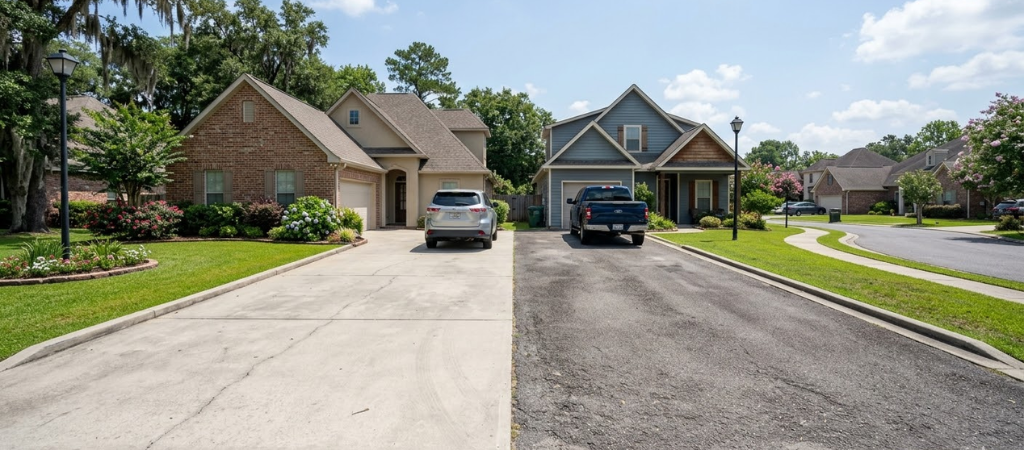
A broom finish generally has the lowest starting cost and the simplest care routine. Stamped concrete costs more because of added labor, coloring materials, pattern tools, detailing, and sealing. Stained, exposed-aggregate, and mixed-finish designs fall across a wide range depending on surface preparation and complexity.
Ask each quote to separate the base slab work from decorative upgrades and future maintenance. Compare whether color, sealer, detailed borders, surface preparation, and future maintenance are included so a lower decorative quote is not mistaken for a like-for-like price.
Questions to Ask Before Making the Final Choice
Before approving a finish, ask for clear answers to these points:
- How will the surface feel and perform when wet?
- What color variation should be expected?
- Is a sealer included, and what sheen will it produce?
- What cleaning and resealing schedule is recommended for that product?
- How will decorative cuts interact with control joints?
- Can a representative sample or comparable completed surface be viewed?
- How will drainage be handled around the house, steps, and lawn?
Choose broom finish when traction, value, and straightforward care lead the decision. Choose stamped concrete when pattern and architectural coordination justify the additional cost and upkeep. Consider color, borders, stain, or exposed aggregate when you want a middle ground. The best Lafayette patio finish is the one that fits daily use, drainage needs, maintenance tolerance, and the home itself.

Written By:
Kurt Manalastas
Home & Property Research Journalist
Kurt is a Home & Property Research Journalist who researches and writes educational content on home services, property improvement, and residential decision-making. He focuses on translating real-world contractor experience, industry standards, and verified research into clear, practical guidance that helps homeowners understand their options and make informed decisions.