Concrete Patio Designs for Lafayette Homes
Quick Summary:
Concrete patios in Lafayette, LA need to handle heat, humidity, and heavy rainfall while looking great year-round. The right design balances finish, drainage, and durability for South Louisiana’s climate. From stamped and stained options to classic broom finishes, there is a concrete patio style that fits every Lafayette home and outdoor living vision.
Outdoor living is not a seasonal thing in Lafayette — it is a year-round way of life. Backyard gatherings, crawfish boils, family cookouts, and lazy Sunday afternoons on the patio are built into the culture here in a way that is genuinely different from most of the country. A concrete patio is one of the most practical investments a Lafayette homeowner can make to support that lifestyle, and the design options available today make it possible to build something that is both functional and genuinely attractive.
The challenge is choosing a design that holds up in Louisiana’s climate. Heat, humidity, heavy rainfall, and the expansive clay soil common throughout the Acadiana region all affect how a patio performs over time. A design that works beautifully in a drier or cooler market may need to be adapted for Lafayette’s specific conditions. Here is a practical look at the concrete patio design options that work well for Lafayette homes and what to consider before making a decision.

Why Concrete Is the Right Choice for Lafayette Patios
Concrete holds up to Louisiana’s climate better than most alternative patio materials. Wood decking weathers quickly in the heat and humidity, requires constant maintenance, and can rot or warp when exposed to the moisture that Lafayette’s summers reliably deliver. Pavers can shift on the expansive clay soil that underlies much of the region, creating uneven surfaces that are both a trip hazard and an aesthetic issue. Concrete, when properly installed with appropriate thickness, reinforcement, and drainage design, provides a stable, durable surface that handles Lafayette’s conditions without the ongoing maintenance demands of the alternatives.
For homeowners exploring options, a conversation with a contractor offering concrete patio services in Lafayette, LA who understands how design choices affect long-term performance in this specific climate is a good starting point before committing to any particular direction.
The design flexibility that concrete offers is another reason it suits Lafayette homes well. A concrete patio is not just a gray slab — it can be stamped, stained, textured, colored, or bordered in ways that complement virtually any architectural style from traditional Acadian cottages to modern contemporary homes. That flexibility, combined with concrete’s durability in Louisiana’s climate, makes it consistently one of the most popular patio choices in the Lafayette area.
Stamped Concrete: Pattern and Character
Stamped concrete is one of the most popular patio design choices in Lafayette because it delivers the visual appeal of natural stone, brick, or tile at a significantly lower cost than the real materials. Patterns are pressed into fresh concrete before it sets, creating textures that range from simple uniform grids to elaborate flagstone arrangements, wood plank looks, and cobblestone designs. When combined with color hardeners and release agents applied during the stamping process, the result can closely resemble high-end natural materials while offering concrete’s durability and lower long-term maintenance demands.
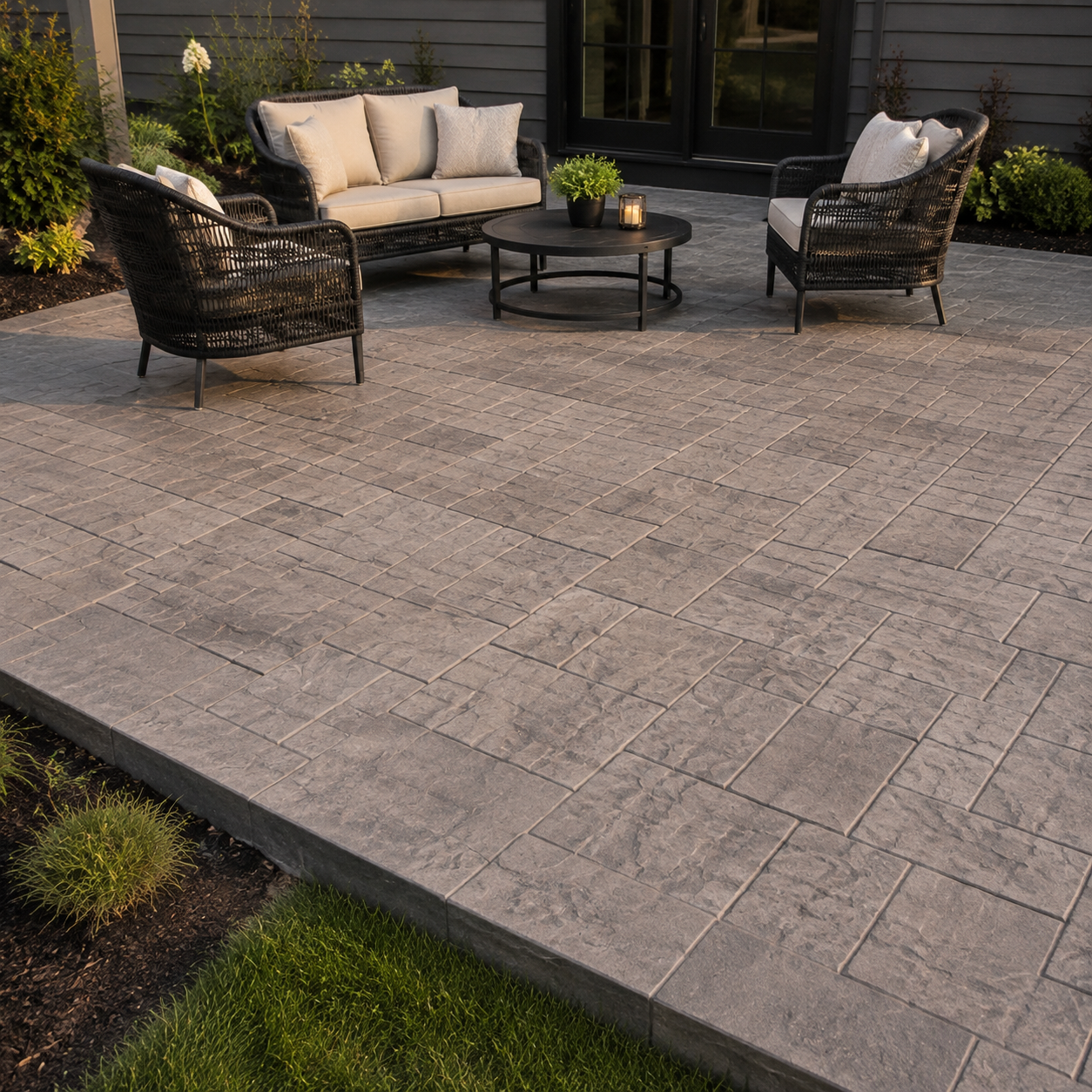
For Lafayette homes, stamped concrete patios in earth tones — warm tans, sandy beiges, and soft terracottas — tend to complement the region’s landscape and architecture particularly well. Slate and flagstone patterns work beautifully in French Country and Acadian-style homes, while cleaner geometric patterns suit more contemporary properties. The key consideration for stamped concrete in Louisiana’s climate is sealer maintenance. The decorative acrylic sealer that protects and enhances the surface requires periodic reapplication, and Lafayette’s heat, humidity, rainfall, and UV exposure may require more frequent resealing than guidance developed for cooler climates suggests.

Stained Concrete: Subtle Color With Lasting Appeal
Stained concrete takes a different approach to adding visual interest. Rather than creating surface texture, concrete staining adds color in different ways depending on the product used. Acid stains react chemically with the concrete to create mottled, variegated tones, while water-based stains use pigments to produce a broader and more predictable color range. When properly applied and sealed, both options can provide a durable finish without the appearance of conventional surface paint.
Acid staining produces rich, earth-toned colors that are particularly well suited to Lafayette’s aesthetic sensibility — deep browns, warm ambers, and soft greens that look at home in a South Louisiana backyard. Water-based stains offer a wider color range for homeowners who want a specific color rather than the organic variation that acid staining produces. Both types of staining can be applied to existing concrete as well as new pours, which makes staining an option for homeowners who want to update the appearance of a patio that is structurally sound but visually tired.
Broom Finish: Practical and Timeless
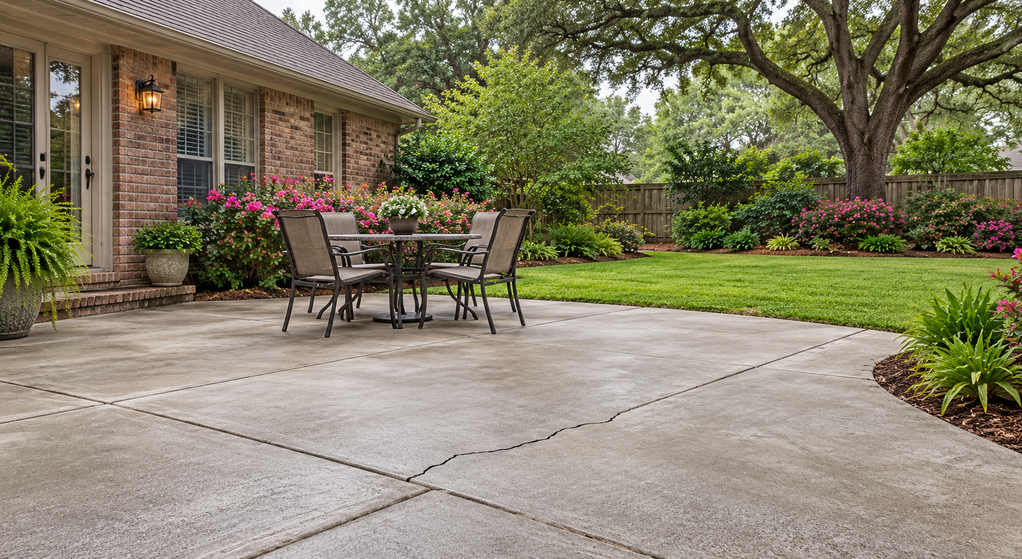
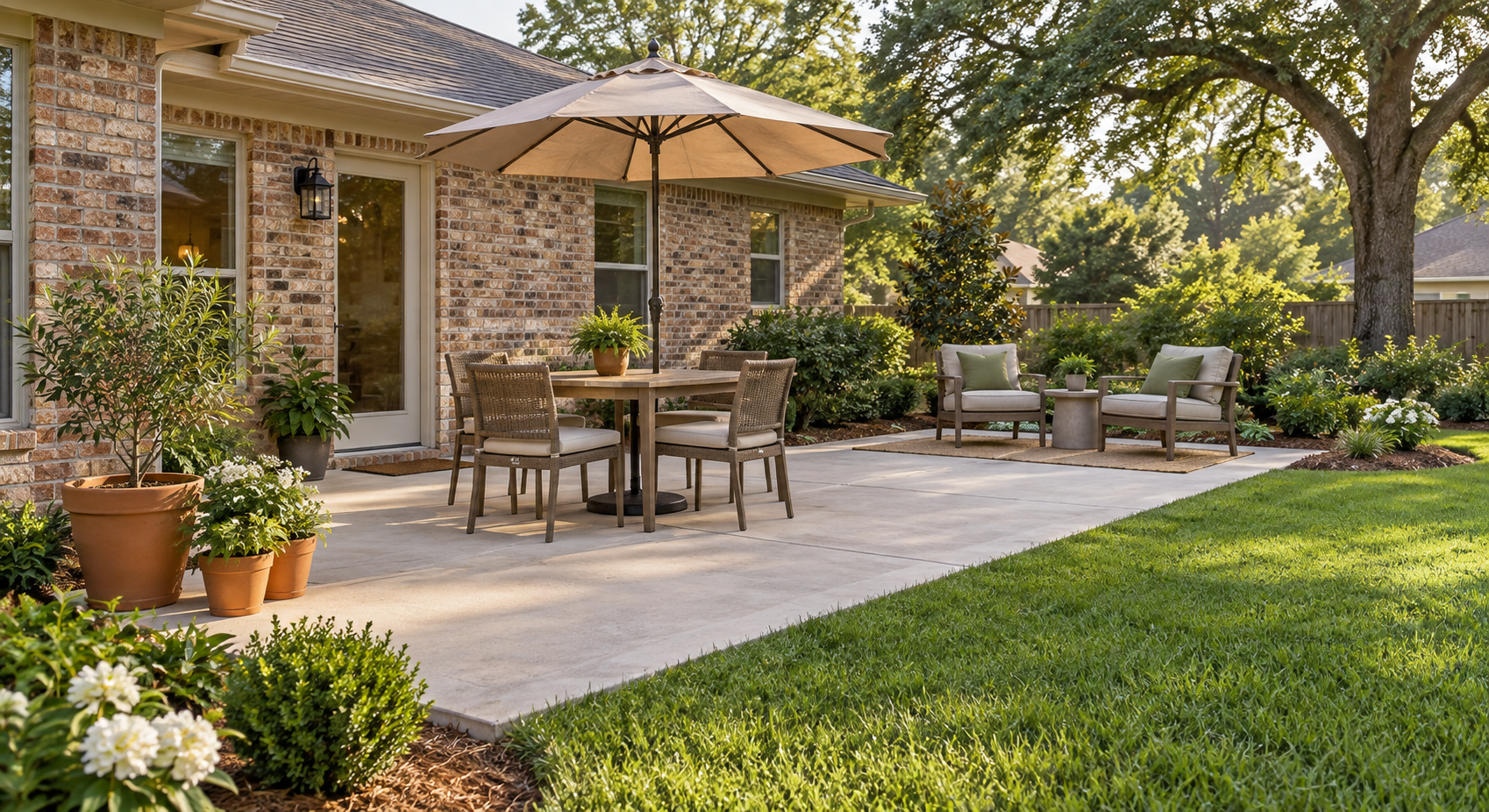
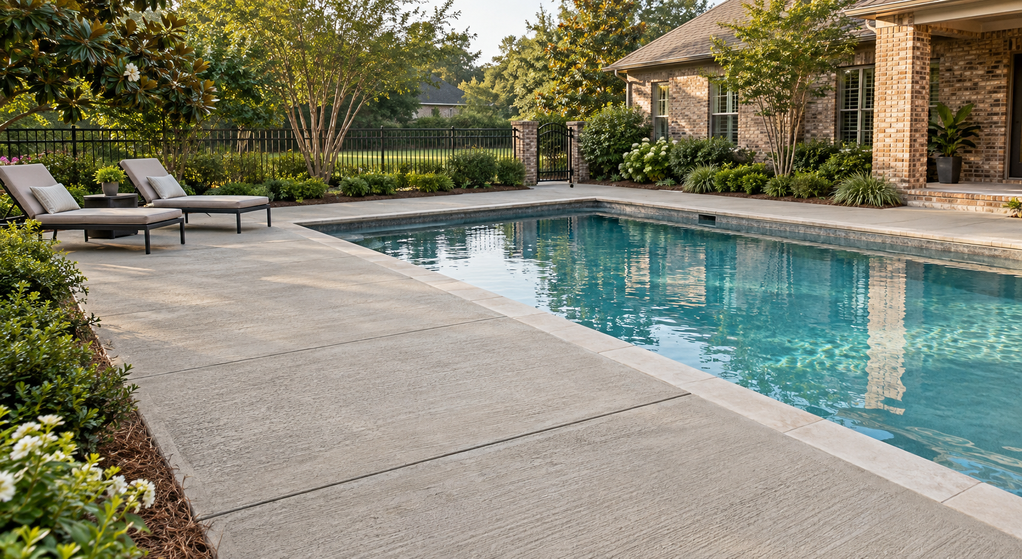
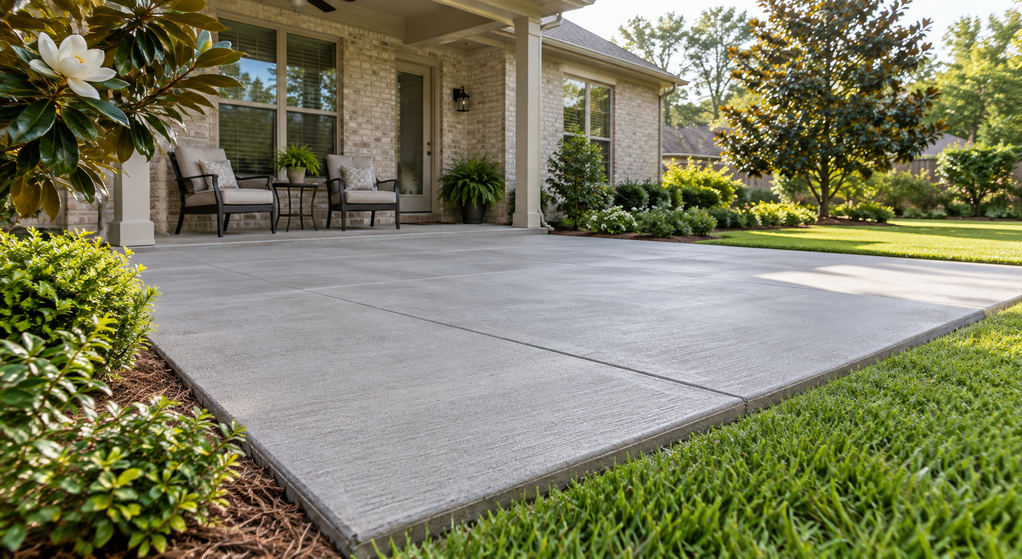
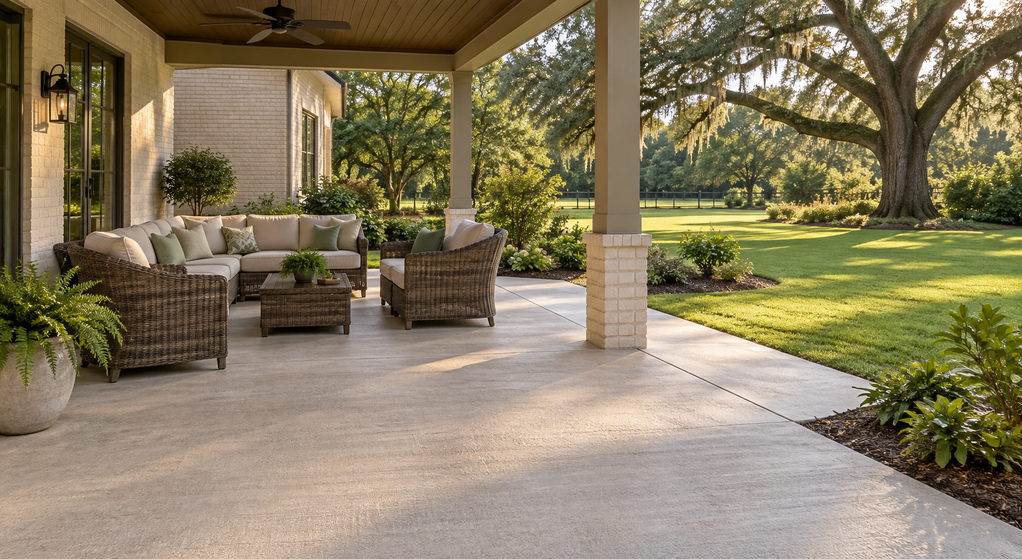
A broom finish is the most traditional and widely used patio surface in Lafayette, and its continued popularity is not just habit — it performs well in the conditions that matter here. The linear texture created by drawing a broom across fresh concrete provides reliable traction when wet, which in Louisiana’s rainfall environment is a practical requirement for any outdoor surface that people will walk on regularly. The texture is consistent and relatively simple, which makes cleaning straightforward and means the surface ages gracefully without requiring the periodic resealing that decorative finishes demand.
For Lafayette homeowners who want an attractive patio without the higher maintenance commitment of stamped or stained concrete, a broom finish is a genuinely good choice rather than a default option. Its simplicity is part of its appeal. Combined with a well-designed border, an interesting slab shape, or integrated elements like a fire pit pad or outdoor kitchen slab, a broom-finished patio can be visually engaging without requiring the ongoing attention that more decorative finishes need in South Louisiana’s climate.
At
T&T Lafayette Concrete Contractors, Tevin Curley and the team have been building concrete patios in Acadiana since the family’s concrete roots go back to the 1970s. That local experience with what holds up in Lafayette’s specific conditions informs every recommendation, from finish selection to drainage design to the slab thickness appropriate for the clay soil conditions common throughout the area.
Drainage and Slope: The Design Element That Cannot Be Ignored
Lafayette averages over 60 inches of annual rainfall, and a patio that does not drain well is one that creates problems — pooling water, subbase erosion, and the accelerated concrete deterioration that follows from repeated moisture exposure. Adequate slope, typically one to two percent toward the yard or a drain rather than toward the house, is a fundamental design requirement for any Lafayette patio, and it should be designed into the slab from the start rather than addressed as an afterthought.
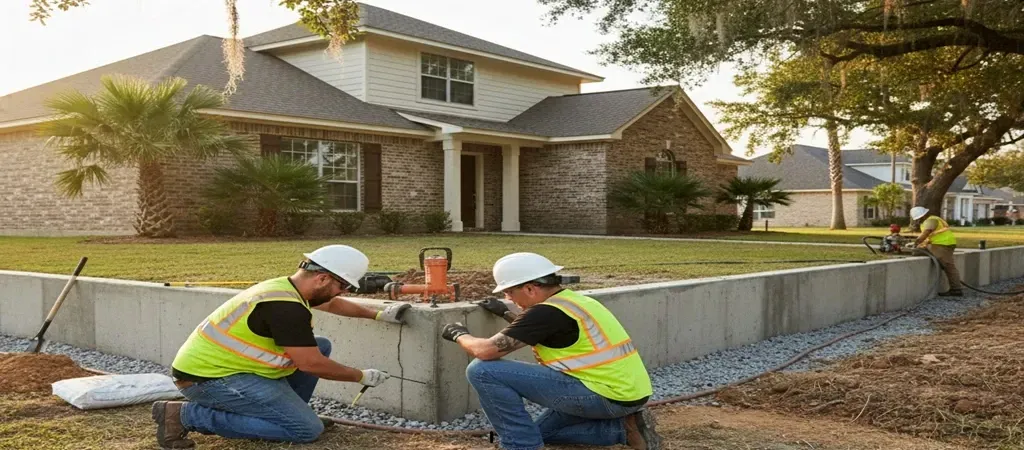
For patios adjacent to the house foundation, the drainage design is particularly important. Water that pools against a foundation and then saturates the clay soil beneath it contributes to foundation movement and moisture infiltration that can affect the home itself, not just the patio. A patio that is properly graded to direct water away from the foundation protects the home as well as the patio surface, which makes the drainage design decision one of the more consequential ones in any Lafayette patio project.
Borders, Inlays, and Design Details
Beyond the primary surface finish, a range of design details can add visual interest to a concrete patio without significantly increasing cost. Saw-cut borders that define the patio perimeter with a contrasting pattern or inset line give a finished, intentional appearance that plain slab edges do not provide. Aggregate borders — where a band of exposed aggregate surrounds a stamped or broom-finished center section — add texture contrast that suits many Lafayette home styles. Colored concrete borders in a contrasting tone to the main slab body create a visual frame that anchors the patio in the landscape.
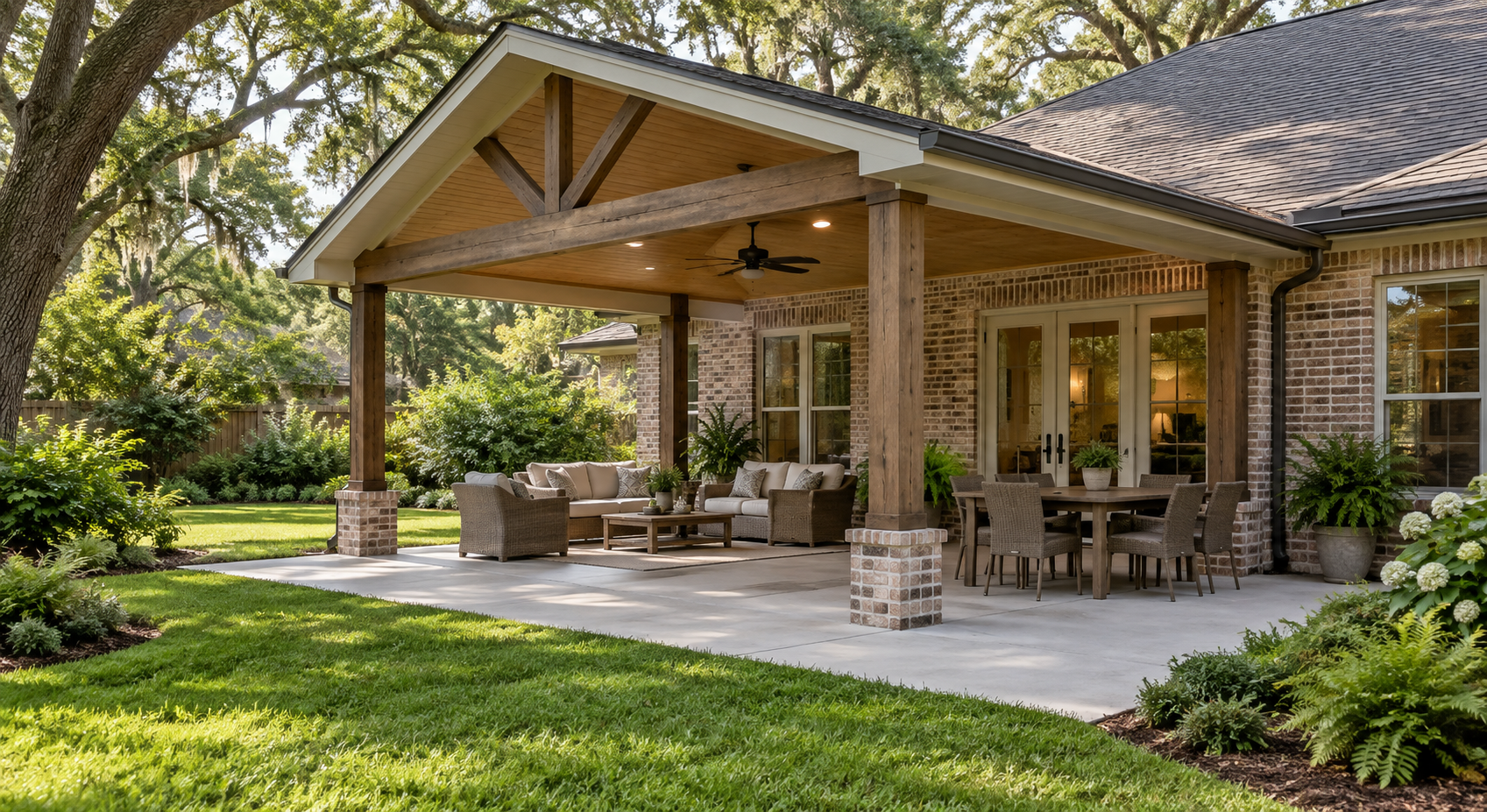
Integrated utility elements — a thickened pad for an outdoor grill or kitchen, a circular section for a fire pit, a step or two at the transition from the patio to the lawn — can all be incorporated into the patio design and formed during the same pour, which is both more economical and more cohesive aesthetically than adding them separately afterward. Planning these elements as part of the original design conversation produces a finished patio that functions and looks the way the homeowner envisioned rather than one that has been pieced together over time.
For Lafayette homeowners thinking through the budget side of a patio project before finalizing design decisions, our article on budgeting for a residential concrete project in Lafayette covers the cost factors that most affect a concrete patio project’s total investment — a useful reference before the design conversation gets too far along without a clear budget framework in place.
Choosing a Design That Fits Lafayette’s Climate
The design decision for a Lafayette concrete patio should account for both appearance and durability in the region’s specific conditions. A stamped finish that requires annual resealing is a reasonable choice for a homeowner who is committed to that maintenance. A broom finish with good drainage design is a reasonable choice for a homeowner who wants a low-maintenance surface that holds up with minimal attention. The worst outcomes come from choosing a high-maintenance finish and then not following through on the maintenance — and in Lafayette’s climate, the consequences of that gap show up faster than in more forgiving environments.
Matching the patio design to the home’s architectural character is the other dimension of the decision. A French Country home with warm colors and natural materials suits a stamped flagstone or cobblestone pattern in earth tones. A modern home with clean lines suits a simple broom finish or a geometric saw-cut pattern in a neutral tone. A Craftsman bungalow might suit exposed aggregate or a stained finish that brings warm, natural color to the outdoor space. The right design is the one that looks like it belongs in that specific home rather than one imported from a different aesthetic context.
For homeowners comparing design options, our article on what Lafayette homeowners should know before adding a patio explains how size, placement, drainage, materials, permits, and long-term use should be evaluated before the finish and decorative details are finalized.

Written By:
Kurt Manalastas
Home & Property Research Journalist
Kurt is a Home & Property Research Journalist who researches and writes educational content on home services, property improvement, and residential decision-making. He focuses on translating real-world contractor experience, industry standards, and verified research into clear, practical guidance that helps homeowners understand their options and make informed decisions.