Concrete Patios for Poolside Areas in Lafayette: What Homeowners Should Know
Summary
A concrete poolside patio needs effective drainage, traction when wet, and a surface comfortable for bare feet. For Lafayette homeowners, summer sun and rain make these practical details especially relevant. Comparing finish samples, drainage plans, and construction responsibilities helps you choose a patio that fits how your household actually uses the pool.
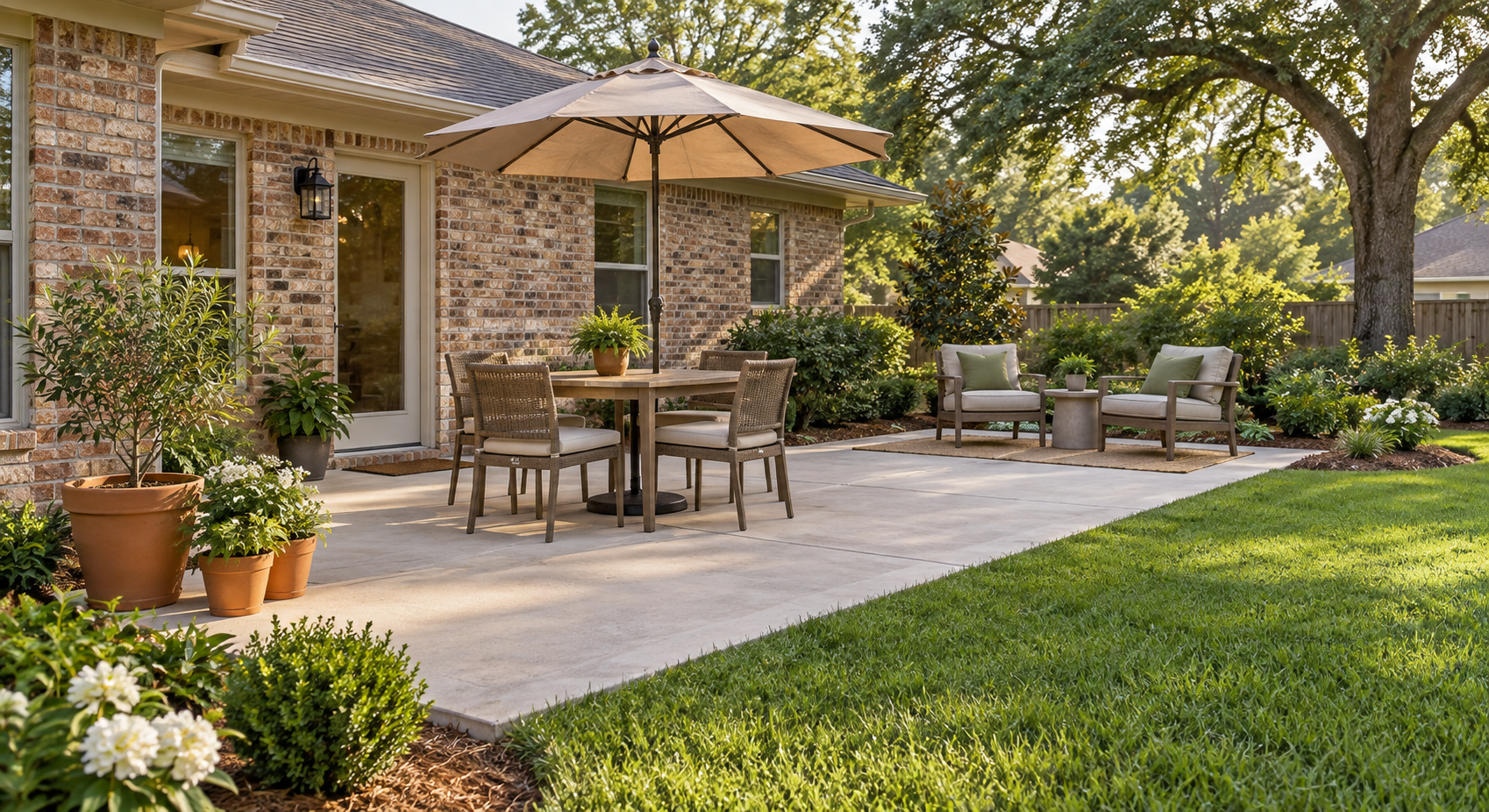
When comparing concrete patio design and installation in Lafayette, look beyond square footage and decorative patterns. A poolside slab must work with the pool edge, doorways, drainage outlets, and routes people use while carrying towels or moving furniture.
T&T Lafayette Concrete Contractors offers residential patio installation and sealing, led by third-generation Louisiana concrete finisher Tevin Curley. For a poolside project, the proposal should explain how these features fit together before you approve the appearance.
Establish Where Rain and Splash Water Will Go
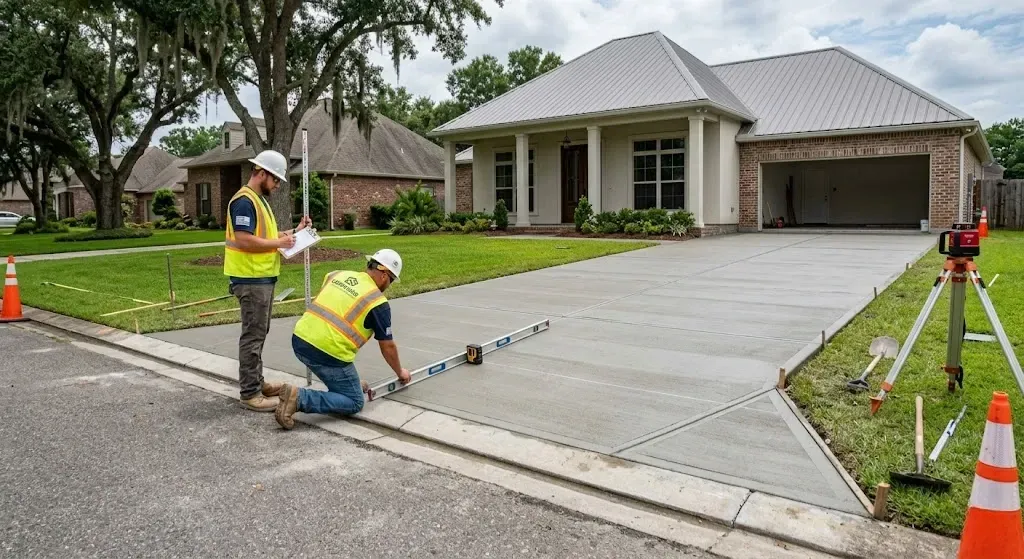
Start with elevations: the house threshold, pool coping, existing walkways, and potential drainage outlets. Coping is the cap along the pool edge. These heights influence where the patio can slope without creating awkward transitions.
Ask for a sketch showing water moving toward a suitable outlet, clear of the house and pool. Where the patio sits between them, a channel drain may be necessary. Its discharge location matters as much as the drain itself.
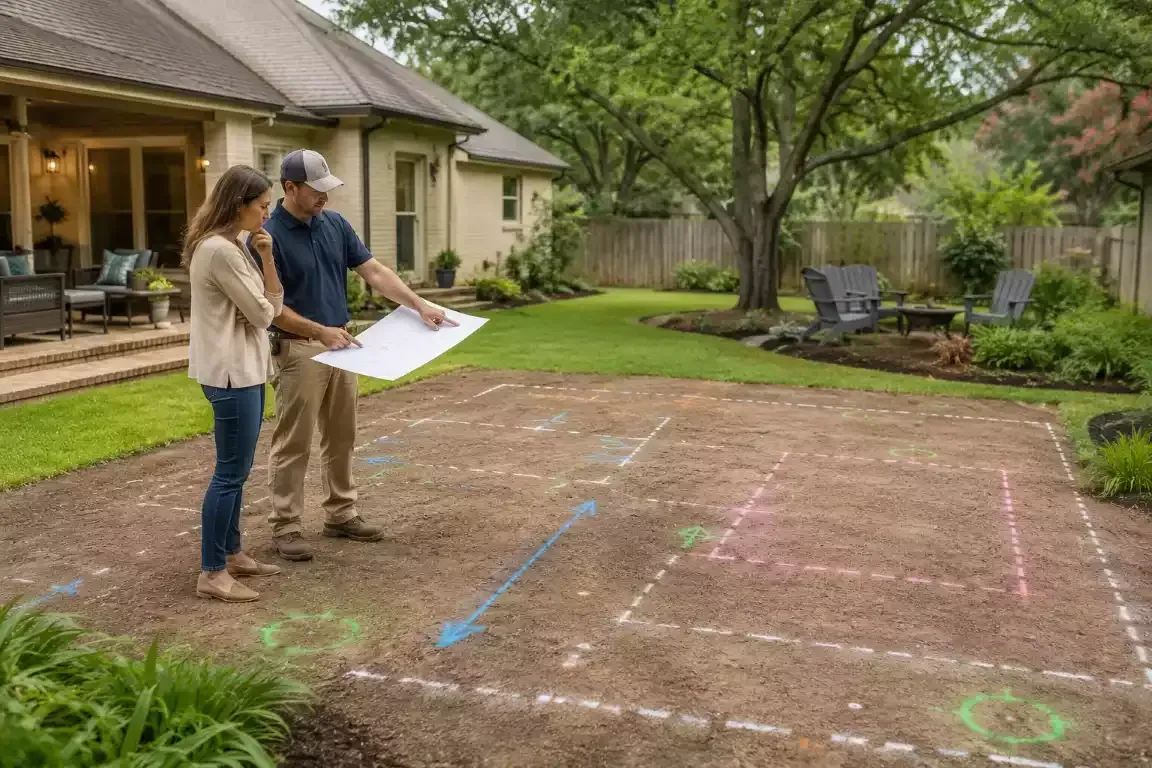
Before the site visit, photograph the yard during or after rain. Mark recurring puddles and downspout discharge points. A patio design needs to address incoming runoff as well as water landing directly on the slab.
Also mark chair positions and gate swings. Check that people can pass a reclined lounger without stepping close to the pool edge.
Choose a Finish for Wet Feet and Bare Feet
The National Ready Mixed Concrete Association’s guidance on finishing exterior concrete flatwork calls for drainage slope and appropriate surface texture. It also explains that a smooth steel-troweled surface becomes slippery when wet.
Use these distinctions when comparing samples:
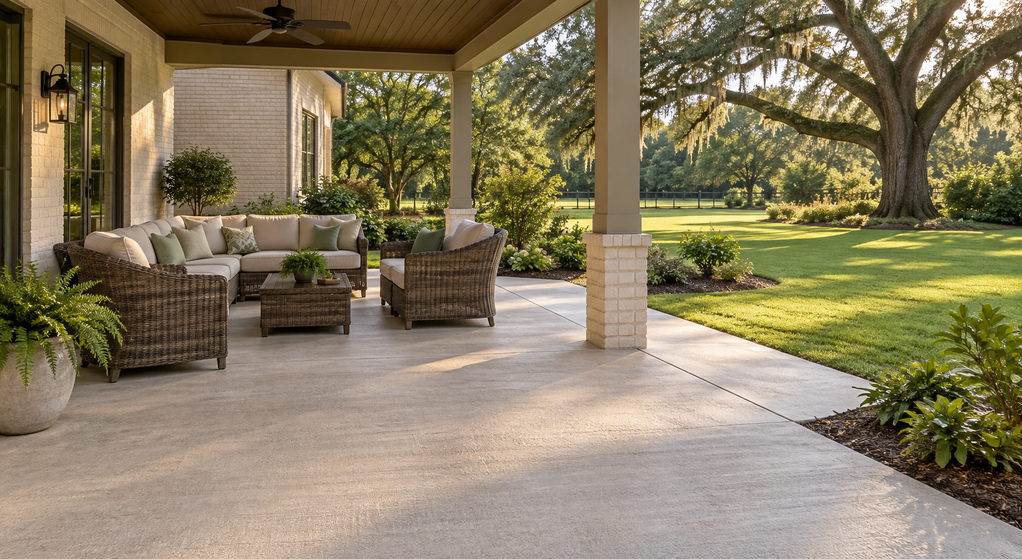
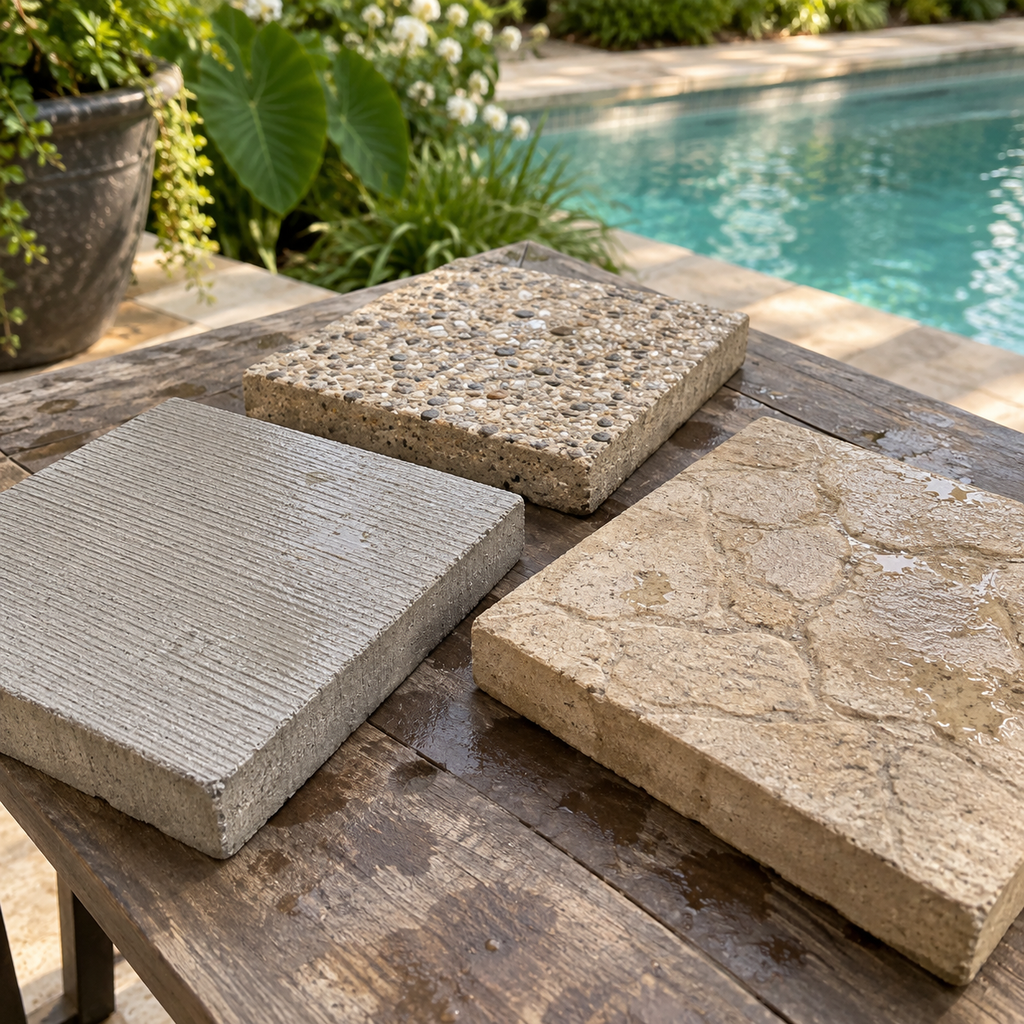
- Broom finish: Provides a textured surface with a relatively simple appearance. Ask to inspect the proposed texture because an aggressive finish can feel abrasive underfoot.
- Stamped concrete: Offers decorative patterns, but evaluate the texture, pattern depth, and proposed sealer together. A stone-like appearance does not establish wet traction.
- Exposed aggregate:
Creates texture through visible stone. Aggregate size, shape, and exposure affect barefoot comfort, so inspect a finished sample.
Request a sample with the intended sealer and any traction additive already applied. Ask for the manufacturer’s suitability guidance for wet pool decks. Judge the complete surface system, including maintenance requirements; an additive does not make slips impossible.
Identify whether the pool uses a salt system, and request compatibility information for the proposed sealer and expected pool-chemical exposure.
For a wider comparison of appearance and upkeep, Concrete Patio Designs for Lafayette Homes explains the finish options. Narrow those choices using the actual poolside conditions.
Account for Afternoon Heat and Shade
Light-colored surfaces generally absorb less solar energy than darker ones, but color alone cannot promise comfortable surface temperatures. Compare samples outdoors in comparable sunlight rather than choosing from indoor photographs.
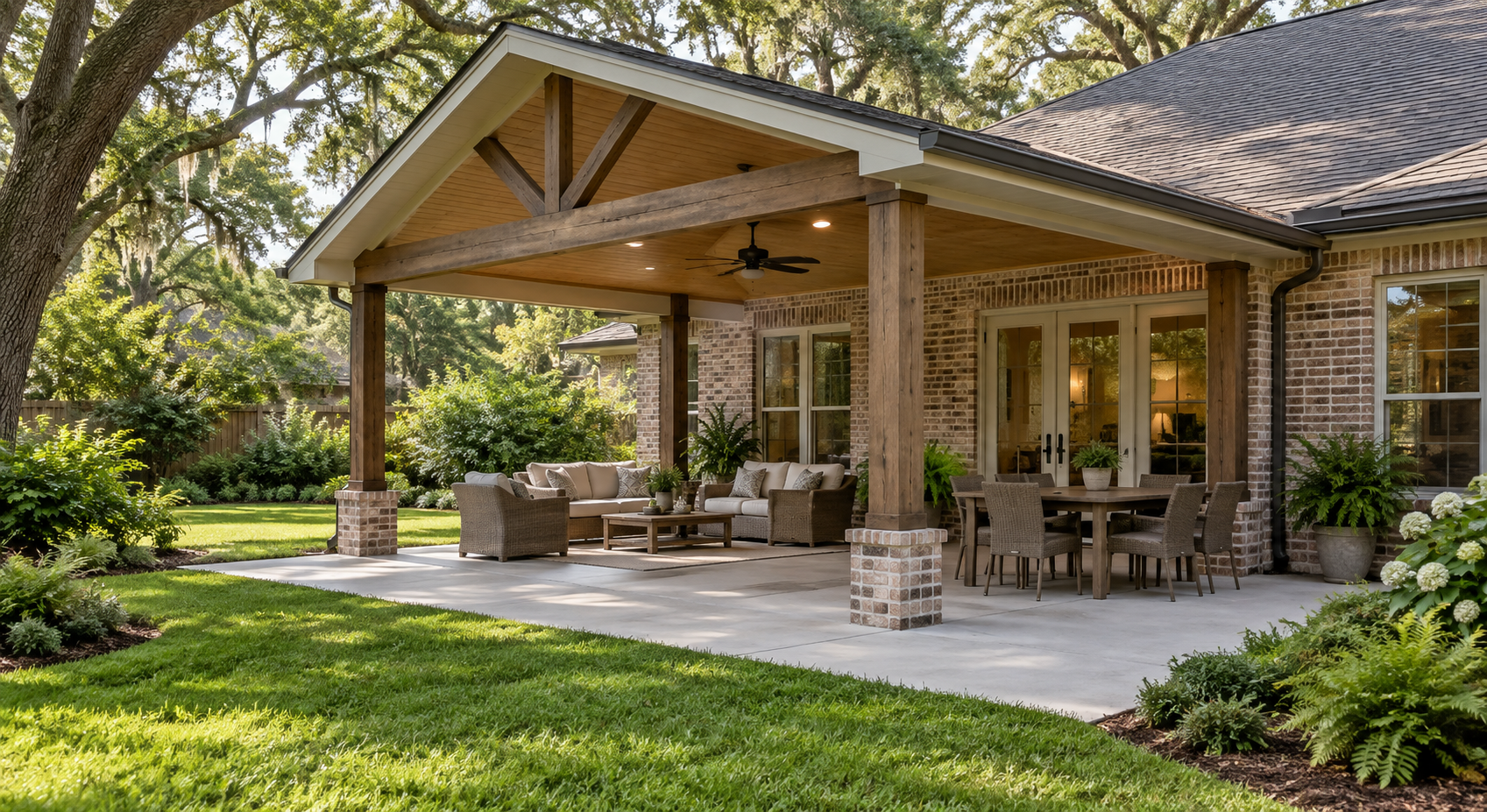
For a Lafayette backyard, map shade during the hours you expect to swim. Prioritize the route between the pool, seating, and house. A shaded table provides limited relief if the walking route remains exposed. Discuss umbrella sleeves or shade-structure foundations before the patio layout is finalized.
Plan the Base and Joints Around the Pool
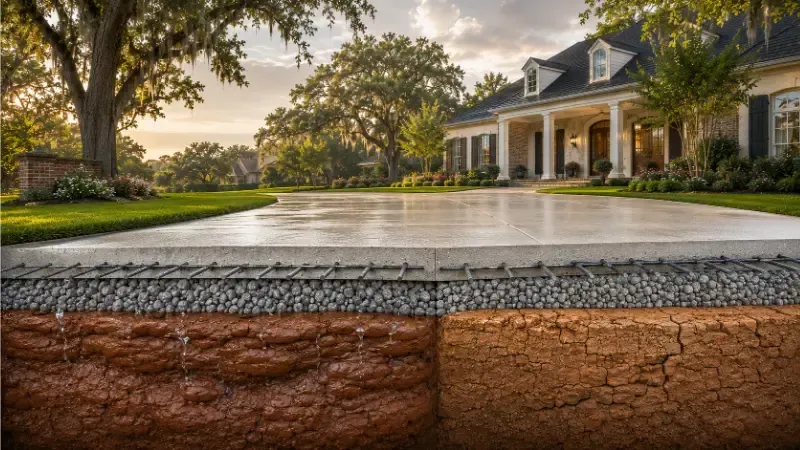
Disturbed ground around a newly excavated pool deserves attention. Ask how backfilled areas and plumbing trenches will be prepared and compacted before concrete placement. Avoid assuming that every Lafayette property has the same soil or requires an identical base specification.
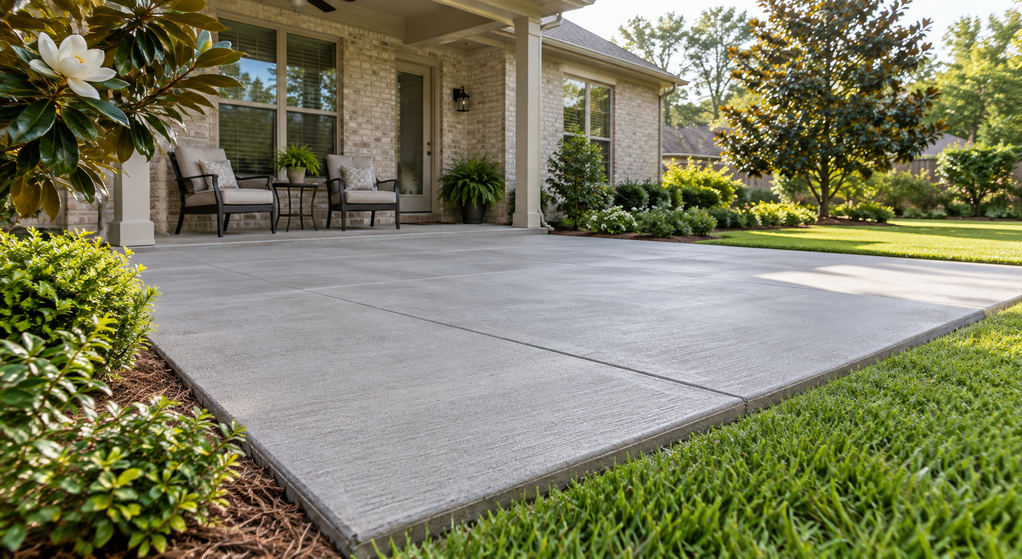
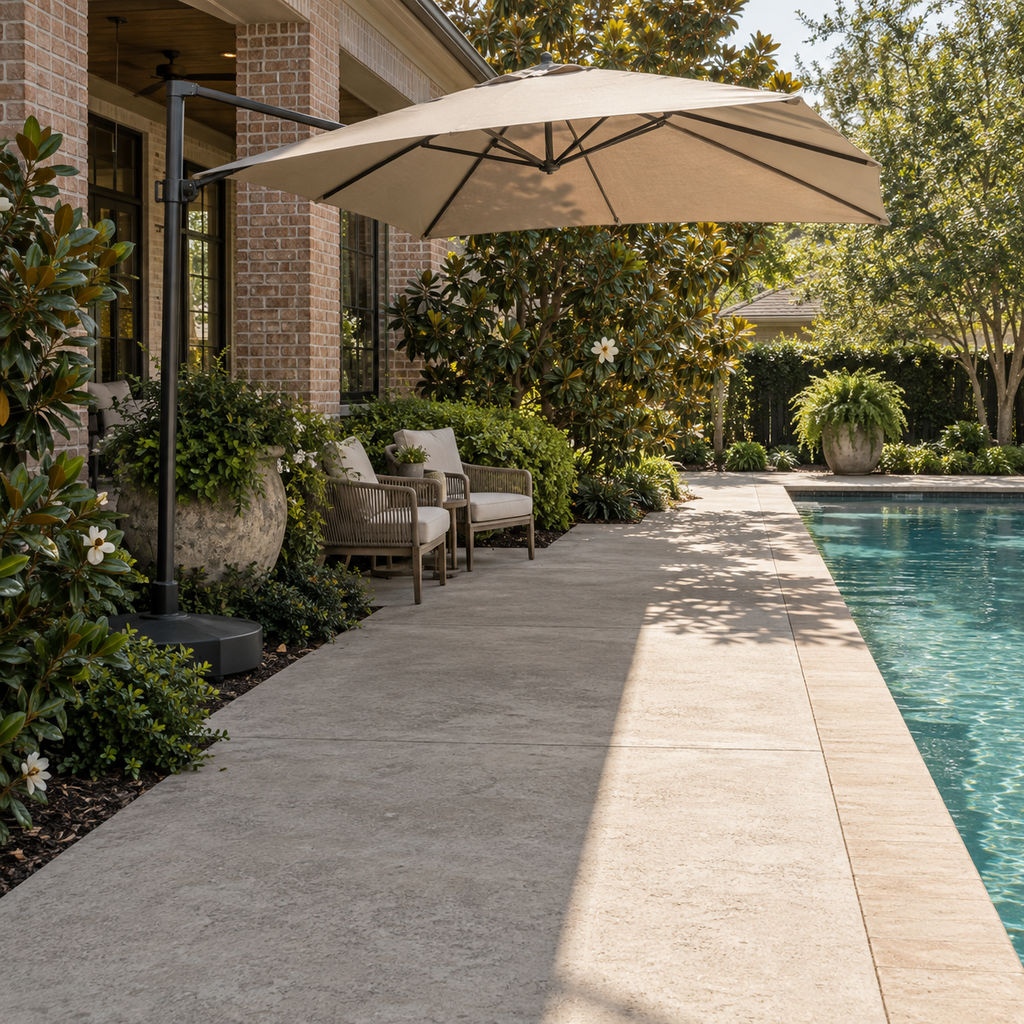
The proposal should identify slab thickness, reinforcement, and joint locations. Control joints encourage shrinkage cracks to form at planned locations; reinforcement does not make concrete crack-proof.
Where the deck meets the pool, have the pool builder and concrete contractor agree on the appropriate movement-isolation detail. This connection depends on the pool and coping design. A decorative groove is not interchangeable with an isolation joint.
Coordinate Pool Work Before the Pour
Confirm responsibilities for underground plumbing, drains, electrical bonding, and any required inspections before concrete covers the work. Have the pool builder and qualified electrician resolve pool electrical details.
When several trades share the backyard, the guide to what Lafayette homeowners should know before adding a patio provides broader planning context for utilities, drainage, future features, and other pre-pour decisions. Name the person responsible for confirming readiness before the concrete delivery is scheduled.
Request separate guidance for concrete curing, sealer application, foot traffic, and returning heavy furniture. A surface that looks dry is not sufficient evidence that every next activity is appropriate. Include weather contingencies in the schedule.
Know Which Changes Need Attention
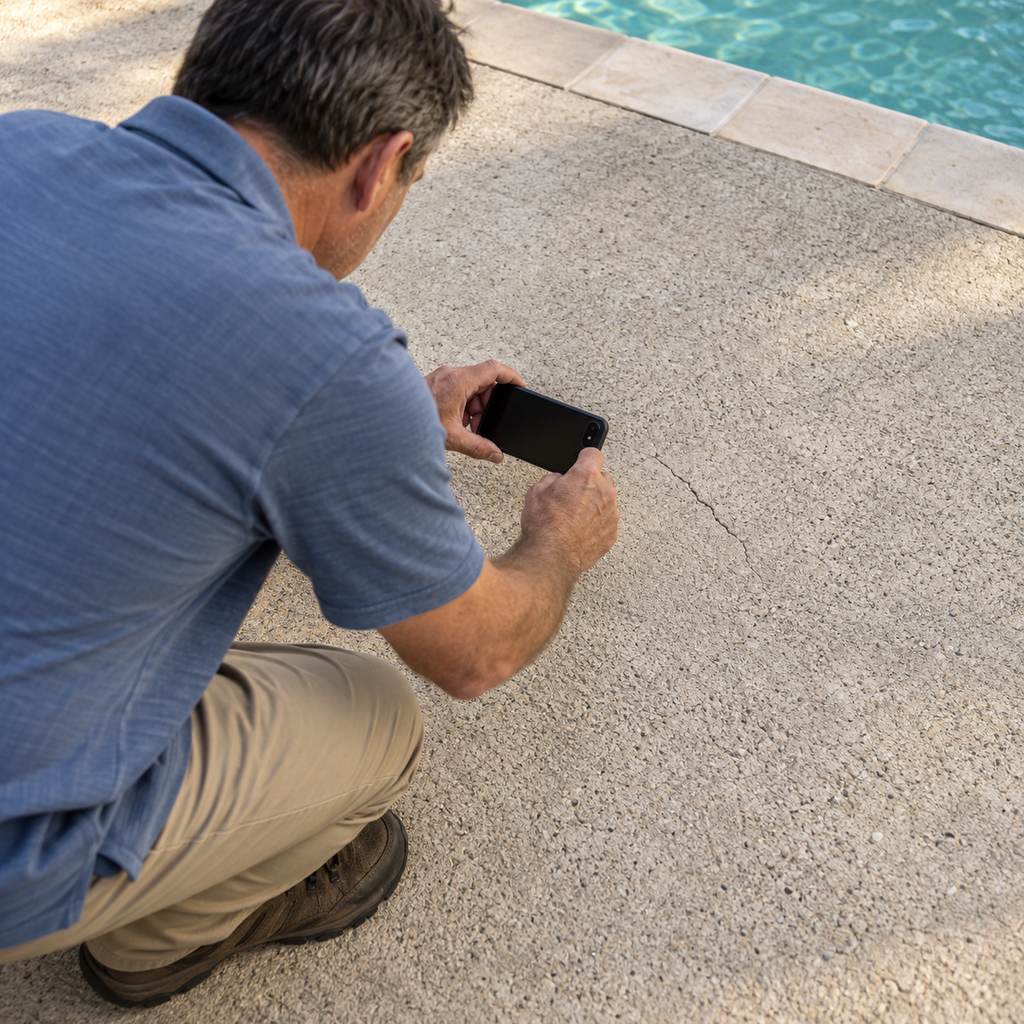
Watch for recurring puddles, slick patches, peeling sealer, widening cracks, and vertical differences between adjoining surfaces. Photograph changes and note whether they worsen after rain or pool use.
Ask for an assessment before covering a problem with another coating. Resurfacing may improve a suitable existing surface, but it does not automatically correct settlement or drainage problems. Keep drains clear and follow the selected finish manufacturer’s cleaning and recoating instructions.
Bring a Clear Scope to the Site Visit
Bring your furniture dimensions, drainage photographs, and preferred finish samples. Request an itemized proposal covering demolition, access, base preparation, concrete specifications, drainage, joints, finishes, and cleanup. Identify exclusions and who handles work shared with the pool contractor.
A useful poolside patio starts with a layout that drains, a finish suited to wet use, and clearly assigned construction responsibilities. Resolve those decisions before committing to decorative upgrades.

Written By:
Kurt Manalastas
Home & Property Research Journalist
Kurt is a Home & Property Research Journalist who researches and writes educational content on home services, property improvement, and residential decision-making. He focuses on translating real-world contractor experience, industry standards, and verified research into clear, practical guidance that helps homeowners understand their options and make informed decisions.